A concrete floor can look clean and finished, yet still need a system matched to the work it will handle. A Boise garage, a busy warehouse, and a hospitality space face different combinations of tire traffic, moisture, chemicals, slip risk, cleaning demands, and scheduling limits.
Concrete floor coatings are protective systems applied over prepared concrete, and the right choice depends on how the space is used and what the surface must withstand. Epoxy, polyaspartic, urethane, sealers, and specialty topcoats each have different preparation, cure, appearance, and exposure considerations.
That makes surface evaluation and project planning just as important as selecting a product name. Before comparing systems by use case, it helps to clarify what a coating does. How it differs from a sealer or topcoat, and why preparation affects the finished result.
Request a free concrete floor coating assessment from Paint Boise
What Are Concrete Floor Coatings?
Concrete floor coatings are bonded systems applied over prepared concrete to change how the surface handles traffic, spills, cleaning, appearance, and daily wear. The word system matters: a finished floor may include a primer, base coat, decorative or broadcast aggregate, and protective topcoat rather than one thin layer. Resinous flooring specifications commonly require the installer to review substrate preparation and environmental conditions before installation, because the slab and the surrounding conditions influence the result. Research on resin-based flooring systems also shows that coating options differ in their physical and processing properties.
Coating, sealer, and topcoat are not the same thing
A coating is generally the main film-forming layer that adheres to the concrete and provides the intended surface properties. Epoxy is one resin used in flooring applications, while urethane and polyaspartic products represent other system options. A concrete sealer is usually intended to penetrate or protect the surface with a thinner treatment, depending on the product. It may be appropriate where the goal is surface protection without building a thicker resinous floor.
A topcoat is the finishing layer placed over another coating or broadcast layer. It can contribute to chemical resistance, cleanability, sheen, texture, or slip resistance, but its suitability depends on the complete system and the environment. In other words, choosing a product by name alone can miss how the primer, base, aggregate, topcoat, and concrete work together. Adhesion research identifies surface roughness and penetration into surface irregularities as important factors for epoxy attachment, which is one reason preparation cannot be treated as an afterthought: the substrate profile affects adhesion.
Use and exposure guide the system choice
A home garage may need a different approach from a warehouse aisle, retail space, food-processing area, or mechanical room. Start with how the floor is used and what reaches it:
- Traffic: Vehicle tires, forklifts, carts, dropped tools, and foot traffic create different abrasion and impact concerns.
- Moisture: Damp slabs, vapor movement, or water intrusion can affect whether coating work is appropriate and what preparation or mitigation is needed.
- Chemicals and spills: Oils, cleaners, solvents, food products, and industrial chemicals may call for a system selected for that specific exposure.
- Safety: Textured aggregates or anti-slip systems may be useful where water, grease, or process conditions increase slip risk.
- Schedule and access: Cure requirements, ventilation, temperature, and available shutdown time affect when the floor can return to service.
Concrete condition is equally important. Moisture, cracking, contamination, spalling, or uncertain slab condition may warrant professional evaluation before coating. Paint Boise offers epoxy and urethane industrial floor coatings, with specialty options selected around the property’s use and exposure rather than a universal “best” product.
Epoxy vs Polyaspartic: How Do the Main Options Differ?
Choosing concrete floor coatings starts with the conditions the floor will face, not with a product label. Epoxy, polyaspartic, and urethane or sealer systems can all be useful, but they solve different project needs. The final result also depends on the complete system, including surface preparation, primer, base coat, aggregate, and topcoat.
| System | Scheduling and cure | Strengths and considerations | Common use cases |
|---|---|---|---|
| Epoxy | Typically requires a planned installation and cure window. Exact access time depends on the product, temperature, humidity, thickness, and site conditions. | Creates a bonded resinous layer when the concrete is properly prepared. The system can be built with broadcast aggregate for texture and wear resistance. Moisture or contamination beneath the coating can create problems. | Garages, workshops, warehouses, mechanical areas, and other floors needing a substantial protective coating. |
| Polyaspartic | Often selected when a faster-return-to-service system may help the schedule. Cure and recoat times remain product- and condition-dependent. | Can support projects where reduced disruption matters, but faster curing does not remove the need for testing, preparation, repairs, or moisture evaluation. The specified formulation and installation method matter. | Garages, commercial areas, and facilities where scheduling or limited downtime is an important consideration. |
| Urethane or concrete sealer | Timing varies widely by chemistry and application. Some are used as protective topcoats over another system rather than as the entire floor build. | May add chemical, abrasion, weather, or maintenance benefits when matched to the exposure. A sealer is not automatically equivalent to a multi-layer resinous floor. | Topcoat protection, light-to-moderate service areas, specialty environments, or systems requiring a particular finish. |
Durability is system-dependent. Concrete roughness affects how a coating can anchor to the surface, so grinding, blasting, cleaning, and repairs are not optional details. A professional specification should also account for substrate moisture, expected traffic, tire loads, impact, cleaning methods, and chemical contact. Research and project specifications commonly treat environmental conditions and substrate preparation as installation decisions, rather than assumptions made after the product is selected.
For a Boise garage, epoxy or polyaspartic may be considered based on the desired appearance, access window, moisture conditions, and how the space is used. A warehouse, food-processing area, or industrial space may need a more specialized combination of urethane, chemical-resistant, anti-slip, or line-striping components. Paint Boise offers industrial floor coatings with epoxy and urethane finishes, while the right recommendation still requires an assessment of the concrete and its exposure.
The practical question is not which material wins in every setting. It is which tested, properly prepared system fits the floor’s use, safety needs, maintenance plan, and schedule.
Which Coating Fits a Boise Garage or Home Floor?
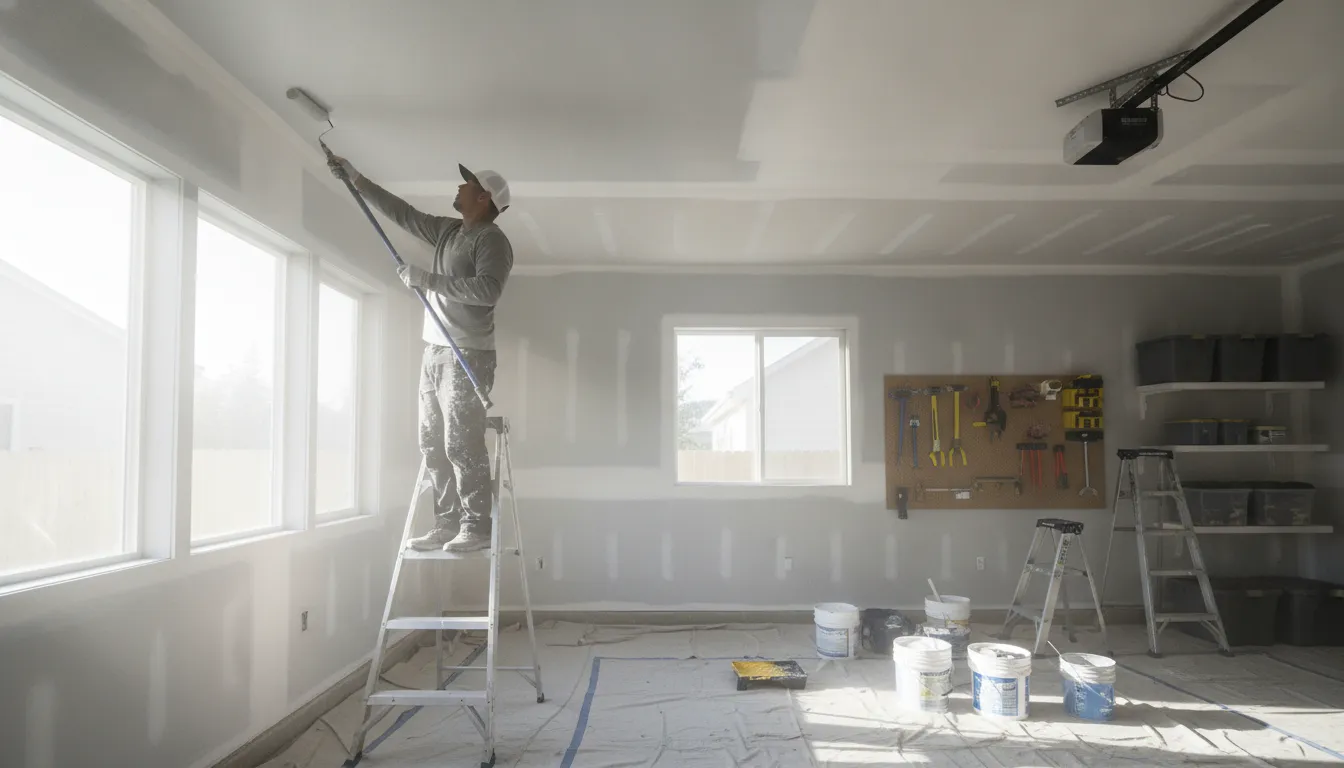
For a residential floor, start with how the space is used rather than choosing a product by name. A garage that holds daily drivers, bicycles, tools, and stored equipment needs a different approach from a lightly used basement, workshop, or utility room. The right concrete floor coatings system should match the floor’s moisture conditions, traffic, cleaning routine, and appearance goals.
Match the system to garage exposure
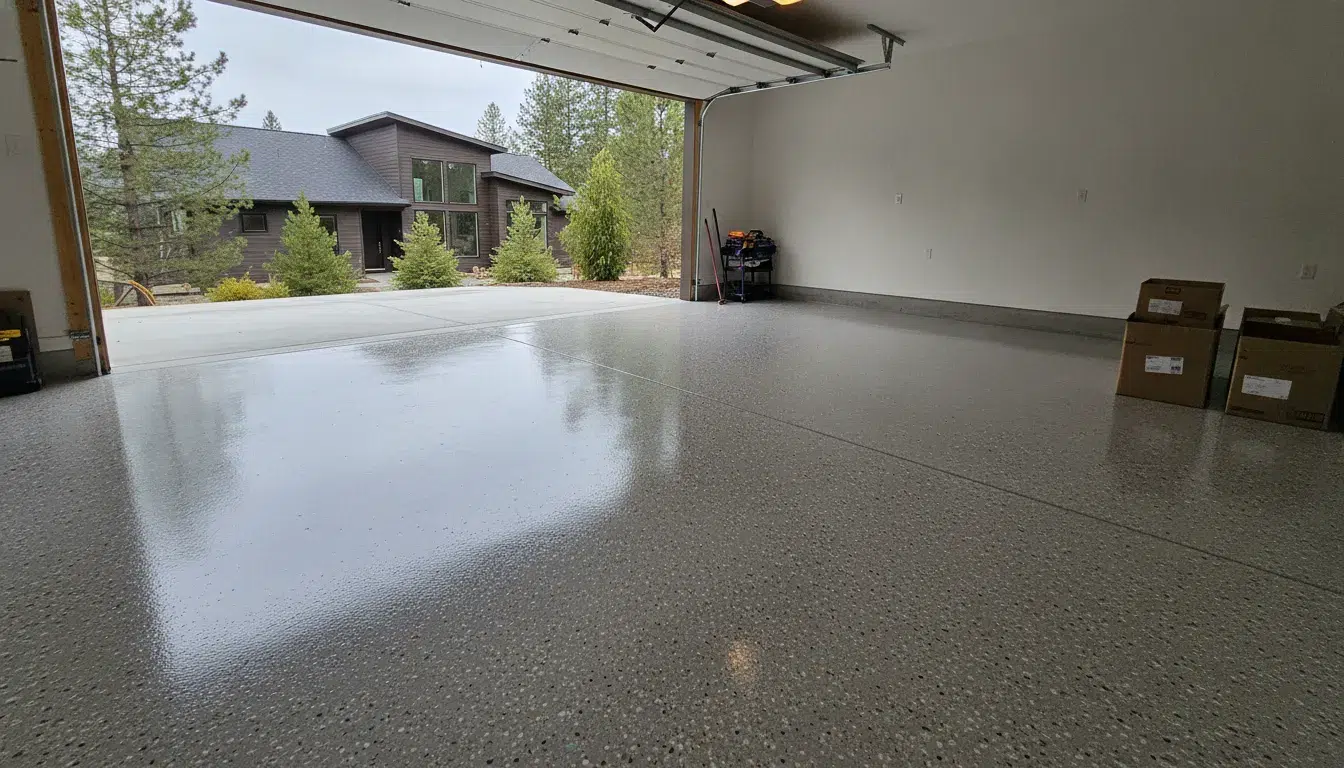
Vehicle tires bring dirt, road salt, grit, and temperature changes into a Boise garage. Jack stands, toolboxes, dropped equipment, and occasional spills add abrasion and impact. If the garage is used as a work area, consider how easily the finished surface can be swept and wiped clean. A coating system may include a base coat, decorative flakes, and a protective topcoat. But the combination should be selected for the actual exposure instead of treated as interchangeable.
Moisture is an early decision point. Water can enter through slab moisture, wet vehicles, foundation conditions, or seasonal changes. Before selecting a coating, check concrete for moisture and discuss any dampness, efflorescence, cracking, or previous coating failure. A professional evaluation can determine whether repairs, a moisture-control approach, or a different system is appropriate. Coating over an unresolved substrate problem can compromise adhesion regardless of how attractive the finished floor looks.
Consider safety and everyday comfort
A glossy floor may brighten a garage, but smoothness and reflected light are not the only finish considerations. Decorative broadcast flakes can add visual texture, while an anti-slip additive or textured topcoat can improve traction when the surface is wet. The suitable approach depends on the room, footwear, cleaning methods, and how much water or snow is tracked inside. The finish should remain practical to clean without creating a surface that feels unnecessarily rough.
Appearance still matters in a home. Homeowners may prefer a subtle gray, a flake blend that hides ordinary dust, or a more uniform finish for a workshop or basement. If you are organizing the surrounding space as well, this guide can help you prepare a Boise garage before coating work begins.
For most residential projects, the best selection is the system that balances substrate condition, moisture, tire and tool exposure, slip considerations, maintenance, and the look you want. An on-site review helps connect those factors to a coating plan without assuming one formula fits every Boise home.
How Should Concrete Be Prepared Before Coating?
Preparation is the part of a concrete coating project that determines whether the new system has a clean, sound surface to bond with. A professional assessment should account for the slab’s condition, the planned coating system, environmental exposure, and the schedule for returning the space to service. The following sequence is a practical overview, not a guarantee that every floor is ready after the same steps.
- Inspect the concrete and the space. Look for cracking, spalling, weak or dusty areas, old coatings, oil or chemical contamination, standing water, and uneven sections. The source of a defect matters. A repair may be appropriate for a sound, stable crack, while movement, settlement, or continuing water intrusion may require a different solution before coating. Paint Boise recommends professional evaluation when moisture, cracking, contamination, spalling, or uncertain concrete condition is present.
- Clean away contaminants. Dirt, grease, curing compounds, adhesive residue, and previous finishes can interfere with adhesion. Cleaning methods depend on what is present and how deeply it has penetrated. The surface then needs to be dry and free of loose dust before repairs or coating work continue. In an occupied commercial space, the plan should also protect nearby equipment, walls, drains, and finished areas.
- Repair damage and allow repairs to stabilize. Fill suitable cracks, pits, and surface voids with compatible repair materials. Remove unsound concrete rather than coating over it. Repairs should be shaped and cured according to the product requirements, because a coating cannot compensate for an unstable substrate or a repair that is still releasing moisture.
- Create the right mechanical profile. Smooth concrete often needs mechanical preparation so the coating can grip the surface. Grinding and sandblasting have been used in resinous-flooring adhesion research to increase concrete roughness before testing. Research on epoxy adhesion also describes the importance of surface roughness and penetration into surface irregularities. The appropriate method depends on the existing floor, dust-control needs, coating residue, and selected system.
- Check moisture before selecting or applying the system. Moisture vapor or water moving through a slab can affect product selection and installation timing. It is wise to check concrete for moisture, especially in basements, slab-on-grade spaces, and areas with drainage concerns. If moisture mitigation is needed, it should be addressed as part of the specification rather than hidden under a finish coat.
- Use primer or additional system layers where appropriate. Some concrete floor coatings use an optional primer, while others rely on a specified base coat, aggregate layer, or topcoat. The decision depends on porosity, repairs, exposure, texture, and the manufacturer’s instructions. Primer is not an automatic cure-all, and adding a product that is incompatible with the rest of the system can create another failure point.
- Plan curing time and access. Confirm the application window, ventilation, temperature and humidity limits, cure requirements, and when foot or vehicle traffic can resume. Move-out, staging, and protection plans are especially important for garages, warehouses, and businesses. A clear schedule helps prevent early traffic from damaging a coating that has not fully cured.
Before application, the installer should review the prepared surface and confirm that the selected system matches the floor’s condition and intended use. That final check keeps concrete floor coatings tied to the actual substrate instead of treating preparation as a one-size-fits-all checklist.
Concrete Floor Coatings for Warehouses and Commercial Spaces
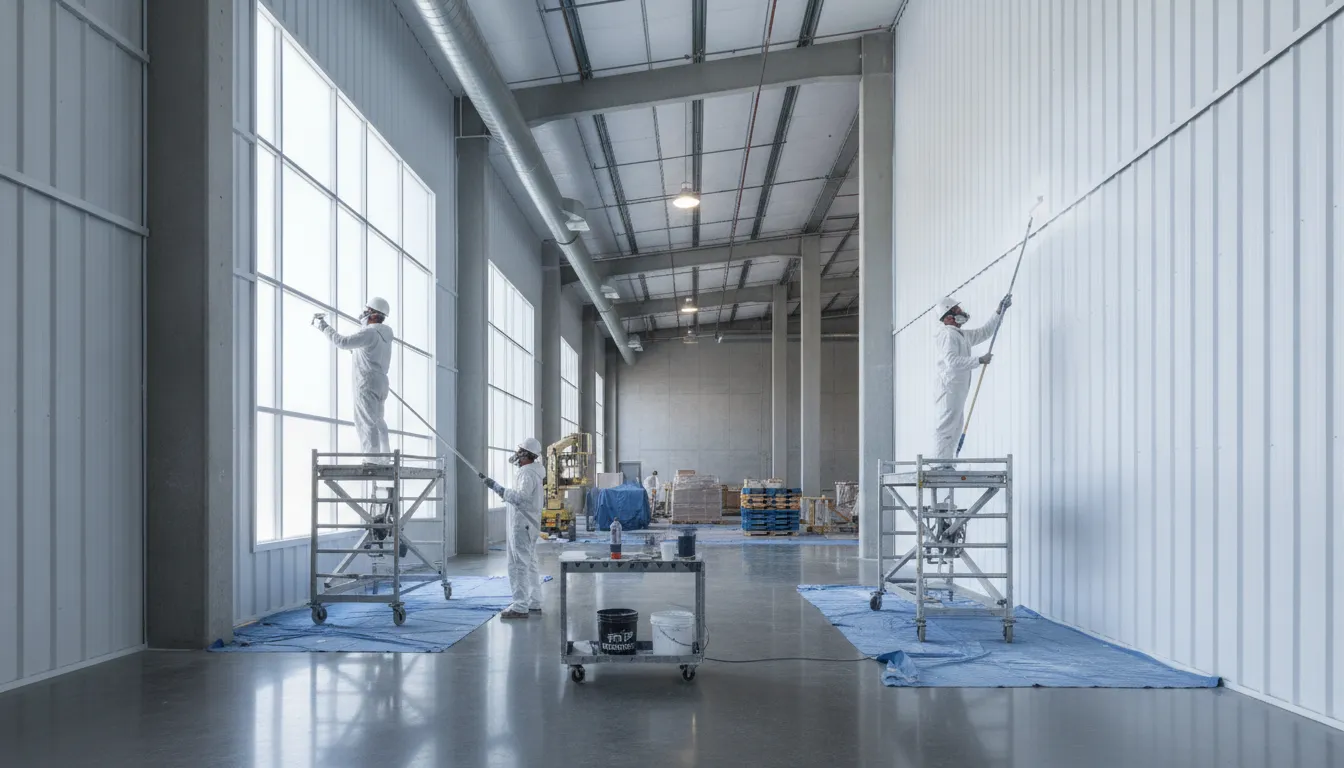
The right floor system starts with how a facility operates, not simply how the finished surface looks. A warehouse or distribution center may need to handle pallet jacks, forklifts, tire traffic, dropped materials, and frequent cleaning. A retail store or office may place greater emphasis on appearance, quiet maintenance, and a clean transition between customer areas. Paint Boise evaluates traffic, environmental exposure, concrete condition, maintenance needs, and the project schedule before recommending a system.
For warehouses, manufacturing plants, and agricultural operations, epoxy and urethane finishes can be selected as part of an industrial floor coating system. The appropriate build may also include a chemical-resistant layer, an anti-slip aggregate, or a protective topcoat. These are system-dependent properties, so a coating should be matched to the actual substances, equipment, cleaning methods, and temperature conditions in the space. See our industrial protective coatings service for a closer look at options for demanding environments.
Match the system to traffic and exposure
High-traffic warehouse floors need a surface plan that accounts for turning equipment, impact zones, aisle wear, and safe movement around loading areas. Line striping and color coding can help separate walkways, storage lanes, work zones, and restricted areas. In a manufacturing or agricultural facility, the review should also consider oils, fertilizers, solvents, washdown routines, and other contaminants. If spills are possible, chemical resistance may matter as much as abrasion resistance.
Food-processing spaces require additional attention to cleaning practices, drainage, sanitation procedures, and the facility’s operating requirements. A textured anti-slip finish can support safer footing where water or product residue is present, but the texture must remain practical to clean. Offices and retail spaces may need a smoother, more decorative finish with limited disruption to employees and customers. Hospitality spaces often benefit from slip-resistant areas near entrances, kitchens, service corridors, and other wet zones.
Plan downtime and compliance before application
Concrete floor coating work involves preparation, repairs where needed, application, curing, cleanup, and access planning. Off-hours or phased scheduling may reduce operational downtime, but the workable approach depends on the facility’s traffic and cure requirements. Paint Boise includes preparation and a final walkthrough with touch-ups in its process. While the building owner or operator should identify equipment moves, protected areas, drainage details, and reopening needs in advance.
There is no universal coating specification for every shop or process. EPA guidance emphasizes that final technology selection is shop- and process-specific, and each business remains responsible for applicable environmental and occupational safety compliance. Review product documentation and site requirements with the project team before work begins. For broader facility planning, explore our commercial painting services for coordinated work in Boise and the Treasure Valley.
What Maintenance Helps a Coated Concrete Floor Last?
Good maintenance protects the coating from avoidable wear and helps you spot small problems before they spread. Start with routine dust and grit removal. Fine debris can act like sandpaper under foot traffic, carts, or vehicle tires, especially in entryways and other high-use areas. Sweep, dust-mop, or use a suitable vacuum on a schedule that matches the space.
Use cleaning products and tools that are compatible with the coating system. A mild cleaner and soft mop are often appropriate, but the product recommendation should come from the installer or coating manufacturer. Avoid assuming that a strong solvent, abrasive pad, or aggressive degreaser is safe for every epoxy, urethane, polyaspartic, or sealer system. In food service, manufacturing, and other regulated environments, cleaning procedures also need to align with site safety requirements.
Respond to spills and changing traffic quickly
Clean oil, chemicals, food, and other spills promptly. Even when a system is selected for chemical resistance, exposure limits and dwell time still matter. Follow the product-specific response procedure rather than letting an unknown substance sit on the surface. Use mats or designated containment areas where water, salt, mud, or tracked-in grit regularly enters the building.
Review the floor when the way it is used changes. New equipment, heavier carts, altered forklift routes, added vehicle traffic, or a process change can create wear that the original coating plan did not anticipate. Inspect seams, edges, drains, traffic lanes, and areas near equipment for dulling, lifting, cracks, impact damage, or exposed concrete. Documenting these changes makes it easier to plan a targeted repair instead of waiting for a larger failure.
Repair wear before it becomes a larger area
Small chips, worn paths, and damaged sections may need cleaning, preparation, and compatible touch-up material. A touch-up is not simply a matter of brushing over visible damage. The surrounding coating may need to be feathered or mechanically prepared, and the repair must be compatible with the existing system. If moisture, concrete movement, contamination, or substrate damage is involved, address that underlying condition first.
Paint Boise’s general internal guidance places some industrial coatings in a 7-10 year range in Boise, but that is an estimate, not a promise for every floor. Actual service life depends on the coating type, preparation quality, traffic, chemicals, moisture, maintenance, and environmental exposure. For a facility, a planned inspection and renewal schedule can help coordinate repairs with lower-traffic periods. This commercial coating maintenance guide offers additional planning context for Boise properties.
Request a concrete floor coating quote or on-site assessment from Paint Boise
Frequently Asked Questions
What is the best type of coating for concrete floors?
There is no single best coating for every floor. Epoxy can suit garages, workshops, and many commercial areas where strong adhesion and a durable finish matter. Polyaspartic systems may fit projects that need faster return to service, while urethane or specialty systems can make more sense for specific chemical, weather, slip, or maintenance demands. The right choice depends on traffic, moisture, exposure, appearance, and scheduling.
What are the downsides of epoxy concrete floors?
Epoxy can require careful surface preparation, controlled installation conditions, and adequate cure time before normal use. Moisture, contamination, cracks, or an insufficiently profiled surface can affect adhesion. Some epoxy systems may also be less suitable than other options when rapid turnaround, significant UV exposure, or a particular chemical and slip-resistance profile is the priority.
How much do concrete floor coatings cost?
Project cost depends on the floor area, concrete condition, repairs, preparation method, coating system, finish, access, and scheduling requirements. A floor with heavy contamination, moisture concerns, or extensive damage needs a different scope than a clean, sound slab. An on-site assessment provides a more useful estimate than applying a generic price to the square footage.
What is the least expensive way to cover a concrete floor?
The least expensive option depends on the floor’s condition and how it will be used. A basic sealer may be practical for a clean, low-demand area. A more complete coating system can be the better value where traffic, chemicals, moisture, or slip risk are concerns. Choosing a low-cost product without addressing preparation can lead to premature repairs, so compare the full project scope rather than material cost alone.
Plan Your Concrete Floor Coating Project
A clear assessment helps match the coating system to your floor’s condition, daily use, traffic, and scheduling needs. Paint Boise can discuss your residential, warehouse, or commercial space and outline practical next steps for a free quote or on-site assessment. Call (208) 254-6615 or use the contact option below.
Request a free concrete floor coating quote or on-site assessment