A garage can be one of the hardest-working spaces in a Boise home, yet its walls and ceiling often remain dusty, stained, and unfinished. A thoughtful paint job can make the space brighter, easier to maintain, and more useful for storage, projects, or everyday parking. Because garages experience temperature swings and occasional moisture, the right preparation and paint system matter more than simply rolling color over the existing surface.
Want a durable, finished garage without guessing at the prep or paint system? Request a free estimate from Paint Boise.
Garage interior painting Boise homeowners can rely on starts with cleaning, repairing, and priming each surface before applying a durable acrylic latex paint. Satin or semi-gloss finishes are often practical for walls because they reflect light and are easier to wipe clean. A light ceiling color also helps brighten the entire garage.
The quality of the finished result depends largely on what happens before the first coat. Begin by evaluating the walls and ceiling, then address the surface conditions that can cause peeling, uneven coverage, or premature wear.
How to Prepare Your Garage Walls and Ceiling for Painting
A durable garage finish starts before the first coat goes on. Garages collect road grime, oil, dust, and moisture, while drywall, concrete, and textured surfaces absorb paint differently. Proper preparation, including cleaning and patching, is the foundation of a long-lasting paint job. Follow these steps whether you are tackling the project yourself or preparing to bring in a professional.
-
Clean away oil, grease, and dust
Remove stored items and sweep or vacuum the walls and ceiling, paying attention to corners, joints, and cobwebs. Wash oily or greasy areas with a suitable degreasing cleaner, then rinse as directed and allow the surface to dry completely. Paint will not bond reliably to residue, so repeat the cleaning where water beads up or the surface still feels slick. Address visible moisture or leaks before painting, too.
-
Patch cracks, holes, and damaged areas
Inspect drywall seams, fastener holes, small dents, and cracks. Fill the imperfections with the appropriate patching compound, and use a compatible repair material for masonry or bare concrete. Patching wall imperfections is necessary for a smooth, uniform finish, especially under lighter colors and brighter garage lighting. Let each repair dry fully before moving to the next step.
-
Sand and remove the remaining dust
Sand repaired areas until they are level with the surrounding wall. Feather the edges so patched spots do not show through the finish coat. Use the right sanding approach for the material, and avoid aggressively sanding textured surfaces that are meant to remain intact. Vacuum or wipe away all sanding dust, then check the walls from several angles for ridges, loose material, or missed damage. For more general guidance, see this resource on preparing a room for painting.
-
Prime before applying paint
Apply a compatible primer to unfinished drywall, bare concrete, repaired areas, and any surface with uneven absorption. Primer is essential on these substrates because it helps create a consistent base for the topcoat. Garage walls may also have unusual textures or mixed materials that require careful priming to prevent peeling and uneven coverage. Follow the product’s drying instructions, maintain airflow, and inspect the primed surface before painting. If the texture, repairs, or ceiling height make preparation difficult, a painting professional can identify problem areas before they become finish defects.
Choosing the Best Paint for Your Boise Garage Interior Painting Project
Garage walls take more abuse than most rooms in the house. Tools, bicycles, vehicle doors, dust, and everyday traffic can leave marks, so durability should guide your paint choice rather than color alone.
For most garage walls, a high-quality acrylic latex paint is a practical choice. It offers moisture resistance and durability, which helps the finish hold up in a space that may experience condensation, changing humidity, and occasional dampness. Premium product lines from Sherwin Williams and Benjamin Moore are worth considering because they offer dependable coverage and performance when paired with proper preparation. A local painting professional can help match the product to your wall material and the way you use the garage. Interior painting services can also provide guidance when the walls include unfinished drywall, masonry, or previously painted surfaces.
| Paint choice | Best use | Why it works in a garage |
|---|---|---|
| High-quality acrylic latex | Most garage walls and ceilings | Provides durable coverage and moisture resistance. |
| Satin finish | Walls with minor imperfections | Offers a softer sheen and is easier to clean than flat paint. |
| Semi-gloss finish | High-touch walls and work areas | Provides added cleanability for scuffs, dust, and everyday wear. |
Choose a finish that can handle daily wear
Finish affects both appearance and maintenance. Satin and semi-gloss paints are recommended for garage walls because their smoother surfaces are easier to wipe clean than flat finishes. That matters when the walls collect dust or pick up scuffs from storage bins and equipment. Semi-gloss generally provides a little more sheen and cleanability, while satin offers a softer appearance that can be more forgiving of minor surface imperfections. Either option gives garage walls a more durable finish than a basic flat wall paint.
Use light colors to improve visibility
White and soft grey are strong choices for a garage interior. Light colors reflect more available light, improve visibility around work areas, and can make the room feel more open. A bright wall color is especially useful in garages with limited windows or older overhead lighting. If pure white feels too stark, a pale grey can provide a finished look while still keeping the space bright.
Account for Treasure Valley temperature swings
Boise and the surrounding Treasure Valley experience varied temperatures throughout the year. Because garage walls may face significant seasonal and daily temperature changes, select a premium coating designed for performance and flexibility rather than choosing solely by price. Temperature fluctuations can place stress on a coating, particularly when the surface has not been cleaned, repaired, and primed correctly. Follow the product’s application and curing guidance, and avoid painting when the garage or wall surface is outside the manufacturer’s recommended temperature range. The right acrylic latex product, durable finish, and thorough preparation work together to create a coating that stays attractive through local conditions.
Should You Paint Your Garage Ceiling?
Yes. The ceiling is easy to overlook, but leaving it unfinished can make an otherwise refreshed garage feel incomplete. A bright white ceiling reflects available light downward, helping the entire space look cleaner and easier to use. Paint Boise notes that a fresh coat of bright white paint can significantly improve light distribution in a garage. Light colors also maximize reflection, which can improve visibility around workbenches, storage areas, and vehicles without adding new fixtures.
Why the ceiling makes such a difference
Garage ceilings are often darker than the walls because they collect dust, show construction materials, or were never finished after installation. A uniform white or soft-light finish creates a more polished backdrop and helps tie the walls, shelving, and lighting together. This small improvement can make the garage feel less like an unfinished utility area and more like a functional part of the home.
Use a different technique than you would on the walls
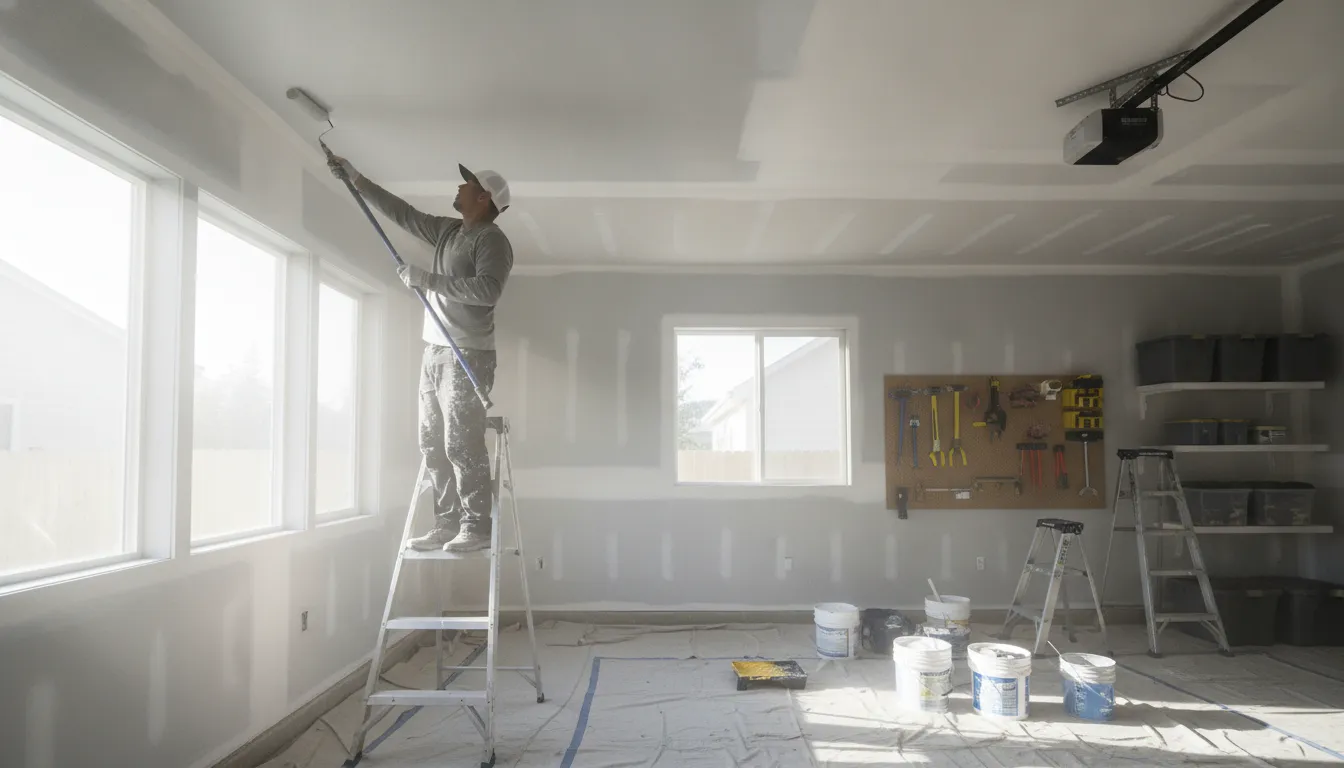
Ceiling painting requires careful setup because overhead work can create more drips and fatigue. Start by protecting the floor, vehicles, and stored items, then cut in around the perimeter, light fixtures, framing, and other edges with an angled brush. After the edges are covered, use an extension pole and roller to apply the paint in manageable strips. Keep a wet edge as you work so the finish stays even, and avoid overloading the roller.
For the most consistent result, choose a ceiling-appropriate bright white paint and address dust, stains, or loose material before coating. If the ceiling has unfinished drywall, unusual texture, or exposed areas, the correct primer may be necessary before the topcoat. Temperature extremes in the Treasure Valley can also affect how paint applies and cures, so timing and product selection matter.
The Benefits of a Professionally Painted Garage Interior
An unfinished garage often feels like an afterthought: dim, dusty, and difficult to use for anything beyond parking or storage. Bare drywall, concrete, and exposed surfaces can make the room look unfinished while allowing grime to settle into every uneven area. A professional paint job changes the way the space looks and functions without requiring a major remodel.
A brighter, more useful space
Fresh, light-colored paint reflects more available light, making it easier to see tools, stored items, work surfaces, and vehicles. The result is a garage that feels cleaner and more intentional rather than like an extension of an unfinished construction area. With the walls and ceiling finished consistently, the space can support more than storage. It may become a workshop, home gym, hobby area, mudroom extension, or a better-organized place for everyday equipment.
Considering a garage refresh? Call Paint Boise at (208) 254-6615 for a free in-home estimate and paint recommendation.
That added flexibility can also improve the overall impression of your property. A well-maintained garage contributes to curb appeal and can support resale value by showing buyers that the entire home, including its functional spaces, has been cared for. Paint will not replace needed repairs or solve every storage problem, but it creates a finished foundation for the improvements that follow.
Less dust and easier cleanup
Sealing porous or unfinished surfaces helps reduce the appearance of dust and debris buildup. Smooth, properly prepared painted walls are easier to wipe down than rough drywall or bare masonry, especially around workbenches, doors, and high-traffic areas. If your garage floor is another major source of dust or grime, pair the wall project with this garage floor epoxy guide to understand how floor coatings fit into a more complete garage upgrade.
A clean backdrop also makes organization easier. Light walls help you spot clutter, while a freshly finished surface gives shelving, cabinets, hooks, and labeled storage a more cohesive setting. Instead of repeatedly shifting piles to find what you need, you can plan zones and keep frequently used items accessible.
Protection from everyday wear
Garage walls face more impact, dirt, temperature variation, and general wear than many rooms inside the home. A professionally prepared and painted surface adds a protective layer against scuffs and routine contact. Proper product selection and application matter because paint applied over dirty, uneven, or improperly primed surfaces can peel or show inconsistent coverage.
Professional garage painting Boise homeowners choose should therefore be about more than color. Thorough preparation, appropriate coatings, and careful coverage create a durable finish that looks better, stays easier to maintain, and helps the garage work harder for your household.
What to Expect During a Garage Interior Painting Project
A well-managed garage painting project should feel organized from the first conversation through the final walkthrough. Paint Boise begins with a free in-home estimate, giving the painter a chance to assess the garage’s size, wall and ceiling surfaces, existing coatings, and preparation needs. During this expert consultation, you can explain how you use the space. Whether it serves as a workshop, storage area, or entry point to your home, and what finish you want. The team can then recommend suitable products and prep techniques for the project.
Planning the work and timeline
After the estimate, the team outlines the scope, products, and expected schedule before work begins. Most garage interior painting projects take about 1 to 3 days, depending on the amount of preparation required and the total surface area. Repairs, heavy cleaning, unfinished drywall, or multiple coats can affect the timeline. You will know what to expect before the project starts, rather than having the schedule change without explanation.
Protecting your home and managing fumes
Preparation includes setting up drop cloths and protecting nearby items, walkways, doors, and stored belongings wherever possible. The crew also plans for airflow, using proper ventilation and fume-management practices while the paint is applied and cures. Industry-leading safety protocols help protect occupants and the home, while a clean, controlled setup keeps the work area orderly.
Because the garage is separated from most living areas, disruption is usually minimal. You may need to move vehicles, tools. Or storage away from the walls and avoid the garage while surfaces are being painted, but normal household routines can generally continue. The team will communicate any access or drying-time considerations clearly.
A no-deposit project with a satisfaction guarantee
Paint Boise does not require a deposit, and payment is made when you are satisfied with the completed work. At the final walkthrough, you can review the finish with the team and identify any detail that needs attention. If you are also considering a durable floor upgrade, explore these professional garage painting services to plan the walls, ceiling, and floor as one cohesive improvement.
Frequently Asked Questions
How much does it cost to paint a garage interior in Boise?
The price depends on the garage’s size, wall and ceiling condition, amount of cleaning or patching, and the paint system selected. Unfinished drywall, bare concrete, oil stains, and extensive repairs can increase preparation time. A free in-home estimate gives you a project-specific quote after the surfaces and scope are reviewed.
What type of paint is best for garage interior walls?
High-quality acrylic latex paint is a practical choice because it offers moisture resistance and durability. Since garage walls typically see more dirt, impact, and temperature fluctuation than living-space walls, satin or semi-gloss finishes can make routine cleaning easier. Light colors such as white or soft gray also improve visibility by reflecting more light.
Do I need to prime garage walls before painting?
Primer is essential on unfinished drywall and bare concrete before the topcoat is applied. It also helps address varied surface texture and promotes more even coverage. Existing painted walls may need less extensive priming, but cleaning, patching cracks or holes, and checking for peeling paint should come first.
How long does garage interior painting take?
Most garage interior painting projects take about 1 to 3 days, depending on preparation needs and total wall surface area. The schedule may also vary when both walls and ceilings are included or when drying and ventilation require additional time. Your estimate should include the expected sequence and timeline.
Is painting a garage interior worth it?
Yes, especially when the garage is used for storage, hobbies, parking, or everyday household access. Fresh paint can brighten the space, protect walls from wear, reduce the appearance of dust, and make the area easier to keep clean and organized. It can also improve the home’s overall presentation and potential resale value.
Ready to Refresh Your Garage Interior?
A professionally painted garage can feel brighter, cleaner, and more useful while giving your walls and ceiling a durable finish. Paint Boise can help you evaluate the surfaces, choose suitable coatings, and plan the work around your home. To get a free in-home estimate, contact us through our online form or call (208) 254-6615. Share your goals for the space, and our team can help you decide on the next step.