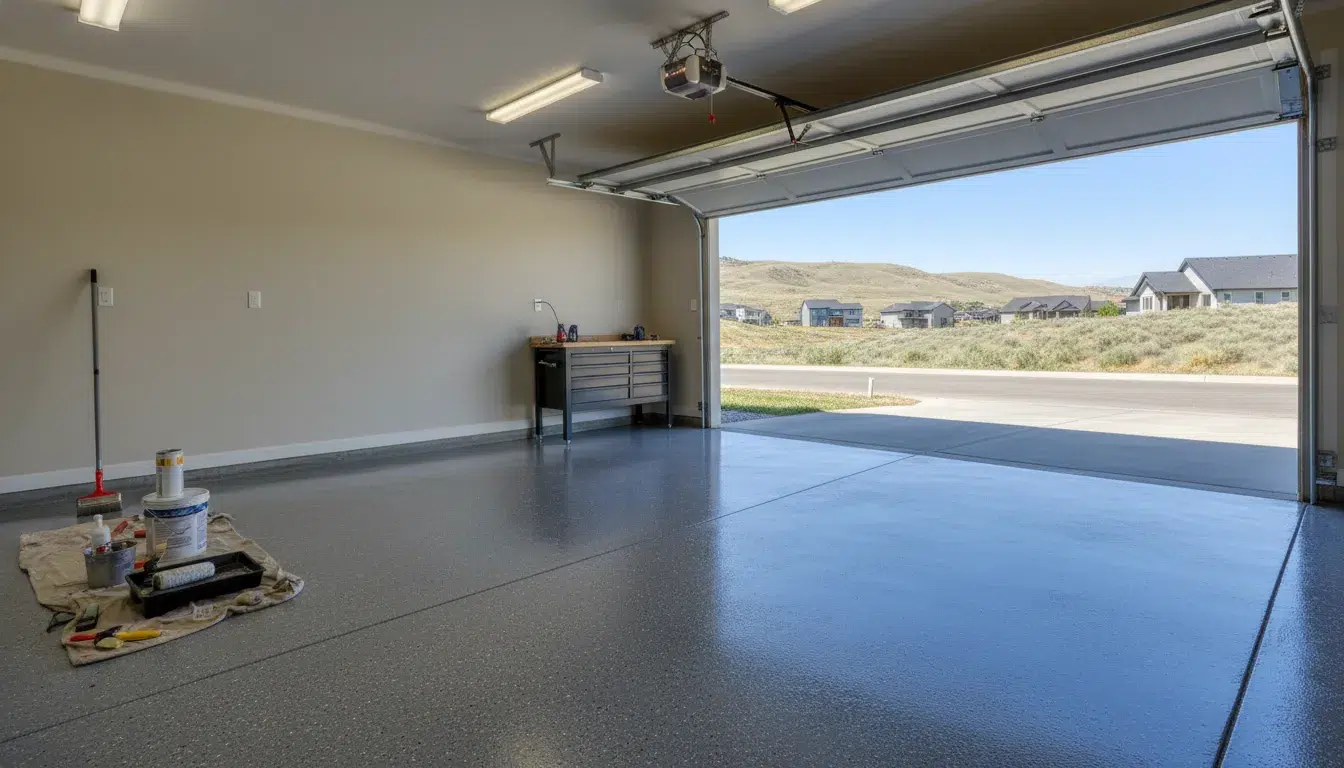
A garage floor coating fails at the concrete long before homeowners notice peeling. In Boise, the right system begins with surface prep, not a glossy color chip.
Garage floor epoxy Boise projects should start with dry, sound concrete and a coating selected for how the garage is used. Epoxy, polyurea, and polyaspartic systems can protect concrete, but they differ in installation schedules, finish choices, and long-term upkeep. Preparation matters because coatings bond more strongly to dry concrete than wet concrete, according to research listed by the U.S. Environmental Protection Agency. A useful comparison weighs durability, surface prep, cure time, return-to-service timing, finish, and the risk of later rework. Professional coating is worthwhile when cracks, moisture concerns, vehicle use, or limited downtime make careful prep and consistent application more valuable than a basic kit.
Local homeowners need a clear answer on which system fits their garage, schedule, and repair risk. The first step is comparing coating options against concrete condition and daily use.
Garage floor epoxy Boise: choosing the right coating
For Boise homeowners, garage floor epoxy is a resin-based coating applied over prepared concrete to form a bonded surface. It is not ordinary garage paint, which mainly adds color and a thin finish. A full coating system starts with inspection and surface preparation, then uses coating layers chosen for the slab and use. That difference matters when a garage handles tires, tools, dirt, and seasonal moisture.
Concrete condition first
Start with the concrete, not a color chip. A floor can have old coatings, oil marks, moisture concerns, cracks, or smooth areas that affect bonding. An EPA-listed study found that, for the coatings tested, bond strength was higher on dry concrete than wet concrete.
That finding supports a simple rule: surface condition should guide the coating plan. Cleaning alone may not solve each slab issue. The contractor should assess repairs, profile the concrete as needed, and remove contaminants before any coating is placed. Paint Boise’s page on proper surface prep explains why a clean base matters before a new finish goes down.
Parts of a coating system
A coating system is more than one can of product. It pairs preparation with a primer or base coat, optional color flakes, and a protective topcoat when appropriate. The right build depends on how the garage is used, what condition the slab is in, and the finish you want.
An epoxy system can be a good fit when adhesion to prepared concrete and a coated finish are key goals. Other coating choices may fit certain scheduling, finish, or exposure needs; ask what layers are included. A decorative floor that hides prep details is hard to compare with a detailed, step-by-step scope. The quote should make those differences easy to see.
Questions for a Boise estimate
In Boise, bring practical questions to an estimate. Ask about preparation, curing limits, traction, cleaning needs, parking downtime, and which wear issues warranty covers. If the garage is also a workshop or storage hub, explain how tools, chemicals, snowmelt, and vehicle traffic reach the floor.
That helps the painter specify a system for real use, rather than appearance alone. Homeowners comparing industrial painting services should request a clear scope: prep steps, layer count, finish, cure window, and warranty terms. A useful garage floor epoxy Boise proposal should state what will be prepared, applied, protected, and checked before payment.
Epoxy vs. other garage floor coatings
A homeowner comparing garage floor epoxy Boise options is choosing more than color or gloss. Epoxy, polyaspartic, and polyurea appear in Treasure Valley floor-coating offers, while concrete paint is a simpler path. The right fit starts with the slab, expected use, and install schedule.
Start with the concrete
Finish type does not fix a slab that is not ready for coating. An EPA-indexed coating study found that tested coatings bonded better to dry concrete than to wet concrete. That finding makes moisture and prep key questions for any garage project.
Ask how cracks, old coatings, stains, and damp areas will be checked before work starts. Paint Boise’s guide to proper surface prep explains why a clean base matters before paint or coating goes on. The exact prep method should match the slab and the chosen system.
Comparison points to confirm
Each option can make sense in a different garage. Rather than choosing from a label alone, compare the full system offered for your floor. Ask the installer or check product data for use timing, finish options, and limits for sun, chemicals, or tire contact.
| Question | Epoxy | Polyaspartic | Polyurea | Concrete paint |
|---|---|---|---|---|
| Finish. | Flake. | Topcoat. | Topcoat. | Color. |
| Use. | Cure. | Cure. | Cure. | Dry. |
| Exposure. | Check. | Check. | Check. | Check. |
| Ask. | Practical? | Right fit? | Right fit? | Enough? |
Choosing for a Boise garage
A Boise garage may store cars, tools, bikes, or gear brought in during wet weather. List the floor’s daily use and any direct sunlight near the door. Note how long the garage can stay clear. These details help a coating professional compare systems without guessing.
For epoxy, ask which coating layers are included and how the slab will be prepared. Research indexed by the EPA found that bonding can vary with epoxy formula and cure time. A clear proposal should state the prep steps, coating system, finish, and cure guidance before work begins.
How is a Boise garage floor prepared for coating?
A coating can only follow the condition of the concrete beneath it. For a garage floor epoxy Boise project, preparation starts before any resin is mixed. Paint Boise explains cleaning as part of proper surface prep. Oil, grit, and loose material need attention before the coating stage.
Initial floor inspection
Garage slabs are rarely alike. A crew first looks for old coatings, grease marks, cracks, chipped areas, and signs of damp concrete. This review helps set the right cleaning, repair, and profiling plan.
- Clear and inspect the slab. Items are removed so the whole floor is visible. Cracks, chips, worn patches, stains, and existing coatings are marked for treatment.
- Remove dirt and surface residue. Dust, oils, and tracked-in grime can stand between concrete and coating. Cleaning creates a sound starting point for later prep work.
- Review moisture conditions. A slab should be checked for dampness before coating begins. If moisture is suspected, work can pause until the condition is understood.
- Profile the concrete. Mechanical prep opens the slab surface and removes weak material or remaining residue. The goal is a clean, even texture that the coating can grip.
- Repair defects after prep. Cracks, pits, and chipped spots become easier to see once residue is gone. Repairs help limit low spots and breaks in the finished coating.
- Clean again before coating. Profiling and repairs can leave dust behind. A final cleanup leaves the prepared surface ready for the chosen coating system.
A surface the coating can hold
Cleaning is needed, but it is not the same as a bond-ready surface. Concrete may look clean while still being too smooth. It may also hold material that harms the bond. Profiling gives the coating a surface it can grip.
Moisture deserves the same care. In an EPA-listed test, coatings bonded better to dry concrete than to wet concrete. That finding supports checking slab conditions before coating a damp surface. The EPA concrete bonding record reports the test finding.
Why preparation is not a shortcut
Coating color and finish get attention once the project is complete. Yet cleaning, profiling, and repair shape whether that finish starts on a sound base. Skipping one stage can leave defects under a new surface. Those defects are harder to fix later.
A clear prep plan also gives homeowners useful questions to ask before work starts. Ask how cracks will be reviewed and how the profile will be made. Also ask how moisture concerns will be handled. Those answers show what is happening beneath the final garage floor finish.
Durability, appearance, and everyday maintenance
A garage floor coating should do more than improve how the space looks. For homeowners comparing garage floor epoxy in Boise, daily use matters: parked vehicles, rolling tools, grit, wet shoes, and routine cleanup.
Wear from daily garage use
Think about how your garage is used before choosing a finish. Tires turn on the surface, tool chests roll across it, and tracked-in debris can grind underfoot. A workshop or busy family entry may need a different coating plan than a garage used mainly for parking.
Durability begins below the finished surface. An EPA-listed coating study found that coatings in its tests bonded better to dry concrete than wet concrete. This supports checking slab conditions and completing proper surface prep before coating work starts. See the study record from the U.S. Environmental Protection Agency.
Color, flakes, and practical appearance
Color and flake blends shape more than the first impression. A light, solid finish can make grit or tire marks easier to notice. A blended flake pattern may make small bits of tracked-in dirt less clear between cleanings. Neither option removes the need for care.
Homeowners should view a sample in the garage, if available. A small screen image may not show how it will look. Light, garage door exposure, cabinet colors, and vehicle use can affect the look in daily life. Ask how the finish looks when clean and between cleanings.
Cleaning and moisture checks
Simple care starts with keeping grit off the surface. Sweep or vacuum sand and gravel, then clean spills before dirt sticks to them. Place pads under sharp equipment feet. Lift heavy items instead of dragging them when practical.
- Track where rain, snow, or wash water tends to collect near parked vehicles.
- Tell the coating contractor about past damp spots, cracks, peeling coatings, or concrete repairs.
- Ask which cleaner and cleaning method match the chosen coating system.
- Request care instructions for tire marks, chemical spills, and winter road residue.
Moisture is part of the coating choice, not just a cleaning issue. A contractor can assess the slab and discuss whether epoxy or another coating fits its condition. The useful choice fits the concrete, the garage routine, and the upkeep the household expects.
How long does a garage floor coating project take?
Planning the work window
A garage floor coating project begins before any product reaches the concrete. During an estimate, the contractor can review floor size, current coatings, visible damage, moisture concerns, and the finish you want. For homeowners comparing garage floor epoxy Boise options, this first visit also helps define when the garage must stay clear.
Plan for a temporary change in parking and storage. Cars, bikes, tools, shelving contents, and seasonal gear may need another safe place before work starts. Ask which fixed cabinets or appliances must move, since access to edges and corners affects the work plan.
An inspection also gives the crew a chance to spot cracks, peeling coating, oil marks, or uneven sections. These details can change the prep needed before application. A clear estimate should explain the planned coating system and when re-entry instructions will be provided.
Preparation and coating application
Surface preparation is often the most disruptive part of the visit. The garage needs to be empty so the crew can clean, repair, and profile exposed concrete. Paint Boise explains why proper surface prep matters before a new finish is applied.
A clean, sound floor is not just about appearance. An EPA-indexed coating study found stronger bonding on dry concrete than on wet concrete. That finding supports careful moisture review and dry surface conditions before coating work begins, as noted in the EPA research record.
After prep, the crew applies the selected coating system according to its product directions. Some projects include more than one layer or a decorative broadcast finish. The crew should explain what is being applied, how the work area is protected, and why the floor cannot be used yet.
Re-entry and daily life
The usable timeline depends on the coating system, floor conditions, weather, and product instructions. For that reason, homeowners should avoid relying on a broad online promise about cure time. Ask for written guidance on foot traffic, stored items, vehicle parking, and any limits during early use.
Keep the garage clear for the full period set by the installer and product label. Loading heavy storage or parking too soon can place stress on a new finish. If you need access to a freezer, pet supplies, or work tools, move those items before surface prep starts.
A practical timeline is built around access, not just application. Confirm the estimate visit, clearing deadline, prep and coating days, and the date or condition for re-entry. This keeps the household moving while the floor receives the care required for the selected system.
When is professional garage floor coating worth it?
The decision point
Professional service is worth considering when the coating has to protect a working garage, not just change its color. That choice matters for a Boise floor exposed to tires, tracked-in moisture, and seasonal use. A homeowner may enjoy a small DIY project, but a full floor leaves little room to correct poor prep.
For garage floor epoxy Boise homeowners compare, the key question is risk: can you redo the floor if adhesion fails? A coating choice also needs to fit how the garage is used. Parking, storage, workshop traffic, and planned downtime affect the questions worth asking.
Professional help may make more sense when the slab shows past coating, visible damage, or moisture concerns. Those conditions call for inspection before material is purchased. Professional value is easier to judge when an estimate separates material selection from prep work.
Where DIY risk starts
A DIY plan should account for concrete cleaning, surface condition, and a coating matched to the space. Skipping repair, coating over moisture, or applying a product outside its stated limits can leave a result that needs rework. EPA-listed research found that the coatings studied bonded more strongly to dry concrete than wet concrete.
That finding makes moisture and substrate checks a practical decision point, not a minor prep detail. Prep also extends beyond sweeping up visible dust. Paint Boise’s page on proper surface prep explains why cleaning before a coating or paint project should be planned, not rushed.
Product choice can turn a simple weekend plan into a repair job. Different systems come with their own application and cure instructions. A homeowner needs to confirm that the garage conditions fall within those instructions before starting. That includes floor condition, temperature range, ventilation needs, and time vehicles must stay off the surface.
Questions before an estimate
Before choosing an installer, ask for the exact coating system and the reason it suits your garage. Ask how the crew will inspect concrete, prepare it, address cracks, and set cure-time expectations. A clear estimate should state coated areas, included prep steps, and how garage access will work.
Ask what warranty applies to the floor coating, what it covers, and what care is required. If you compare DIY with a professional bid, include your time, rented tools, materials, and the cost of a second attempt. Look for a plan listing inspection, repairs, surface prep, product, cure time, use restrictions, and warranty terms.
Requesting an estimate does not require a decision that day. Use the visit to learn what the slab needs and which options fit its use. Ask for exclusions in writing, such as moisture problems, existing coating removal, crack repair, or items that must leave the garage. With that information, choose based on prep, product fit, and clear accountability.
Frequently Asked Questions
What is the difference between epoxy and polyaspartic garage floor coatings?
Epoxy is a resin-based coating that bonds to prepared concrete and creates a hard, finished surface. Polyaspartic is another coating option often selected when installation scheduling and cure conditions matter. The better choice depends on slab condition, moisture, expected vehicle use, appearance goals, and the installer’s specified system. Boise homeowners should compare the complete coating system, not only the product name.
How long does garage floor epoxy last?
Garage floor epoxy life depends on concrete condition, preparation, moisture exposure, traffic, hot tires, and the coating system used. A coating on a dry, properly prepared slab is better positioned for durable adhesion. In testing cataloged by the EPA, tested coatings bonded more strongly to dry concrete than wet concrete. Ask installers how they test moisture and prepare the slab.
Is garage floor epoxy worth the investment in Boise?
Professional garage floor coating services can be worthwhile in Boise when a homeowner wants a cleaner, protected garage surface. It also avoids personally managing slab repairs, grinding, moisture checks, and coating application. It is especially sensible for worn concrete or a garage used heavily for vehicles and storage. Compare proposals by prep method, coating layers, cure restrictions, warranty terms, and total price rather than choosing by price alone.
How do I prepare my garage floor for epoxy coating?
Before epoxy coating, a garage floor should be emptied, cleaned of oil and debris, checked for moisture, and evaluated for cracks or failing previous coatings. Installation preparation often includes mechanical profiling so the coating can bond to sound concrete. Because dry concrete produced stronger bonding in EPA-cataloged coating tests, moisture evaluation matters before application. A professional estimate should explain repairs, surface profiling, and cure time.
Can I install garage epoxy during winter in Boise?
A Boise garage coating project may be possible in winter, but suitability depends on the product specification, slab temperature, air temperature, ventilation, and moisture. A cold slab can affect application and curing even when the garage feels comfortable. Homeowners should not rely on season alone. Have the installer measure conditions, identify the coating system, and state when vehicles and stored items can return.
Ready to Protect Your Boise Garage Floor?
Waiting to address a worn or unprotected garage floor can leave everyday spills, traffic, and seasonal messes harder to manage over time. Starting now gives you time to compare epoxy and other coating options, discuss prep needs, and plan around your household schedule. A professional evaluation can help you choose a practical finish and avoid committing time or budget to the wrong approach.
Do not wait until another season of vehicle traffic and tracked-in debris makes your garage feel harder to keep clean and useful. Ready to plan a coating project with clear next steps? Request a free estimate to discuss your Boise garage floor and choose a workable project timeline soon.