
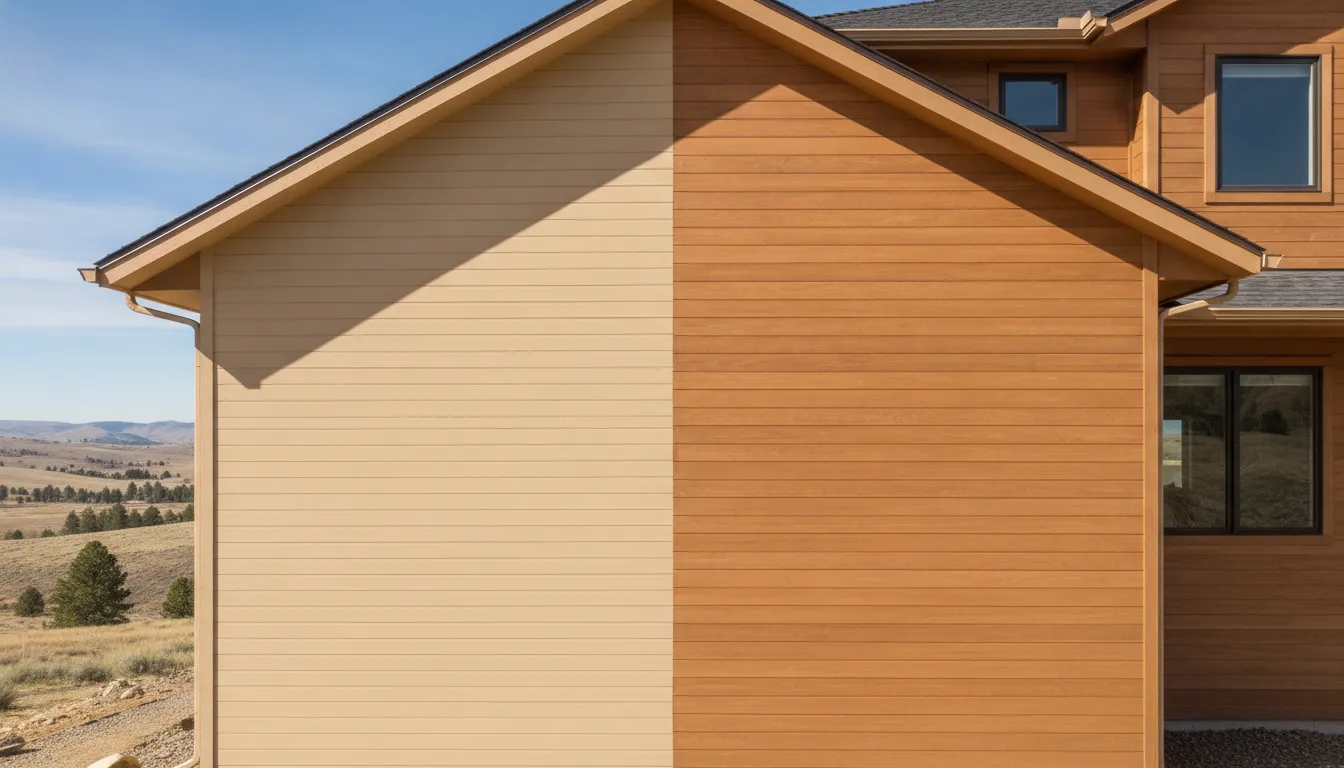
If you own a home in the Treasure Valley with cedar siding, you have already made one of the best exterior-material choices available. Cedar offers natural insulation, dimensional stability, and a warmth that vinyl or aluminum simply cannot match. But cedar is not a set-it-and-forget-it material. Left uncoated, Idaho cedar siding turns gray, checks, and eventually deteriorates under the region’s intense summer UV and freeze-thaw winter cycles.
Schedule your free exterior consultation today and let Paint Boise help you choose between paint and stain for your Boise-area home.
That brings every cedar-home owner to the same question: should you paint or stain cedar siding? The answer is not one-size-fits-all. Paint and stain serve different goals, perform differently under Idaho’s climate, and demand different maintenance commitments. This guide breaks down every factor so you can choose the right finish for your home.
Paint Vs Stain Cedar Siding: Paint vs Stain for Cedar Siding: Quick Comparison Table
Paint forms a protective film on the wood surface while stain penetrates the wood fibers. Here is how they compare across every important factor for Boise homeowners.
| Factor | Paint | Stain |
|---|---|---|
| Appearance | Opaque, hides wood grain entirely; any color available | Translucent to semi-solid, shows natural wood grain |
| Preparation required | Extensive: scraping, sanding, priming | Moderate: cleaning, light sanding |
| Application method | Primer + 2 coats of paint (sits on surface) | 1-2 coats of stain (penetrates wood fibers) |
| Typical lifespan (Idaho climate) | 5-8 years with quality prep and premium paint | 3-6 years semi-transparent; 5-7 years solid stain |
| Maintenance cycle | Scrape peeling areas, spot-prime, repaint entire surface | Clean and recoat; no scraping required |
| Weather resistance | Excellent moisture barrier; sun can cause fading and peeling | Good moisture resistance; better UV fade resistance |
| Best for aging siding | Excellent: hides old stains, repairs, and weathered areas | Fair: older siding absorbs unevenly |
| Cost (per sq ft installed) | Higher: more prep labor and premium paint materials | Lower to moderate: less prep, fewer coats |
| Can you switch later? | Stain over paint is not possible without full strip | Paint over stain is possible with proper prep |
How Paint and Stain Work on Cedar: The Fundamental Difference
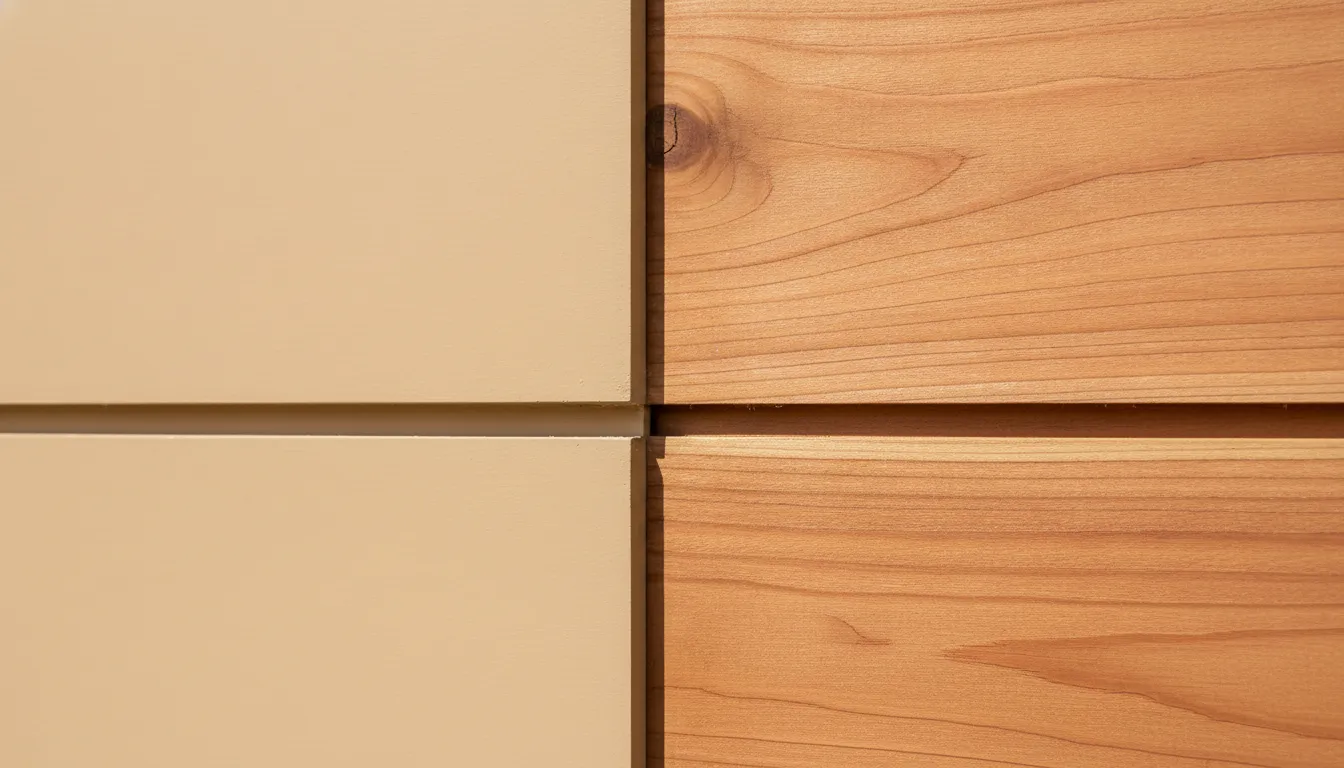
Paint forms a continuous film that sits on top of the cedar surface. Stain soaks into the wood fibers and protects from the inside out. This difference drives every other decision about your siding finish.
The most important thing to understand is how each finish bonds to wood. Paint forms a continuous film that sits on top of the cedar surface. This film blocks moisture and UV effectively. But because it does not penetrate the wood, it can peel, crack, or blister when moisture gets trapped behind it.
Stain, by contrast, penetrates into the cedar fibers. Semi-transparent stains soak deep into the wood, protecting from the inside out while allowing the natural grain to show. Solid stains offer heavier coverage that approaches paint’s opacity while still bonding chemically with the wood surface rather than simply coating it.
Why does this matter for Boise homes? Idaho’s high-desert climate delivers intense sun, low humidity, and dramatic temperature swings. A surface film (paint) expands and contracts with these swings, which accelerates peeling over time. A penetrating finish (stain) moves with the wood fibers themselves, reducing the mechanical stress that causes failure. For a deeper look at exterior coating longevity, read our exterior paint lifespan guide for Boise homeowners.
Appearance: Do You Want the Wood Grain or a Fresh Color?
This is the most personal decision in the paint versus stain debate and often the deciding factor for Idaho homeowners.
Paint gives you unlimited color options
Paint completely conceals the cedar grain, which is the right choice when you want a specific exterior color: a crisp white farmhouse. A deep navy craftsman, or an earthy green that blends with the Boise foothills. Modern exterior paints from Sherwin-Williams and Benjamin Moore (the brands Paint Boise uses for every project) offer fade-resistant formulations that hold color through Idaho’s high-UV summers. Paint is also the clear winner if your cedar siding has been through decades of weathering, has visible repairs, or shows uneven staining.
Stain lets the natural cedar show through
If you chose cedar siding because you love the look of wood, stain is your finish. Semi-transparent stain enhances cedar’s natural grain patterns and warm reddish-brown tones. As the wood ages, stain weathers gracefully rather than peeling. It simply fades evenly and can be recoated without the labor-intensive scraping that paint demands. Solid stain splits the difference: it offers a colored, nearly opaque finish while still allowing some wood texture to show through.
For a similar comparison on outdoor wood finishes, check out our fence staining guide: paint or stain your fence.
Which Finish Prepares Faster: Paint or Stain for Cedar Siding?
Stain requires less surface preparation than paint because penetrating finishes do not need primer or extensive scraping.
Surface preparation is where most DIY painting projects go wrong and where hiring a professional pays for itself.
Preparation for painting cedar siding
Paint demands thorough surface prep. Loose or failing paint must be scraped. The wood must be sanded smooth. A high-quality exterior primer is required to seal the cedar (which has natural tannins that can bleed through paint). Only then can the topcoat be applied — typically two coats of a premium 100% acrylic latex paint. Skip any of these steps, and paint failure is all but guaranteed within the first year or two. Our power washing before painting guide explains the first critical step of exterior prep.
Preparation for staining cedar siding
Stain prep is less intensive but still critical. The surface must be clean and free of dirt, mildew, and previous coatings. Light sanding or a wood cleaner opens the pores so the stain can penetrate. Old stain that has faded needs only a pressure wash and a fresh coat. No scraping required. This lighter prep is one reason stain projects often cost less per square foot than paint projects.
Maintenance: What Will Your 10-Year Commitment Look Like?
Over a decade, paint needs one full strip-and-repaint cycle while stain needs two or three simpler recoat sessions with no scraping required.
Maintenance is where paint and stain diverge dramatically.
Paint maintenance over 10 years
With professional application using premium materials, a painted cedar exterior in Idaho should look excellent for 5-8 years. Around year 6, you may begin noticing small areas of peeling or fading on south- and west-facing walls that take the most sun. Touch-up is possible but rarely blends perfectly with weathered paint. Most homeowners end up repainting the entire house. The repaint process is expensive: all peeling paint must be scraped, edges sanded, bare wood spot-primed, and two new coats applied over the whole surface.
Stain maintenance over 10 years
Semi-transparent stain on cedar typically lasts 3-6 years in Idaho’s climate. Solid stain stretches to 5-7 years. Rather than peeling, stain simply fades or wears thin. The good news: recoating is straightforward. Clean the surface, let it dry, and apply a fresh coat. No scraping, no priming, no worrying about patchy touch-ups. Over a decade, stain may require two recoats to paint’s one full strip-and-repaint. But each stain recoat is significantly faster and less expensive.
How Does Idaho’s Climate Affect Paint vs Stain Performance?
Boise’s high-desert climate favors stain for its ability to withstand UV exposure and freeze-thaw cycles without the film-peeling failure that paint experiences.
Boise’s climate is the real test. Here is how each finish performs against the specific conditions the Treasure Valley delivers.
Intense UV exposure
Boise averages over 200 sunny days per year. UV radiation breaks down paint binders over time, causing fading and chalking. Premium paints with UV-stable pigments hold up well, but no paint is immune. Stain performs better here. Penetrating stains fade more evenly, and the lack of a surface film means no peeling or blistering from UV breakdown.
Freeze-thaw cycles
Idaho winters bring temperatures well below freezing followed by daytime thaws. Moisture that seeps behind paint film freezes, expands, and pushes the paint off the wood. Classic peeling. Stain, because it is absorbed into the wood fibers, has no surface film to push off. This makes stain inherently more resistant to freeze-thaw damage. If you are already dealing with peeling on your home, our peeling exterior paint repair guide covers what to do before refinishing.
Low humidity and dry heat
Idaho’s dry summers cause wood to shrink and swell seasonally. Paint expands and contracts with the wood but at different rates. This differential movement is what causes hairline cracks and eventual peeling. Penetrating stain, bonded at the fiber level, moves with the wood and does not develop the same cracking pattern.
Which Finish Is Right for Your Siding’s Current Condition?
New siding works with either finish while previously painted cedar must stay with paint unless fully stripped to bare wood.
The condition of your existing siding is a major factor in the decision.
New or nearly new cedar siding
If your siding is freshly installed or in excellent condition, you have full flexibility. Choose stain if you want to showcase the wood grain. Choose paint if you want a specific exterior color. Either way, professional application ensures the finish bonds correctly from day one.
Previously stained cedar siding
If your siding currently has stain, you have two good options. You can re-stain with a fresh coat (the simplest path). Or, if you want a solid color. You can apply a solid stain or paint over the existing stain as long as the old stain is well-adhered and not failing. A professional painter can test adhesion and recommend the best approach.
Previously painted cedar siding
Once cedar siding has been painted, switching to stain is extremely difficult. The paint must be completely removed through sanding or chemical stripping before stain can penetrate the wood fibers. For most homeowners with painted cedar, the practical choice is to maintain it with high-quality paint and proper prep. Or to have a professional strip it down to bare wood and start fresh.
Aged or weathered cedar siding
Older siding that has grayed from sun exposure can go either way. A solid stain in a rich color can revitalize weathered cedar without the heavy prep of a full paint job. If the siding has minor damage or previous repairs, paint provides the most forgiving, uniform finish. For comprehensive advice on refreshing older exteriors, see our complete guide to painting an old house.
Cost: Which Finish Saves You More Over Time?
Paint costs more upfront but may need fewer total cycles each decade. Stain costs less per application but requires more frequent recoating.
Pricing varies by project size, accessibility, and condition of the existing siding. But here are general ranges for the Boise market:
- Paint (full prep, prime, two coats): Higher cost due to extensive labor for scraping, sanding, priming, and multiple coats. Expect premium materials (Sherwin-Williams Duration or Benjamin Moore Aura) for best results in Idaho’s climate.
- Semi-transparent stain: Lower cost. Less surface prep, fewer coats, no primer required. The trade-off is a shorter maintenance cycle and more frequent recoating.
- Solid stain: Moderate cost. Similar prep to paint in some cases but no primer required and no future scraping.
When evaluating cost, look at the 10-year total, not just the first year’s estimate. Paint’s higher upfront cost can be offset by a longer lifespan between repaints. Stain’s lower upfront cost may be balanced by needing a recoat sooner. Our deck staining guide provides cost comparisons for related wood-finishing projects.
Can You Mix Paint and Stain on the Same House?
Yes. A common strategy is staining the cedar siding for a natural look while painting the trim, fascia, and window casings for a crisp contrast.
This is a smart strategy in some situations. For example, you might stain the cedar siding to preserve the wood look while painting the trim, fascia, and window casings for a crisp, clean contrast. This is a common approach on craftsman and mid-century homes throughout the Treasure Valley. The key is proper surface preparation at every material junction and using compatible products.
Which Should You Choose: Paint or Stain for Your Cedar Siding?
Choose stain for natural wood appearance and easier maintenance. Choose paint for unlimited color options and the ability to hide weathered or repaired siding.
If you love the natural look of cedar and want the lowest-maintenance path, choose a quality stain. Semi-transparent stain is best for siding in good condition. Solid stain offers more color options while maintaining stain’s practicality. The trade-off is more frequent recoating, but each recoat is simpler and cheaper than paint.
If you want a specific exterior color, need to hide an uneven surface, or prefer painting every 6-8 years instead of staining every 4-5, choose premium paint. Professional preparation and high-quality materials are non-negotiable. Cutting corners on prep is the number one reason paint fails on cedar in the Idaho climate.
Either way, the decision starts with an honest assessment of your siding’s condition and your long-term maintenance preferences. A professional consultation can help you see how each option would look on your specific home.
Frequently Asked Questions About Paint vs Stain for Cedar Siding
Can you paint over stained cedar siding?
Yes, you can paint over stained cedar siding as long as the existing stain is well-adhered and not failing. A professional painter should test adhesion first. The surface needs thorough cleaning and light sanding to help the paint bond. A high-quality exterior primer is also recommended to block tannins and ensure even coverage.
Can you stain over painted cedar siding?
Staining over painted cedar siding is not possible without completely removing the paint first. Stain must penetrate wood fibers to bond properly, and paint forms a sealed film that blocks penetration. The paint must be stripped through sanding or chemical removal before stain can be applied. For most homeowners, this makes the switch impractical.
How long does paint last on cedar siding in Idaho?
With professional preparation and premium acrylic latex paint, a painted cedar exterior in Boise typically lasts 5-8 years before needing repainting. South- and west-facing walls tend to fade or peel first due to intense UV exposure. Using top-tier brands like Sherwin-Williams Duration or Benjamin Moore Aura extends the lifespan significantly.
How long does stain last on cedar siding in Idaho?
Semi-transparent stain lasts 3-6 years on cedar siding in Idaho’s high-desert climate. Solid stain lasts 5-7 years. Unlike paint, stain does not peel. It simply fades or wears thin over time, especially on sun-exposed walls. Recoating is straightforward with no scraping required, making each maintenance cycle faster and less expensive than repainting.
What happens if you do not seal cedar siding?
Unsealed cedar siding exposed to Idaho’s climate will turn gray from UV exposure within months. Over time it develops surface checking (small cracks), can warp from moisture absorption, and eventually deteriorates. Sealing with paint or stain protects the wood fibers, blocks moisture, and extends the siding’s service life by decades. Uncoated cedar in the Treasure Valley requires replacement much sooner.
Ready to get started? Paint Boise serves homeowners throughout the Treasure Valley. Contact us for a free estimate. We will assess your cedar siding, discuss your goals, and recommend the right finish for your home.