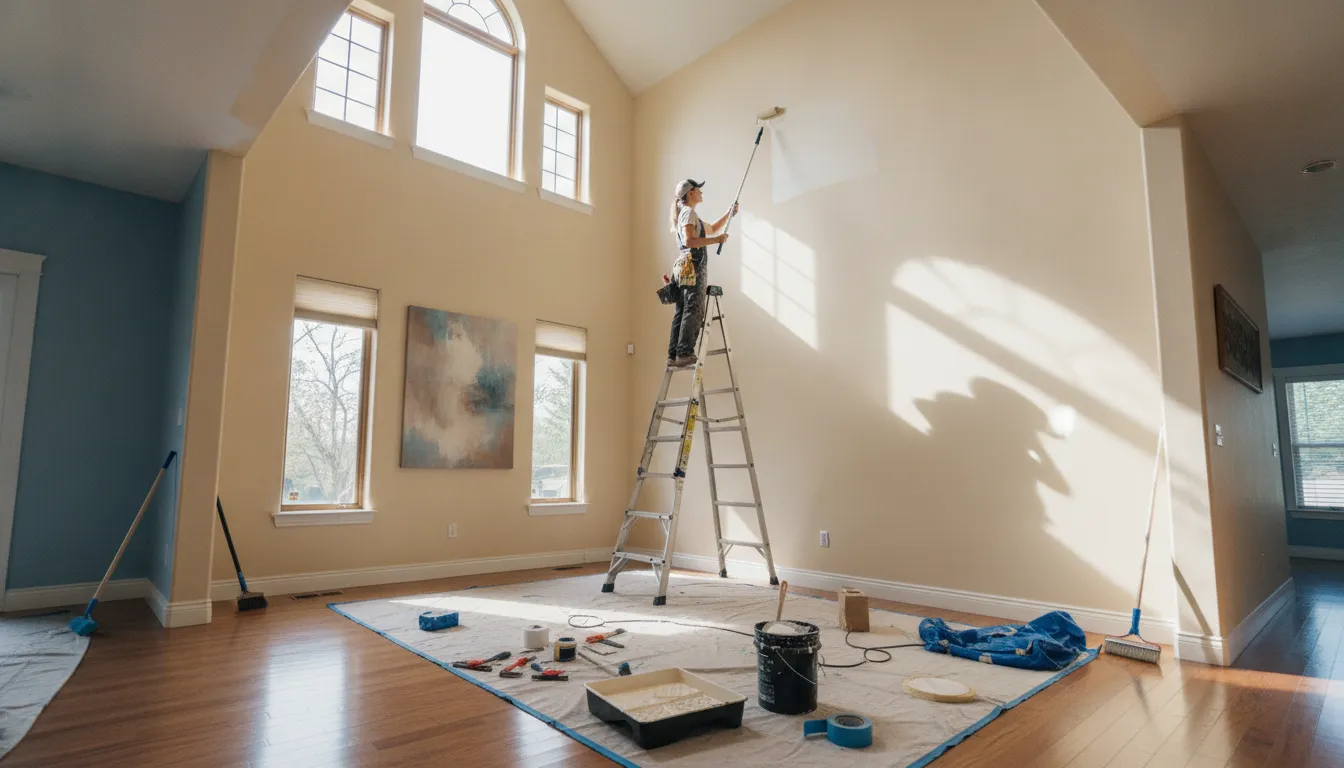
A two-story foyer can make a Boise home feel open and dramatic, but the same height that creates that impact can make a repaint surprisingly difficult. Stairwell walls, vaulted ceilings, angled landings, and nearby railings all demand more than a roller on an extension pole. The work has to look even from multiple viewpoints while protecting floors, steps, trim, and furnishings below.
Professional stairwell painting Boise homeowners can rely on combines careful surface preparation, stable access equipment, controlled paint application, and a finish selected for a high-traffic area. A qualified crew can also identify drywall damage, plan around changing natural light, and complete the work without asking you to take unnecessary risks on a ladder.
The right approach starts before the first coat. Understanding how professionals manage access, footing, ventilation, and drying conditions explains why these spaces benefit from a detailed plan rather than a rushed weekend project.
Why Stairwell Painting in Boise Requires a Professional
A two-story stairwell may look like a straightforward wall with a few extra feet of height. In practice, it combines elevated work, uneven footing, limited maneuvering space, and surfaces that are difficult to inspect from the floor. Professional interior painting services account for those conditions before a brush or roller ever touches the wall.
Height changes the safety equation
Working above a stairway is not the same as standing on a level floor. OSHA identifies working at heights and uncomfortable working positions as hazards painters regularly face. Falls from ladders, platforms, or other elevated equipment can cause severe injuries, so a safe setup requires more than a tall ladder and a willing homeowner. Painters need a clear path between levels, stable footing, and enough room to move without reaching or twisting beyond a controlled position.
Extension poles can help reach high sections from a more stable position, reducing unnecessary ladder use. When the wall angle or ceiling height demands it, multi-position ladders or adjustable scaffolding provide a properly supported work platform across the changing elevations of a staircase. The equipment must be placed and used correctly, not improvised with stacked boxes, furniture, or a ladder positioned on a step.
Uneven stairs require planning and equipment
Scaffolding in a foyer or stairwell takes time to stage, secure, and remove. That time is part of doing the job responsibly. A professional crew plans how materials will move through the space, protects railings and floors, and keeps access routes clear while work is underway. This approach also makes it easier to maintain consistent pressure and coverage, instead of rushing through hard-to-reach areas from an unstable position.
Boise’s dry air can affect the finish
Temperature and humidity influence how quickly paint dries. Boise’s dry climate can cause some coatings to set faster than expected, especially in a high, well-ventilated foyer. That may require adjustments to application speed, working sections, and recoat timing. If paint flashes off before it can level properly, visible lap marks or uneven sheen can result. An experienced painter watches the surface and environmental conditions rather than following a rigid clock.
DIY stairwell painting is risky because a mistake can involve both personal safety and an expensive finish repair. If your Boise stairwell or foyer needs a careful, properly equipped approach, request a free estimate before taking on the climb.
Preparation Is the Secret to a Flawless Finish
A stairwell can look clean from the floor and still hide the problems that cause a new paint job to fail. Before applying color, a careful painter inspects every reachable surface, plans access, and protects the parts of the home that should remain untouched.
Repair the surface before adding paint
Preparation starts with removing dust, fingerprints, cobwebs, and other buildup from the walls. Small nail holes and dents should be filled, allowed to dry, and sanded smooth. In older Boise homes, the inspection should also look for recurring drywall cracks, loose joint compound, stains, or signs of water damage. Painting over those issues can make them more noticeable and may hide a problem that needs repair first. The painter is primarily responsible for preparation, including patching drywall and protecting surfaces that are not being painted, as OSHA’s painting safety guidance explains.
Sanding is not about removing every bit of existing paint. It creates a smoother surface, softens patched edges, and helps the next coat bond consistently. Once the dust is removed, primer can be applied where the wall is patched, stained, glossy, or especially exposed to hands and shoulder traffic. A quality primer helps improve adhesion and supports a more durable finish in high-use areas.
Protect floors, railings, and the levels below
Two-story spaces require more than a narrow strip of tape along the baseboard. Stair treads, flooring, trim, railings, banisters, light fixtures, and nearby furniture should be covered or masked before work begins. Drop cloths need to be secured on each level and arranged so they do not create a tripping hazard. For this reason, masking and surface protection are fundamental parts of preparing a large stairwell, not optional cleanup steps.
Homeowners who want to organize the room before the crew arrives can review this guide to preparing your home for painting. A professional crew will then add the stairwell-specific protection plan, including safe material staging and a clear path between levels.
Use lighting to catch flaws before they become permanent
High walls can look even from one angle and show holidays, sanding marks, or missed patches from another. Work lights positioned across the wall help reveal uneven areas before primer and finish coats go on. Good lighting also makes it easier to maintain consistent coverage around railings, corners, and landings. This extra preparation takes time, but it is what gives stairwell painting Boise homeowners can be proud of a smooth, clean result.
Choosing the Right Paint and Finish for Your Stairwell
Stairwells and foyers see more contact than many homeowners realize. Hands brush against walls, shoes bring in grit, and corners collect scuffs as people move between floors. Choose a coating that can handle regular cleaning without sacrificing the look of the space.
Balance washability with the right sheen
For most stairwell walls, a quality acrylic latex paint is a practical choice. It applies smoothly, dries relatively quickly, and is available in durable interior formulations. Look for a washable finish designed for high-traffic areas, since stairwells and foyers need to withstand repeated touching and occasional spot cleaning. Eggshell and semi-gloss each have a place. Eggshell has a softer appearance and helps disguise minor wall imperfections, making it a good fit for broad foyer walls. Semi-gloss reflects more light and is generally easier to wipe clean, which can be useful on lower stairwell walls, trim, doors, and handrail areas. Because its sheen can highlight uneven drywall, use semi-gloss selectively rather than automatically covering every wall with it.
| Finish | Appearance | Best For | Washability | Imperfection Coverage |
|---|---|---|---|---|
| Eggshell | Soft, low-luster | Broad foyer walls, upper stairwell | Good | Excellent |
| Satin | Smooth, subtle sheen | Hallways, mid-level walls | Better | Good |
| Semi-Gloss | Noticeable shine | Trim, doors, handrails, lower walls | Best | Fair |
Paint Boise can also coordinate the wall finish with stair railing painting for a more consistent result.
Prioritize indoor air quality
Stairwells often connect the entry, living areas, and bedrooms, so paint odors and airborne chemicals can travel through the home. Boise homeowners increasingly prioritize low-VOC or zero-VOC products for main living spaces, and that is a sensible consideration when selecting interior paint. Ask about the product’s VOC rating, ventilation requirements, and intended use rather than assuming every water-based paint has the same profile. Premium lines from Sherwin-Williams and Benjamin Moore offer a broad range of low-VOC and washable acrylic latex options.
Use color to support natural light
Two-story foyers can feel shadowed even when they have windows, particularly where the stair angle limits direct sunlight. Light colors can help reflect available natural light and make a tall entry feel more open. Soft whites, warm off-whites, pale greige, and light neutral tones are often easier to live with than stark white, especially alongside wood floors or darker railings. Light-colored paint is a useful way to maximize natural light in a high-ceilinged foyer. Test sample patches at different levels before committing, because stairwell lighting and color perception can change throughout the day.
What Stairwell Painting in Boise Costs and How Long It Takes
There is no responsible one-size-fits-all price for a stairwell. The estimate depends on the height and square footage, the condition of the walls. The amount of patching and sanding required, and how much protection the floors, railings, and stairs need. A straightforward repaint with sound walls will cost less than a project involving repairs, multiple colors, or difficult access.
Two-story foyers and vaulted stairwells usually carry a premium over standard wall painting because crews need extension poles. Adjustable ladders, scaffolding, or professional equipment rentals for exceptionally high ceilings. Those tools allow the team to work from stable platforms and reach surfaces safely, rather than improvising from a staircase. High-ceiling work also requires additional setup, staging, and safety planning. Specialized access equipment and safety procedures are part of doing the job correctly, not optional extras.
How long does a two-story foyer project take?
Most two-story foyer and stairwell projects should be planned across multiple workdays, not treated like a quick afternoon repaint. The schedule typically includes protecting the space, setting up access equipment, completing repairs and prep, applying primer when needed, painting the finish coats, and carefully removing equipment. A coordinated professional team can work more efficiently across the levels while minimizing disruption in the home.
Boise’s dry climate can shorten or change the time needed between coats, but temperature, humidity, ventilation, and the specific product still matter. Paint that appears dry on the surface may need more time before the next coat or before heavy use. A careful crew adjusts application and drying time to the conditions instead of rushing the finish.
A straightforward estimate and payment process
Paint Boise provides free estimates so you can understand the scope before work begins. The company requires no deposit, follows a pay-when-satisfied approach, and backs its work with a 5-year warranty. To discuss your space and get a free estimate, contact Paint Boise at (208) 254-6615. An on-site review is the best way to account for access, prep, equipment, and the finish you want.
Design Tips for Two-Story Foyers and Stairwells
A two-story foyer should feel connected from the entry to the upper landing, not like two unrelated rooms stacked together. Start by viewing the stairwell from several positions. The color should work from the front door, along the stairs, and from the second-floor hallway.
Create color flow between floors
For a calm, cohesive look, carry one main wall color through both levels and use trim, doors, or a nearby hallway for contrast. In an open stairwell, avoid abrupt color changes at the landing unless the architecture gives you a natural stopping point. Light colors can help maximize natural light and make a tall foyer feel more open and welcoming. Warm whites, soft greiges, and muted beige tones can complement Boise homes with warm wood floors. While restrained blue-gray or green-gray tones can balance cooler flooring and abundant daylight.
Use accents to emphasize architecture
An accent wall can draw attention to a vaulted ceiling, dramatic railing, or the longest uninterrupted wall. A two-tone approach also works well: keep the main walls lighter and use a deeper version of the same color on the stair wall or upper architectural feature. This adds visual depth without making the foyer feel smaller. Accent walls are particularly effective in high-vaulted areas because they emphasize the room’s shape rather than competing with it.
Test color in changing stairwell light
Stairwell lighting can shift dramatically from morning sun to afternoon shade and evening fixtures. A color that looks soft near the entry may appear noticeably cooler or darker halfway up the stairs. Paint large test patches on more than one wall, including the wall that receives the least natural light. Leave them in place for a full day, then compare them with flooring, railings, and adjacent rooms before choosing warm or cool tones. Test patches are recommended because multi-story lighting can change how colors appear at different levels.
Frequently Asked Questions
How much does it cost to paint a two-story stairwell or foyer?
There is no reliable flat price because access height, wall condition, ceiling details, number of coats, and the amount of masking all affect the work. Tall foyers typically cost more than standard rooms because they may require specialized access equipment, added setup, and additional safety planning. A professional estimate should account for preparation, materials, equipment, labor, and cleanup rather than pricing the wall area alone.
How long does stairwell painting usually take?
Many projects can be completed in a planned visit or a short series of visits. But the schedule depends on the size of the space, repairs, drying time, and whether scaffolding or equipment rental is needed. Boise’s dry climate can change how quickly paint dries, so an experienced crew adjusts application and recoat timing to protect the finish. Ask for a written schedule that includes setup and cleanup, not just brush and roller time.
What type of paint is best for a stairwell?
A durable, washable interior finish is usually the practical choice for walls that see hand contact, scuffs, and regular traffic. Eggshell offers a softer look and can help disguise minor surface irregularities, while semi-gloss is easier to wash but reflects more light. Low-VOC or zero-VOC products are also worth considering in an occupied home, especially around the main entry and living areas. Test a few colors in the actual stairwell because the light changes throughout the day.
Can I paint a two-story stairwell myself?
You can handle some reachable areas yourself, but high walls over stairs create fall, access, and protection challenges that are easy to underestimate. Professional crews may use extension poles, multi-position ladders, or adjustable scaffolding to create a stable working platform. OSHA identifies working at heights and uncomfortable work positions as painting hazards. So DIY is not a good fit if you lack the right equipment, training, or a safe way to move between levels: OSHA painting safety guidance.
How should I prepare my home before the painters arrive?
Remove fragile decor, wall art, and loose items from the foyer and stair landing, then clear a safe path through each level. Leave fixed railings, trim, and flooring in place so the crew can protect and mask them properly. Point out drywall cracks, stains, or possible water damage before work begins. The painter can then plan repairs, cleaning, sanding, and primer before applying the finish coats.
Ready to Schedule Your Stairwell Painting Estimate?
A professional walkthrough can clarify the preparation, access, and finish details your stairwell needs before work begins. To schedule your free estimate, contact Paint Boise today. The team can review your Boise or Treasure Valley project and help you plan a clean, durable update for the space. Call (208) 254-6615.