
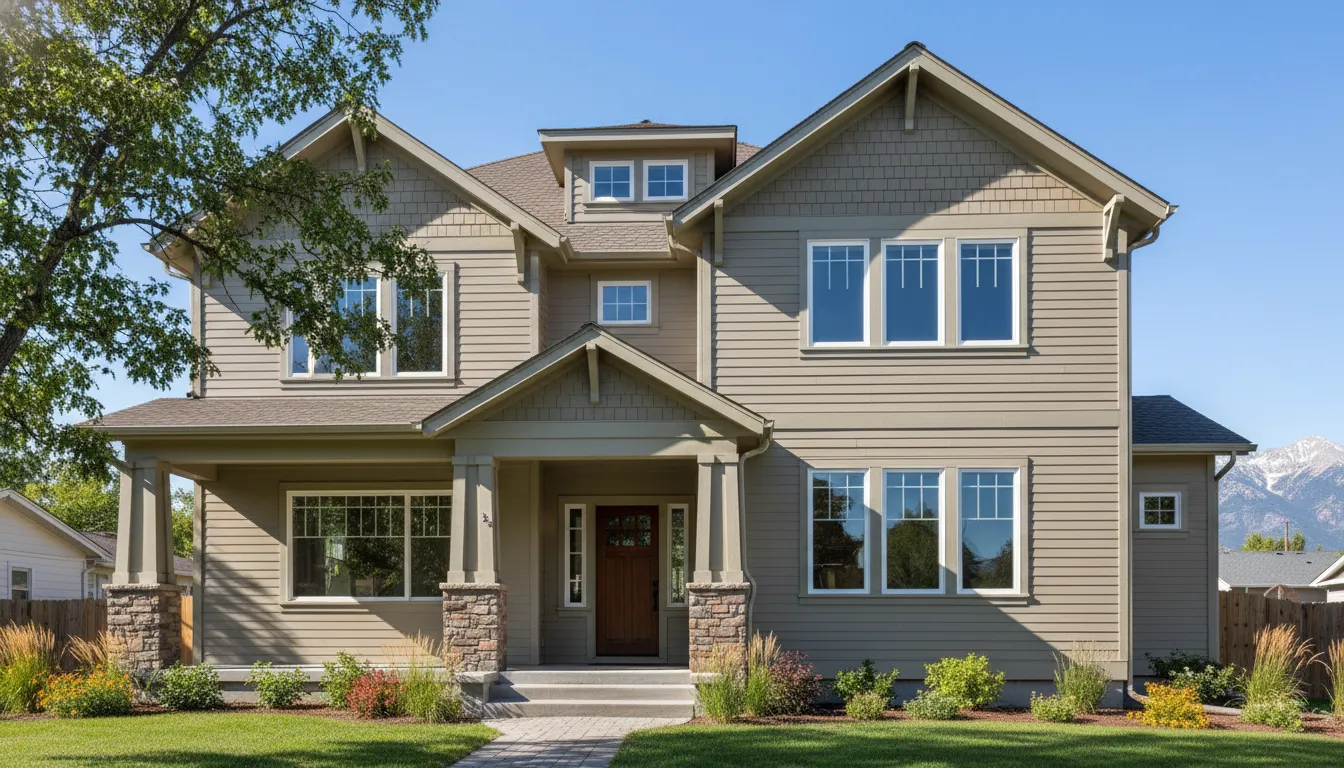
A color that looks calm on a sample can glare under Boise’s afternoon sun. The right palette must also survive temperature swings and clear HOA review before the first gallon is opened.
Request a free exterior painting estimate from Paint Boise
Exterior paint colors Boise homeowners choose should balance high-desert sunlight, the home’s fixed features, neighborhood character, and any HOA-approved palette. Start with warm whites, greiges, muted sage greens, or other restrained tones, then compare large samples beside the roof, stone, and landscaping. Check each sample in morning light, full afternoon sun, and shade because the same color can shift noticeably as light changes. Favor premium weather-resistant paint, especially on exposed walls, and use trim or doors for stronger accents that may be easier to approve. Confirm HOA approval before buying paint, and inspect the siding first; an EPA report says peeling accounts for about half of residential paint problems.
You need a palette that looks right on your specific home, clears neighborhood rules, and resists Boise weather without early fading or failure. Before comparing popular shades or planning accent colors, focus on the local conditions that shape every option. The path begins with How Boise’s climate changes exterior color choices.
How does Boise’s climate change exterior color choices?
Boise’s intense sunlight, dry summers, freezing nights, and fast temperature swings affect both color appearance and coating performance. Test colors outdoors on every elevation, then choose a compatible, weather-resistant paint system that protects the underlying surface.
Sunlight and shifting color
Boise’s bright sun can make an exterior color look lighter and less rich than it did on a small indoor chip. Shade can pull out cool blue or gray notes, while direct afternoon light can bring warm notes forward. Judge each color outside, not under store lights.
The Treasure Valley landscape also shapes how a color reads. Warm earth tones can echo dry foothills and stone, while muted greens can connect a home with mature trees. For more ideas, compare these effects while Boise exterior color planning.
Weather and lasting appearance
Summer sun, cold nights, snow, and quick temperature swings all put stress on an exterior coating. Dark colors can also make sun-facing walls feel hotter, so they deserve extra care on large areas. A weather-resistant, breathable paint system helps the finish handle Idaho conditions.
Color cannot make up for poor prep or the wrong coating. Peeling, cracked, or damp areas need attention before a fresh coat goes on. Paint Boise’s professional exterior painting in Boise process pairs color choices with the surface and exposure of each wall.
Older homes call for another check before sanding or scraping begins. The EPA Renovation, Repair and Painting program requires lead-safe practices for paid work that disturbs painted surfaces in pre-1978 homes.
A useful outdoor sampling process
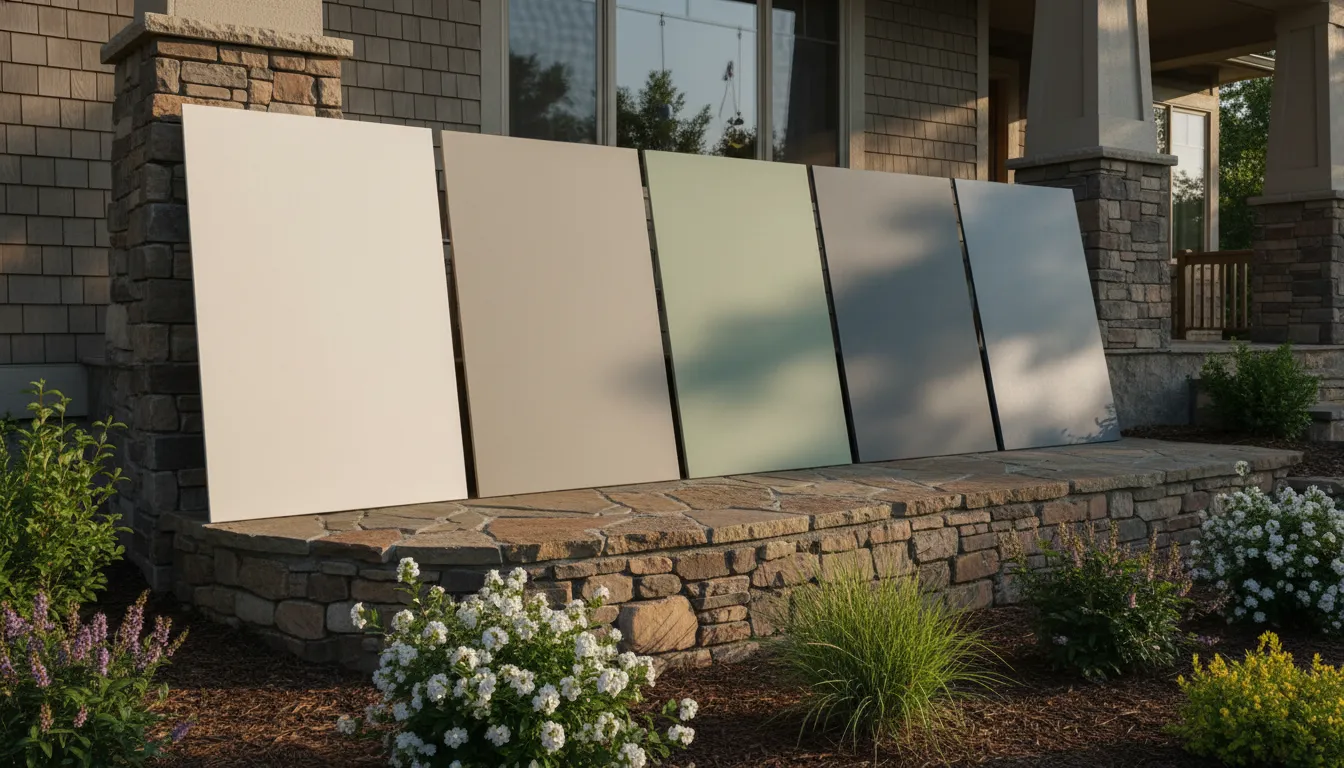
Start with several large sample boards instead of painting small patches beside each other. Move the boards around the house so nearby colors do not affect your choice. Check the front, a sunny side, and a shaded wall.
- View each sample in morning, midday, and late afternoon light.
- Hold it beside the roof, stone, brick, trim, and other fixed finishes.
- Look from the street and from the main approach to the house.
- Leave samples outside through a few changes in weather.
- Compare a lighter and darker version of the leading color.
Then narrow the group to one body color and two trim or accent options. A small test area can confirm the final pairing on the actual siding. This process makes exterior paint colors in Boise easier to judge before work begins.
Exterior paint colors Boise homeowners can rely on
A reliable exterior palette fits the home’s architecture, fixed materials, and nearby landscape. It should also look balanced in bright sun and shade. For Boise homes, start with a small group of flexible colors rather than one trendy shade.
Use the table below to compare six practical color families. Each offers a different balance of warmth, contrast, and visual weight. Homeowners who want a broader planning process can review this guide to selecting a home exterior palette.
Practical palette comparison
| Color family | Best uses | Trim pairing | Main caution |
|---|---|---|---|
| Warm white | Farmhouse, cottage, or shaded facade | Soft white, tan, or muted charcoal | Test for yellow or glare in full sun |
| Greige | Most siding styles and mixed stone | Cream, warm white, or dark bronze | Avoid undertones that clash with masonry |
| Sage green | Craftsman homes and wooded lots | Cream, taupe, or stained wood | Some shades turn gray in deep shade |
| Blue-gray | Traditional homes and crisp facades | White, light gray, or navy | Cool tones can feel flat on shaded walls |
| Charcoal | Modern homes, gables, and accents | Warm white or natural wood | Large dark areas can overpower small homes |
| Earthy brown | Ranch homes, brick, and natural settings | Sand, cream, or muted green | Very red browns may fight nearby brick |
Warm whites and greiges are dependable when a home has several fixed colors. They can connect roofing, stone, brick, and concrete without making the facade look busy. If pure white feels too sharp, an off-white or pale greige often creates a softer result.
Sage green and earthy brown tie a home to natural materials. These colors work well with wood doors, stone bases, and warm roof shingles. Browse more neutral exterior paint colors before narrowing the undertone.
Where stronger colors work best
Blue-gray brings a clean, calm look to traditional siding. Charcoal creates stronger contrast and can frame an entry, gable, or set of shutters. Using either shade as an accent lets homeowners add depth without placing a dark color across every wall.
Trim does more than outline a house. Low contrast makes a facade feel broad and calm, while high contrast draws attention to windows and rooflines. Keep the garage door close to the body color if it already takes up much of the front view.
Checks before choosing a color
Always compare samples beside the roof, masonry, and other parts that will not change. View each sample in morning light, afternoon light, and shade. A color that works on one side of the house may shift on another.
For homes built before 1978, color planning may also involve lead-safe preparation. The EPA requires certified contractors and trained workers when paid work disturbs painted surfaces in these homes. Confirm HOA rules as well, since some neighborhoods limit body, trim, and accent choices.
After those checks, choose one body color, one trim color, and one restrained accent. This simple structure gives the exterior a clear hierarchy. It also makes later touch-ups easier because fewer colors need to be matched.
How do you build a balanced three-color exterior palette?
Assign one color to each visual role: a main body color for the largest surfaces, a trim color for clean definition, and a restrained accent for the front door or another focal point. Connect all three to the home’s fixed materials and undertones.
A balanced exterior usually starts with three roles: a main body color, a trim color, and an accent color. The body covers the largest area, while trim gives windows, corners, and rooflines a clean edge. The accent adds focus to the front door, shutters, or another small feature.
Start with fixed materials
Choose paint beside the colors that will stay. Roof shingles, brick, stone, concrete, and stained wood all count as fixed materials. Look for a shared warm, cool, or neutral undertone. Then pick a body color that works with it instead of trying to hide it.
For example, warm brown stone can pair with soft cream siding, muted taupe trim, and a deep green door. Gray roofing may suit dusty blue siding, crisp off-white trim, and a charcoal door. If brick has several tones, use its quietest neutral as the bridge between painted areas.
When exterior color selection guide, compare samples beside every fixed finish. Check them from the curb and near the entry. A color can seem balanced on one wall yet clash with stone around the front steps.
Give each color a clear job
Keep the main body color calm enough to cover a broad surface. Use trim to outline the home’s shape, but avoid harsh contrast on a facade with many small details. Save the strongest color for one or two features so the entry remains easy to find.
- Warm and classic: creamy beige body, soft white trim, and a brick-red front door.
- Cool and quiet: blue-gray body, pale gray trim, and a navy front door.
- Earth inspired: muted sage body, warm ivory trim, and a dark brown front door.
- Modern neutral: light greige body, charcoal trim, and a muted clay front door.
These examples are starting points, not fixed rules. A roof with strong red or green tones may call for a quieter door. Detailed brick may also need low-contrast trim. Browse neutral exterior paint colors when fixed materials already bring plenty of color.
Test the full palette together
Place body, trim, and accent samples next to each other on more than one side of the house. Review them at different times of day and from common street views. Also check the palette against nearby homes and any HOA color rules before making a final choice.
Older homes need one more check before sampling or prep begins. The EPA says many homes built before 1978 still contain lead-based paint. Its Renovation, Repair and Painting guidance explains the lead-safe rules for paid work that disturbs painted surfaces.
Once the three colors work together, decide where each one stops and starts. Clear placement keeps the palette balanced across siding, trim, doors, and attached details. It also gives the painting crew a clear plan before work begins.
How do you choose HOA-friendly exterior colors?
Start with your association’s written requirements, not a paint fan deck. The goal is to find exterior paint colors Boise homeowners like while keeping the review process clear. Rules and forms vary, so confirm the current process with your HOA before buying paint or booking work.
A clear approval path
Use this sequence to reduce delays and give the review group enough detail to assess your plan.
- Review the governing documents. Read the covenants, design standards, approved palette, and application form. Note any limits on body, trim, accent, and door colors.
- Record the fixed colors. Photograph the roof, stone, brick, paving, and other finishes that will stay. These elements help narrow the palette and explain why it suits the home.
- Build a short list. Compare a few coordinated body, trim, and accent sets. Check each set against the home’s style, setting, and fixed finishes.
- Create sample boards. Label each board with the brand, color name, color code, sheen, and planned surface. View the samples beside the fixed finishes in morning and afternoon light.
- Prepare the submission. Include the completed form, labeled color sets, home photos, and a simple note showing where each color will go. Add any other item the HOA requests.
- Wait for written approval. Do not rely on a casual conversation or assume a prior approval covers your home. Keep the final written decision with your project records.
- Schedule the work. Share the approved palette and any work-hour or access terms with your painter. Confirm that the estimate matches the approved colors before setting a start date.
What belongs in the color plan?
A strong plan connects every color to a specific surface. It also shows how the palette works with nearby fixed materials. If the HOA asks for changes, revise the full set rather than swapping one shade without checking the others.
Large samples are easier to judge than small chips. A guide to choosing exterior paint colors in Boise can help you compare the home’s style, setting, and fixed features. A free color consultation can then help turn an approved range into a balanced scheme.
Approval before scheduling
Written approval should come before paint is ordered or labor is booked. This order leaves time for questions and keeps the approved names, codes, sheens, and placements tied to the final estimate. An surface preparation and exterior painting team can use those details to prepare a clear scope.
Older homes may also need a separate safety review before prep begins. The EPA Renovation, Repair and Painting Rule requires certified contractors for paid work that disturbs paint in pre-1978 homes. Ask about that requirement while planning, not after the schedule is set.
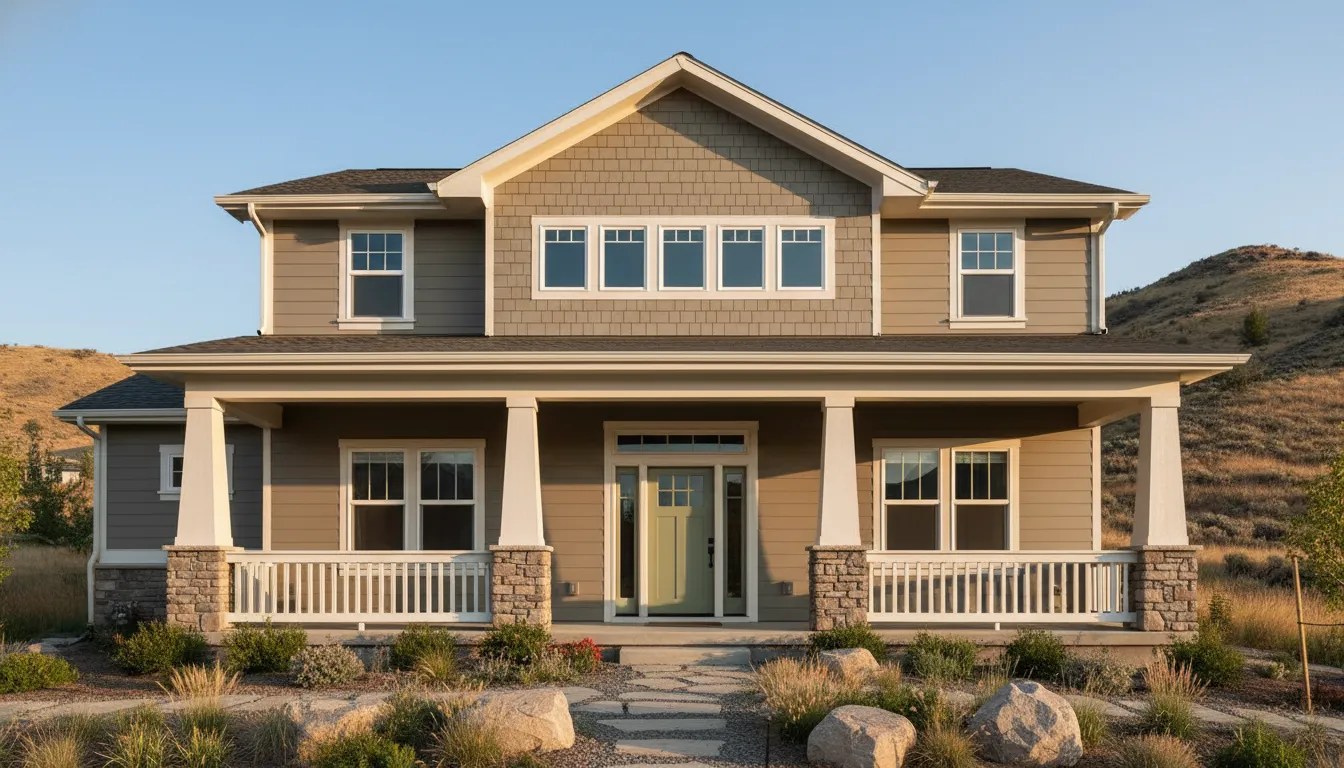
Get a professional color consultation and exterior painting estimate
How should you test colors before painting the whole house?
Use large, movable sample boards and review each finalist on sunny and shaded elevations over several days. Compare the samples beside the roof, masonry, trim, and landscaping before selecting a final body, trim, and accent combination.
A paint chip cannot show how a color will look across an entire exterior. Test large samples before settling on exterior paint colors in Boise. This step reveals shifts in light, undertones, and sheen while changes are still easy to make.
Large samples on every elevation
Paint each choice on a large, clean sample board instead of making a small patch on the siding. Move the boards around the house, or paint separate samples on several elevations. A shade that feels balanced on the north side may look washed out on the south side.
Place two or three finalists beside each other, but leave enough space between them. Nearby colors can change how the eye reads each sample. For more guidance on narrowing the options, review our guide to choosing exterior paint colors in Boise.
Color through changing light
Check each sample in the morning, at midday, and in the evening. Look again on a cloudy day if possible. Direct sun can make a color appear brighter. Shade may bring out cool blue, green, or gray notes.
- Morning: Check how the color reads in softer, angled light.
- Midday: Look for glare, excess brightness, or a flat appearance.
- Evening: Watch for warm shifts as the sun gets lower.
- Cloud cover: Note whether the shade becomes dull, cool, or too dark.
Take photos for comparison, but make the final choice with your eyes. Phone screens can alter color and brightness. The EPA identifies color change as an important form of exterior paint deterioration, so ask how each option may age.
Undertones, sheen, and fixed materials
Undertones are the less obvious colors beneath the main shade. A beige may lean pink, yellow, or gray once it sits beside brick or stone. Compare every sample against roofing, trim, concrete, windows, and other fixed materials. These parts will remain after painting.
Test the planned finish as well as the planned color. A higher sheen reflects more light and may make a shade look brighter. It can also draw attention to surface flaws. A flatter finish softens glare, but the sample must still match the product planned for the project.
Stand back from the curb after each check. View the sample from the same distance neighbors and visitors will see it. If two shades remain close, a color consultation during expert exterior painting can help compare them against the full exterior.
What makes an exterior color last in Boise weather?
Long-lasting exterior color starts with sound siding, thorough preparation, compatible primer and paint, and careful application in suitable weather. Surface condition matters more than the shade itself, although strong sun can make fading more noticeable on some colors.
The lifespan of exterior paint colors in Boise depends more on the work beneath the finish than on the shade itself. Even a durable color can fail early when paint covers dirt, loose material, damp wood, or failing caulk. Careful preparation gives the new coating a sound surface to grip.
Preparation before the first coat
Preparation starts with a close look at the siding, trim, joints, and other exposed areas. Peeling paint needs removal, and bare spots may need sanding and primer. Gaps should be sealed, while damaged or wet materials should be fixed before painting begins.
Peeling accounts for about half of residential paint problems in consumer surveys cited by the U.S. Environmental Protection Agency. The same source notes that color change, chalking, and erosion are other common forms of paint wear. A fresh color cannot hide the causes of those problems for long.
Coatings that suit the surface and weather
The coating system must fit both the material and the paint already on the home. Wood, stucco, fiber cement, and metal do not always need the same primer or finish. A compatible system helps each coat bond and move with the surface as conditions change.
Premium weather-resistant paint can help protect a Boise home from cracking, fading, and water damage. Timing also affects the finish. Local exterior work is usually scheduled from spring through fall, with daytime temperatures above 40 degrees and overnight temperatures above freezing.
Application quality is just as important. Thin or uneven coats leave weak spots, while rushed recoating can keep the finish from curing as intended. Paint Boise’s expert exterior painting service pairs surface preparation with coatings selected for local conditions.
When a consultation prevents costly mistakes
A professional consultation is useful when the existing finish is peeling, the siding type is unclear, or several repairs may be needed. It also helps when a dark color, bold change, or HOA rule adds risk. The consultation can connect the color choice to the right primer, finish, and repair plan.
An estimate should spell out preparation, repairs, coating products, coat count, and the areas included. Those details make bids easier to compare and reduce the chance of surprise costs later. They also show whether the plan treats the cause of wear instead of covering it.
For a whole-home project, professional house painting services in Boise can help coordinate color, surface needs, and application. Paint Boise also offers free estimates and color consultation, so homeowners can review durability and appearance before work starts.
Frequently Asked Questions
These quick answers cover the questions Boise homeowners most often ask about popular exterior colors, HOA approval, sunlight, dark shades, and coating durability. Always verify neighborhood rules and product suitability for your specific home before committing.
What are the most popular exterior paint colors in Boise?
Popular exterior paint colors in Boise include warm whites, greige, sage green, and charcoal. These shades suit many Treasure Valley landscapes and home styles. Popularity should not be the only deciding factor, however. Compare each color with the roof, masonry, landscaping, neighboring homes, and any HOA-approved palette before making a final choice.
Does my HOA need to approve my exterior paint color?
Many Boise-area HOAs require written approval before a homeowner changes exterior colors, including trim and accent shades. Check the association’s current design rules and approved palette before buying paint. Submit the exact manufacturer, color name, and color code requested by the HOA. Keep the approval notice with your project records in case questions arise later.
Do dark exterior paint colors hold up well in Boise’s climate?
Dark exterior colors can work in Boise, but they absorb more heat and may show fading sooner on sunny walls. The result depends on the siding material, sun exposure, paint formula, and surface preparation. Ask the paint manufacturer whether a dark shade is suitable for your siding, then test it on the home’s hottest, brightest side.
How does Boise’s sunlight impact the appearance of exterior paint colors?
Boise’s bright high-desert sunlight can make exterior colors look lighter and less saturated at midday. The same shade may appear warmer in morning light and cooler in evening shade. Paint large samples on several sides of the house. Review them over multiple days, including sunny and cloudy periods, before approving the final palette.
How long does professional exterior painting typically last in Boise?
Exterior paint life in Boise varies with surface preparation, siding condition, product quality, sun exposure, and weather. Color choice also matters because fading is easier to notice on some shades. An EPA report identifies peeling as about half of residential paint problems. Regular inspections and prompt repairs help prevent small coating failures from spreading.
Ready to choose a durable, HOA-friendly color?
Paint Boise’s exterior color consultation can help homeowners compare color choices, confirm project needs, and build a practical exterior painting plan.
Waiting to settle on an exterior color can leave worn paint exposed longer and push your project into a less convenient season. Starting now gives you time to review HOA rules, compare samples in Boise’s changing light, and plan the work before your preferred painting window. A clear plan helps you choose a lasting color scheme that fits your home, meets neighborhood standards, and avoids rushed decisions later.
Paint Boise can help you compare practical color options and prepare a clear plan for your exterior project and painting season. Ready to move forward with confidence? Request an exterior painting estimate to discuss your home, HOA requirements, color goals, color consultation, and preferred project timing.