
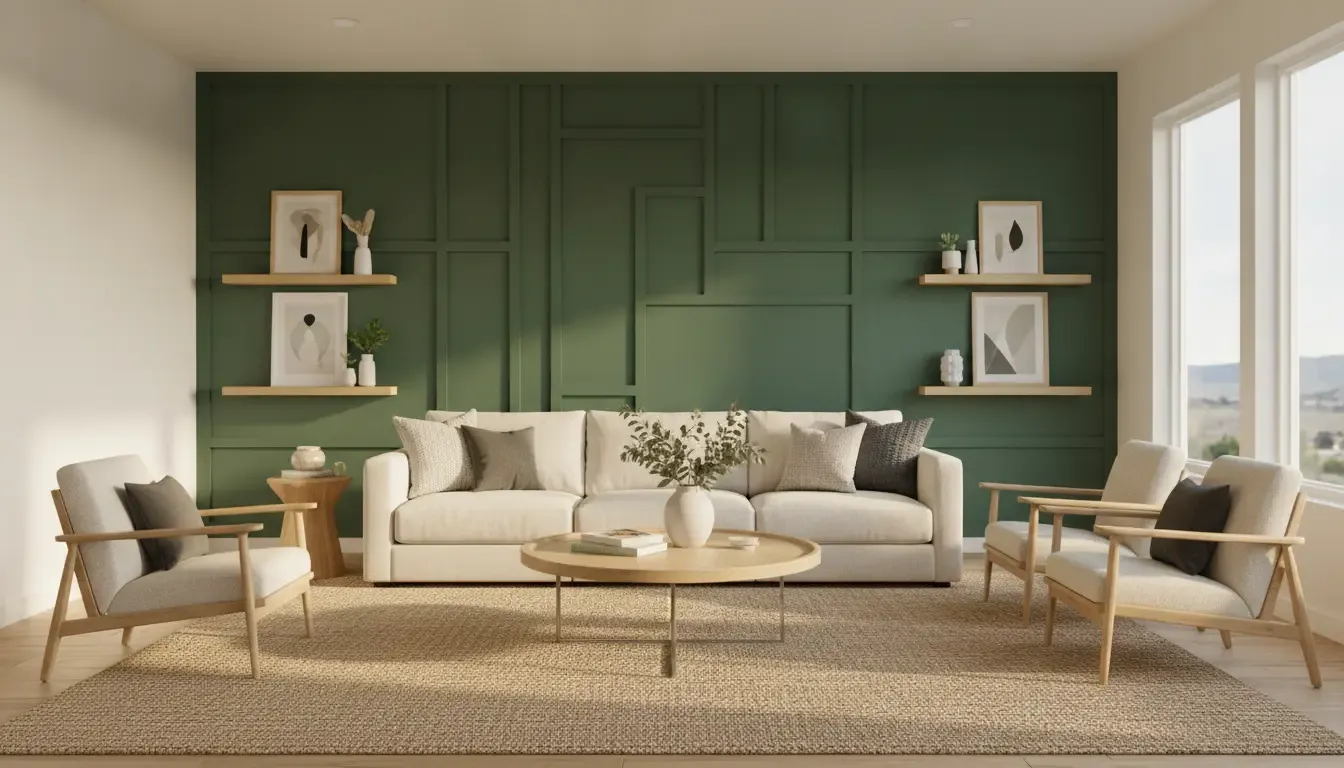
A well-chosen accent wall can make a Boise living room feel more grounded. Give a bedroom a clearer focal point, or add personality to a dining area without repainting every surface. The best accent wall ideas begin with the room’s architecture, natural light, and the feeling you want to create, then pair those choices with careful preparation and clean paint lines.
Talk with Paint Boise about an interior painting estimate for your Boise or Treasure Valley home.
Accent Wall Ideas: What is an accent wall, and why does it work?
An accent wall is one wall, or a clearly defined architectural section, finished differently from the surrounding walls. It may use a deeper paint color, a lighter contrast, a geometric pattern, or added texture. Its job is to direct attention, not to compete with every other surface in the room.
Paint Boise approaches accent walls as part of the overall interior, rather than as a color sample enlarged to wall size. A successful feature wall gives the room a visual anchor while keeping trim, furnishings, lighting, and nearby walls in balance.
- Depth: A darker or richer color can make a long room feel more intentional.
- Focus: It highlights a fireplace, headboard wall, built-in shelving, or dining area.
- Definition: It can separate an open-plan space without adding a physical divider.
- Flexibility: One painted wall is often an approachable way to try a bolder direction.
The key is restraint. If a room already has a dramatic fireplace surround, busy wallpaper, or several competing furniture colors, a quieter accent may work better than another strong statement. An accent wall that competes with the room’s existing focal points ends up making the space feel disjointed rather than intentional. This is why Paint Boise recommends stepping back and evaluating the whole room before deciding which wall to highlight.
How do you choose the right wall for an accent?
The right accent wall is usually the wall your eye naturally lands on when you enter the room. In Boise homes, that may be the wall behind a bed, the fireplace wall in a living room, or the back wall of a dining nook. Choose a surface with a reason to stand out, not simply the first blank wall you see.
Before settling on placement, stand at each doorway and ask where attention goes first. Look for existing features such as windows, built-ins, a mantel, a headboard, or a change in ceiling line. The wall behind these elements often gives a painted feature wall a finished, purposeful appearance.
| Room | Strong accent-wall location | What to consider |
|---|---|---|
| Living room | Fireplace or sofa wall | Balance the wall with window light and large furniture. |
| Bedroom | Wall behind the headboard | Use a restful color that works with bedding and lamps. |
| Dining room | Wall facing the entry or table | Consider how the color reads under evening lighting. |
| Home office | Wall behind a desk or video-call background | Keep contrast intentional, not distracting. |
| Entry or hallway | End wall or recessed niche | Use the feature to give a narrow space direction. |
A wall with multiple doors, large windows, or awkward cutouts can still be painted, but it may not deliver the clean visual effect you expect. In those cases, an architectural niche or a single well-proportioned section can be a better canvas. You can also consider an alcove, a recessed bookshelf, or the area between two windows as a feature worth highlighting.
Another useful trick: paint the wall behind the primary seating area in a living room or behind the headboard in a master bedroom. These are the walls occupants face most often, so the color choice has the greatest visual return. If the room has an open floor plan, the accent wall can help define one zone without building a wall.
Accent wall color ideas for Boise homes
Accent wall color should relate to the fixed elements you are keeping, including flooring, stone, cabinets, tile, and upholstery. Start with the undertones already present in the room. Warm wood floors often pair well with softened greens, clay tones, or warm navy, while cooler gray materials may support blue-green, charcoal, or muted blue choices.
In bright Treasure Valley rooms, a deeper color can feel confident without making the room feel closed in. In rooms with limited daylight, a mid-tone or softly saturated color may be easier to live with than a near-black wall. Paint Boise recommends viewing samples on the actual wall at different times of day before committing.
Five reliable color directions
- Deep green: A natural choice for living rooms, offices, and spaces with warm wood details.
- Muted blue: Useful behind a bed or in a study when you want a calm, tailored look.
- Earthy terracotta or clay: Adds warmth to rooms with cream, beige, tan, or natural-fiber furnishings.
- Charcoal: Can sharpen a fireplace wall or dining space when balanced with light trim and adequate lighting.
- Soft tonal contrast: Choose a color only a few steps deeper than surrounding walls for a subtle feature.
Finish matters as much as color. A flatter sheen can disguise minor surface variation, while a more washable finish may make sense in a high-traffic family room or hallway. For a room-by-room comparison, see our guide to choosing the best paint sheen for every room.
When testing colors for your accent wall, paint a two-foot square swatch at eye level on the actual wall and live with it for a couple of days. The color will read differently in the morning sun, under afternoon shade, and next to your furniture. This simple step prevents the disappointment of seeing the finished wall in a light you did not anticipate.
Need help narrowing your options? Explore Paint Boise interior painting services and request a color-and-project consultation.
Which painted accent wall techniques fit your space?
Paint is often the cleanest route to a high-impact accent wall because it can be adapted to the room’s scale. The right technique depends on whether you want a subtle backdrop, graphic movement, or a feature with physical dimension. Professional preparation and layout are especially important once a design includes crisp lines or trim details.
Solid-color statement wall
A single color on one wall is the most flexible option. It works well behind a bed, sofa, or dining table and is easy to coordinate with a future furniture update. The result depends on even coverage, a sharp cut-in line, and proper sheen selection.
Vertical or horizontal stripes
Stripes can change how a room feels. Vertical stripes visually emphasize height, while horizontal stripes can make a wall feel wider. Keep stripe widths consistent and choose colors with enough contrast to read clearly, but not so much that the wall overwhelms the room. Good painter’s tape, measured layout lines, and sealing the tape edge with the base color help reduce paint bleed.
Geometric color blocking
Arches, angled blocks, half walls, and simple grid patterns add personality without requiring a mural. These designs look best when their proportions connect to something already in the room, such as the top of a headboard, the height of wainscoting, or a doorway. Sketch the design and measure from more than one reference point before paint goes on the wall.
Board-and-batten or picture-frame detail
Applied trim painted in the same color as the wall creates a tone-on-tone accent with shadow and dimension. This approach can suit a formal dining room, entry, or bedroom. It is less about a loud color and more about creating texture that changes as daylight moves across the wall.
Textured finish
Texture should be selected carefully. Limewash-style movement, a subtle plaster effect, or a specialty finish can add depth, but each has its own surface-prep and maintenance considerations. If a wall has cracks, patches, or uneven repairs, address them first rather than expecting texture to conceal every flaw.
What preparation makes an accent wall look professional?
Great accent wall painting starts before the color is opened. Clean surfaces, sound repairs, protected floors, and deliberate masking make the difference between a feature wall that looks crisp and one that looks improvised. Paint Boise uses a preparation-first approach for interior projects because finish quality depends on what is underneath.
Use this quick checklist before painting:
- Remove or protect outlet covers, furniture, flooring, and nearby decor.
- Clean dust and residue from the wall, especially near switches and baseboards.
- Fill nail holes, repair damaged drywall, and sand patched areas smooth.
- Prime repaired spots or significant color changes as needed for an even finish.
- Measure and mark stripes, blocks, or trim layout before applying tape.
- Use quality tools and maintain a wet edge to avoid visible lap marks.
For a more detailed room-prep walkthrough, read how to prepare a room for painting like a pro. If you are planning more than one room, our start-to-finish interior repaint guide can help organize the larger project.
When should you hire a professional for an accent wall?
A straightforward solid-color wall can be a manageable DIY project for a prepared homeowner. Professional help is often worthwhile when the wall needs drywall repair, the design requires precise geometry. Trim must be installed, ceilings are high, or the accent is part of a larger interior repaint. Those details are where planning and execution show the difference between a DIY weekend project and a finish that complements the rest of the home for years.
Paint Boise serves homeowners throughout Boise and the Treasure Valley with interior painting that prioritizes clean preparation. Reliable communication, and a finished result that works with the rest of the home. If your accent wall is the first step in a larger refresh, professional coordination can keep color, sheen, trim, and adjacent rooms consistent across the entire project. Even a single accent wall benefits from the same surface preparation and precise cut-in work that professional painters bring to every job.
Get a free quote from Paint Boise for an accent wall or complete interior painting project.
FAQ: Accent Wall Ideas for Boise Homes
Are accent walls still in style?
Yes. Accent walls remain useful when they have a clear purpose, such as emphasizing a fireplace, bed wall, built-in, or dining area. Current approaches often favor richer colors, subtle tonal contrast, texture, or tailored geometric details over a random wall painted a completely unrelated color.
Should an accent wall be lighter or darker?
Either can work. A darker wall usually creates depth and a focal point, while a lighter wall can brighten a space or create gentle contrast. Choose based on the room’s light, furnishings, and the mood you want, then test samples on the actual wall.
What is the best room for an accent wall?
Bedrooms, living rooms, dining rooms, home offices, and entries are all strong candidates. The best room is one with a natural focal wall and enough visual simplicity for the feature to stand out.
Can you paint an accent wall with low-VOC paint?
Yes. Low-VOC options are available in a range of interior colors and finishes. Learn more in our low-VOC paint guide for Boise homes before choosing a product for your project.
What should I do if the wall is damaged or heavily textured?
Repair and surface preparation should come first. Filling holes, smoothing patches, or addressing existing texture helps the final color and any taped design read more evenly. A professional can assess whether the wall needs repair, priming, or a technique that works with its existing condition.
Make one wall feel intentional
The most successful accent wall ideas are not about following a trend. They are about choosing a location, color, and technique that support how you use the room. Whether you prefer a calm tonal change, a rich color behind your sofa. Or a geometric feature in a home office, a well-prepared wall can give the entire space a more finished feel.
For additional inspiration before choosing a direction, browse Paint Boise’s complete guide to interior paint finishes and connect with our team when you are ready to plan your project.