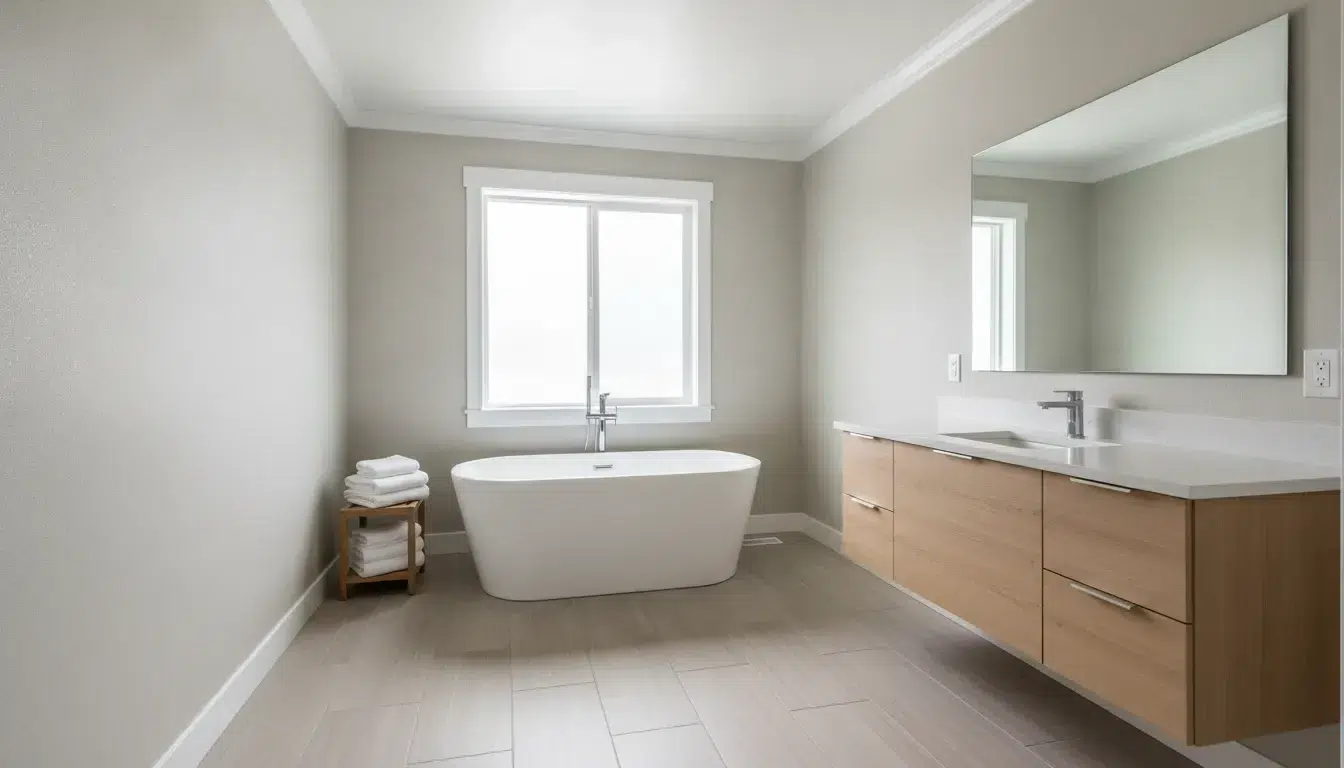
Choosing the best paint for bathrooms in a Boise home takes more than picking a color. Steam, splashes, condensation, cleaning, and uneven ventilation all affect how a coating performs. For most bathroom walls, choose a quality interior acrylic or latex paint labeled for moisture and mildew resistance, then match the sheen to the surface and prepare the room carefully.
Ready to repaint your Boise bathroom? Request a free quote from Paint Boise.
What is the best paint for bathrooms?
The best bathroom paint is a high-quality interior coating designed to tolerate humidity, regular cleaning, and occasional splashes. A mildew-resistant acrylic or latex formula is a practical choice for walls and ceilings, while a tougher enamel or trim coating works better on doors, baseboards, and other frequently touched surfaces.
Product labels matter more than a single brand name. Look for language such as bathroom, kitchen and bath, moisture-resistant, mildew-resistant, washable, or scrubbable. The right product should also be suitable for the surface you are painting, whether that is drywall, plaster, previously painted trim, or another properly prepared substrate.
Paint does not waterproof a leaking wall or solve a failed exhaust fan. If moisture is entering through a plumbing leak, roof issue, failed caulk joint, or damaged shower surround, correct that problem before painting. A coating can protect a sound surface, but it cannot replace repairs or waterproofing.
Which paint qualities matter most in a Boise bathroom?
Bathroom paint performs best when the product, surface preparation, sheen, and ventilation work together. Prioritize moisture tolerance, mildew resistance, cleanability, adhesion, and the ability to form an even film. A premium coating applied to a damp or contaminated surface can still peel, stain, or fail early.
- Moisture tolerance: The film should handle steam, condensation, and light splashing without softening or breaking down.
- Mildew resistance: A bathroom-rated formula can slow mildew growth on the painted surface, but it cannot correct an ongoing water source.
- Washability: Walls near a sink, toilet, or shower need to tolerate gentle cleaning without burnishing or losing color.
- Adhesion: The paint must bond to the existing coating and prepared substrate, especially after patching or stain sealing.
- Leveling and durability: A smooth, hard-wearing film helps the room look finished and reduces visible brush or roller marks.
Boise’s dry climate does not eliminate bathroom moisture. A home can have low outdoor humidity while a shower creates a short, intense burst of indoor steam. Winter temperature differences can also make condensation more noticeable on cool walls, windows, or pipes. Paint selection should reflect how the bathroom is actually used, not just the regional climate.
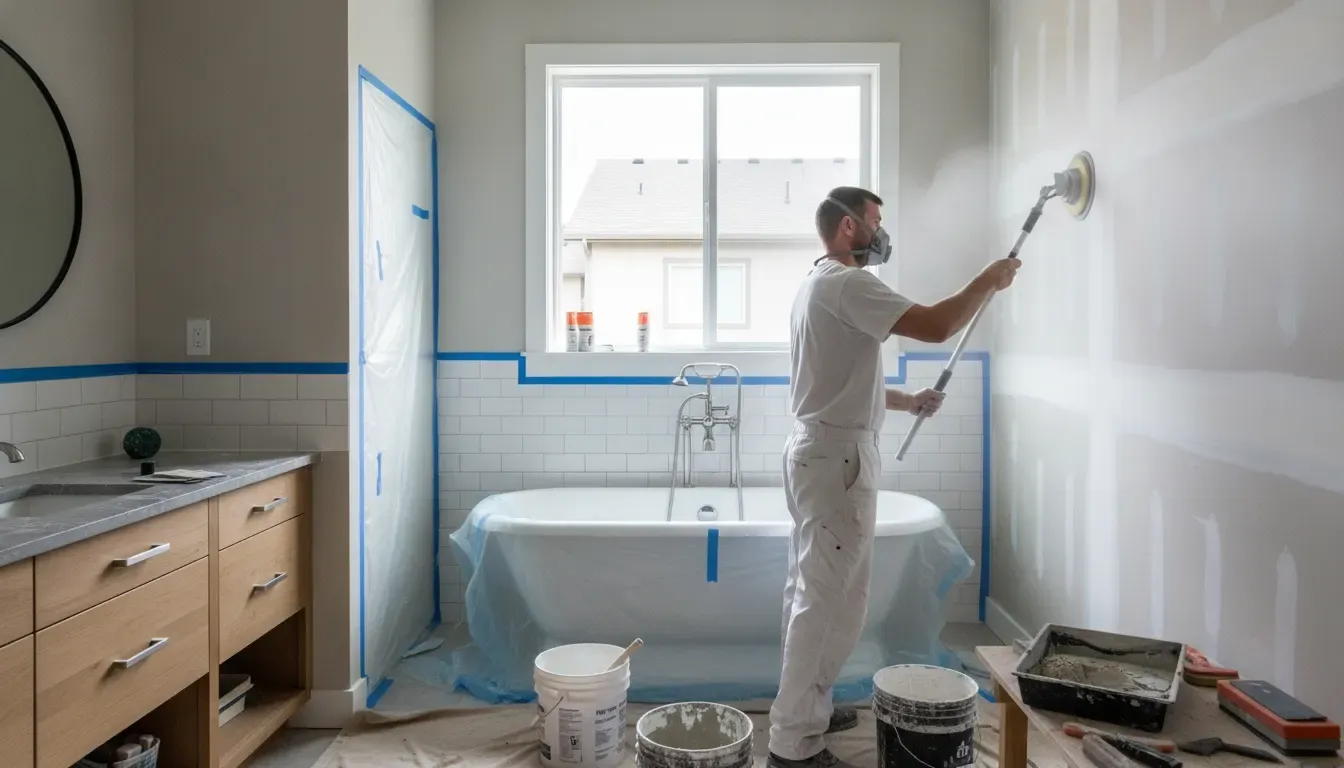
What paint finish is best for bathroom walls, ceilings, and trim?
For many bathroom walls, satin is the most versatile finish because it balances cleanability, moisture tolerance, and moderate reflection. Eggshell can work in a lower-splash bathroom when the product is designed for interior use and the ventilation is good. Semi-gloss is usually better reserved for trim, doors, and other surfaces that need a harder, more washable film.
| Bathroom surface | Practical finish choice | Why it works |
|---|---|---|
| Walls | Satin or bath-rated eggshell | Balances a soft appearance with easier cleaning and better moisture performance than flat wall paint. |
| Ceiling | Bath-rated matte or low-sheen finish | Reduces glare and can hide minor surface variation, provided the product is appropriate for bathroom humidity. |
| Trim and baseboards | Satin or semi-gloss enamel | Handles hand contact, cleaning, and occasional splashes while creating a clean visual transition. |
| Door and window trim | Semi-gloss | Provides a durable, washable surface in areas that receive frequent contact. |
Semi-gloss has a harder, more reflective surface, but that does not automatically make it the best choice for every bathroom wall. High sheen can emphasize drywall repairs, texture, roller marks, and wavy surfaces. Satin is often the better whole-wall compromise. If a bath-specific matte product is engineered for high humidity, it may also be a good wall option when hiding imperfections is important. Always follow the product label.
For a broader explanation of how sheen changes the look and maintenance needs of different rooms, see Paint Boise’s complete paint finish guide for Boise homes. This article focuses specifically on the extra moisture and cleaning demands in bathrooms.
How do you prevent mildew before repainting a bathroom?
Preventing mildew starts with controlling moisture, not simply covering a stained surface with new paint. Before repainting, identify leaks, dry damp materials, clean suitable surfaces, and improve ventilation. If growth is extensive, keeps returning, involves contaminated water, or may affect an HVAC system, stop the painting plan and consult a qualified remediation professional.
- Find the moisture source. Check plumbing connections, shower corners, caulk joints, windows, ceilings, and areas below bathrooms.
- Allow the surface to dry. Do not prime or paint over damp drywall, soft joint compound, or an active water stain.
- Clean surface mildew safely. Follow appropriate cleanup guidance and product directions. Never mix bleach with ammonia or other cleaners.
- Remove failing paint. Scrape loose material and sand or feather edges as appropriate for the substrate.
- Seal stains when needed. A compatible stain-blocking primer can help prevent discoloration from water marks, tannins, or previous repairs.
- Repaint with the correct system. Use a bathroom-suitable finish after the surface is sound, clean, and dry.
The US Environmental Protection Agency explains that moisture control is the key to mold control and recommends increasing ventilation in bathrooms where mold reappears. Review the EPA’s guide to mold, moisture, and the home for general prevention and cleanup guidance. Painting should follow moisture correction, not substitute for it.
How does ventilation affect bathroom paint?
Ventilation gives bathroom paint a better chance to dry and remain clean by moving humid air out of the room. Run the exhaust fan during showers and for a period afterward, use a window when practical, and keep wet surfaces from staying damp. A fan cannot fix every building problem, but it is an important part of a durable paint plan.
- Confirm that the bathroom fan operates and exhausts where it should.
- Keep the fan grille clean so airflow is not restricted by dust.
- Use the fan during showers and continue ventilation afterward according to your home’s conditions.
- Wipe standing water from ledges and trim rather than letting it evaporate slowly on the paint film.
- Watch for recurring condensation, bubbling, peeling, or darkening. These signs may point to a moisture or substrate problem.
Ventilation is especially important during a repaint. Follow the coating manufacturer’s temperature, humidity, and recoat instructions. Closing a room up while the paint is still curing can trap moisture and extend the time needed before the surface can be washed.
When is professional bathroom painting worth it?
Professional preparation is often worthwhile when a bathroom has peeling paint, repeated mildew staining, water marks, patched drywall, textured walls, high ceilings, multiple surface types, or trim that needs a crisp finish. A professional can separate a paint problem from a moisture problem, protect fixtures, prepare the substrate, and build a coating system that fits the room.
A complete-room repaint may include walls, ceiling, doors, trim, baseboards, and selected built-ins. That scope is different from painting a vanity. Paint Boise already has resources for bathroom vanity cabinet paint selection and planning a Boise bathroom cabinet project. Those cabinet-focused guides cover durable cabinet coatings and detailed vanity preparation, while this guide addresses the room’s walls, ceiling, trim, and moisture conditions.
Professional interior painting can also make sense when the room must coordinate with a larger home update. Paint Boise’s interior painting service in Boise covers residential interior projects, wall repairs, ceiling painting, trim, cabinets, and specialty coatings. A quote can clarify whether the project needs simple repainting, stain sealing, repairs, or a more complete preparation plan.
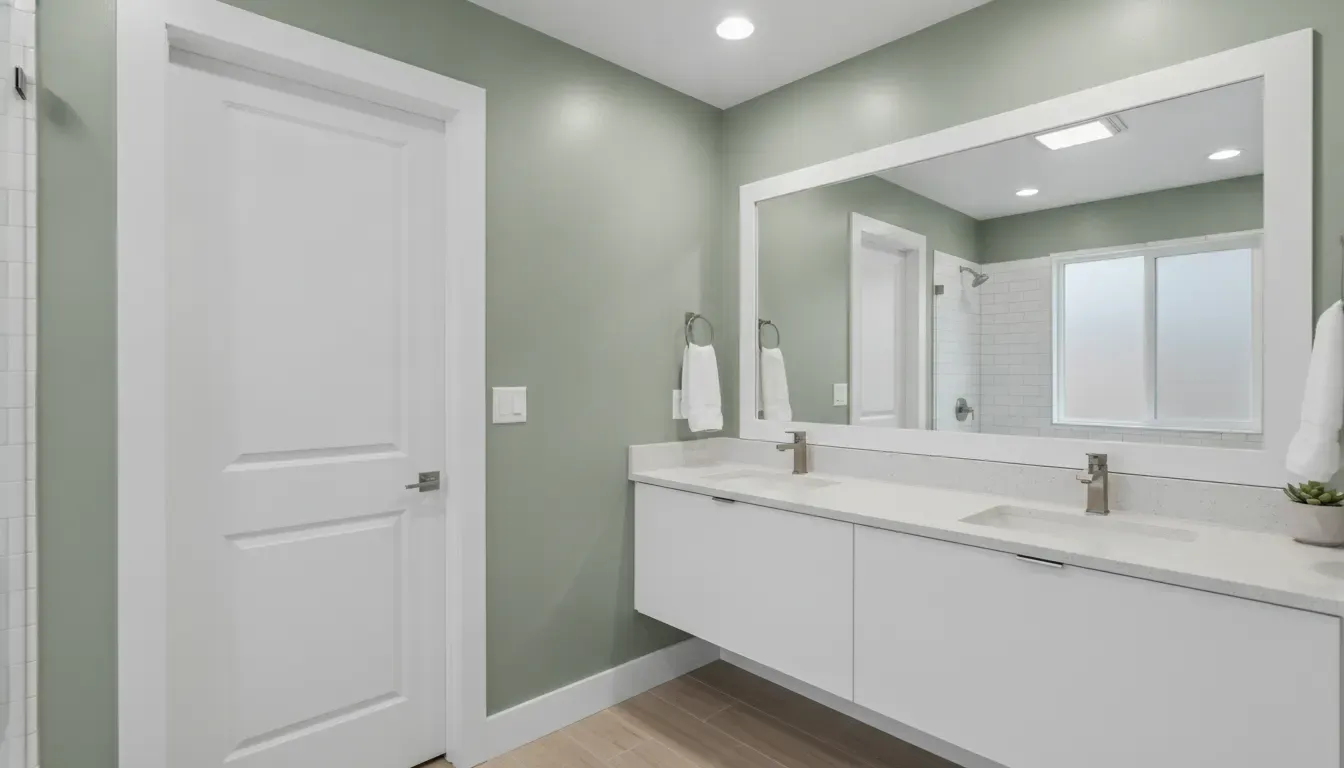
Bathroom paint mistakes to avoid
Most bathroom paint failures come from a mismatch between the surface, the product, and the room’s moisture conditions. Avoiding a few common shortcuts can protect the finish and save time on rework.
- Painting over active moisture: Fix leaks, recurring condensation, and damaged caulk before applying a new coating.
- Using ordinary flat wall paint near a shower: Choose a product and sheen suited to humidity and cleaning.
- Skipping primer on bare or stained areas: Patched drywall, water stains, and glossy surfaces may need a compatible primer.
- Assuming paint is waterproofing: Paint protects a prepared surface but does not replace a shower membrane, sealant, or leak repair.
- Choosing semi-gloss for every surface: More shine can reveal wall defects. Match the sheen to the substrate and the visual goal.
- Reassembling or washing too soon: Dry to the touch is not the same as fully cured. Follow the label before heavy cleaning or frequent contact.
Bathroom paint FAQs
These answers summarize the most common decisions Boise homeowners face when planning a bathroom repaint. The final recommendation depends on the existing coating, substrate, ventilation, moisture history, and the product label.
Do bathrooms require special paint?
Bathrooms do not require one universal brand, but they benefit from a quality interior coating formulated for humidity, cleaning, and occasional splashing. A bathroom or kitchen-and-bath label is a useful starting point. The product still needs to be applied to a clean, dry, properly prepared surface.
Is satin or semi-gloss better for bathroom walls?
Satin is often the best balance for bathroom walls because it is washable without looking as reflective as semi-gloss. Semi-gloss provides a harder, more moisture-resistant film and is commonly better for trim, doors, and baseboards. A bath-rated matte or eggshell can also work when the product is designed for that use.
What is the best paint for a bathroom ceiling?
Choose a bath-suitable matte or low-sheen interior coating for many ceilings, especially when you want to reduce glare and hide minor surface variation. If the ceiling has water stains, peeling, or recurring condensation, correct the moisture source and use the appropriate primer before repainting.
Will bathroom paint stop mildew from coming back?
Mildew-resistant paint can help protect the painted surface, but it will not stop growth caused by leaks, damp drywall, poor ventilation, or unresolved condensation. Clean and dry the surface, correct the moisture source, and improve airflow before repainting. Recurring or extensive growth may need qualified remediation.
Can I use bathroom wall paint on vanity cabinets?
Wall paint is usually not the best choice for vanity cabinets because cabinets face more hand contact, abrasion, and edge wear. Use a cabinet-suitable coating system with careful cleaning, adhesion preparation, and cure time. For vanity-specific guidance, review Paint Boise’s bathroom cabinet resources before choosing a product.
How do I choose bathroom paint for a Boise home?
Start with the room’s moisture level, fan performance, surface condition, and cleaning demands. Then choose a moisture-tolerant interior coating, a practical wall sheen such as satin, and a durable trim finish. If the room has peeling, staining, mildew, or several substrates, a professional assessment can prevent a short-lived repaint.
With the right moisture plan, surface preparation, and finish selection, a bathroom repaint can look clean and stay easier to maintain. If you are comparing options for a wall-only refresh or a complete-room repaint, Paint Boise can help you define the scope and choose a durable interior finish.