
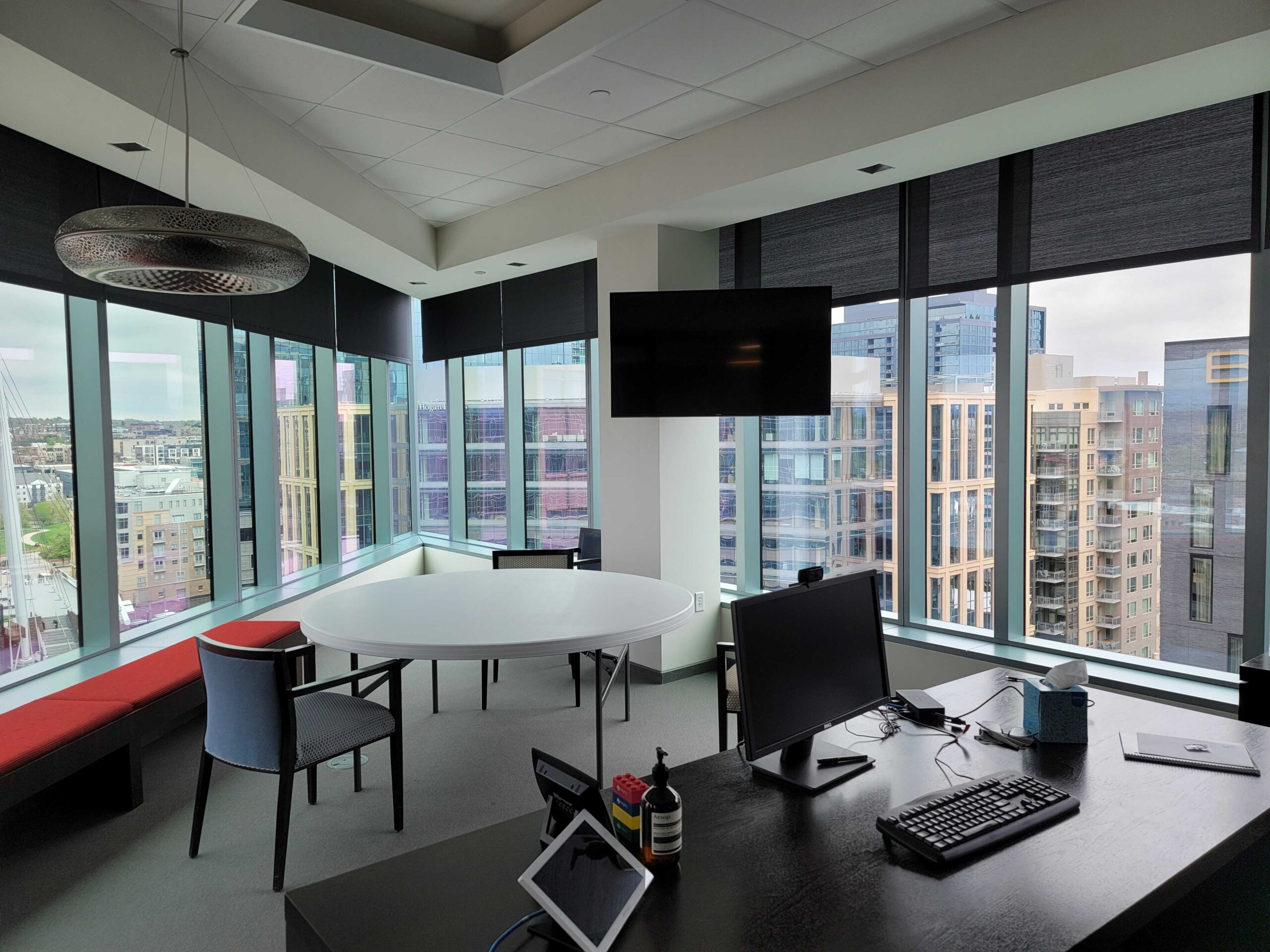
Planning an office repaint starts with three decisions: when painters can access the space, which areas must remain operational, and which colors and finishes fit each room. Document the scope, identify high-traffic areas, and request a written schedule before work begins. These choices help your team prepare for the project while keeping the finished space practical, professional, and easy to maintain.
If you are planning a refresh for a Boise workplace, discuss your goals with Paint Boise’s commercial painters and get guidance for your specific space.
Why Office Paint Matters More Than You Think
Office paint is more than a background color. It is one of the first finishes clients notice, and it affects how clean and well-maintained a workspace looks. The right color and finish can also make routine cleaning easier in busy hallways, reception areas, meeting rooms, and break rooms.
First Impressions for Clients
Your office may be the first place clients experience your business in person. Clean, consistent paint helps reception areas, conference rooms, and shared spaces look cared for. Scuffs, fading, stains, or uneven touch-ups can distract from an otherwise polished environment. A repaint gives you an opportunity to address those worn surfaces and create a more consistent look from the entrance through client-facing rooms.
Brand Identity and Company Culture
Paint colors can support your visual identity without turning every wall into a brand statement. A signature color may work well on an accent wall, while neutral supporting colors keep the overall office flexible and professional. Consider how wall colors relate to your logo, flooring, furniture, signs, and the amount of natural light in each room. The goal is a coordinated space that still works for day-to-day operations.
How Do You Plan an Office Repaint With Less Disruption?
A practical office repaint plan begins with access and workflow. List every room and surface in scope, note which areas must stay available, and identify any dates when painting would interfere with meetings, customer visits, or deliveries. Share those constraints before requesting an estimate so the project schedule can reflect how your office operates.
Set the Scope and Schedule First
Walk through the space and document walls, ceilings, doors, trim, and other surfaces that may need attention. Note damaged areas, difficult-to-reach locations, and rooms with sensitive equipment. Decide whether colors will stay the same or change, and ask for a written schedule that identifies the work sequence, preparation needs, and expected access for each area.
Before work begins, confirm who will move furniture, remove wall hangings, protect equipment, and communicate updates to employees. A clear point of contact on your team can answer access questions and help keep decisions moving. For a deeper look at scoping and project coordination, read our office painting Boise planning guide.
Phase the Work Around Your Operations
Room-by-room or zone-by-zone phasing can help keep essential areas available. For example, you might complete one conference room before starting another, or schedule a reception area separately from staff workspaces. Identify alternate routes and temporary work areas in advance. Tell employees what must be cleared and when they can expect access to change. The right sequence depends on the size, layout, surfaces, and operating needs of your office, so confirm the plan in writing before the project starts.
How Should You Choose Office Paint Colors?
Start with how each room is used, then narrow your choices based on light, existing finishes, and maintenance needs. Color can make a room feel brighter, warmer, calmer, or more visually active, but the same sample may look different from one wall to another. Testing colors in the actual office is more reliable than choosing from a small swatch alone.
Match Color to Each Room’s Purpose
Reception areas often benefit from welcoming neutrals with a restrained brand-color accent. Private offices and meeting rooms may need colors that look professional on video calls and work with existing furniture. Hallways and shared areas usually need a coordinated palette that connects adjacent rooms without making the space feel busy.
Examples such as Sherwin-Williams Repose Gray (SW 7015), Accessible Beige (SW 7036), Drift of Mist (SW 9166), and Sea Salt (SW 6204) can provide useful starting points. Bolder colors may work well as accents in selected areas. There is no single best office color, so compare options against the room’s purpose and the finishes that will remain.
Test Colors Under Office Lighting
Natural daylight, overhead fixtures, and task lighting can each change how a paint color appears. Place sample areas on more than one wall and review them at different times of day. Look at the samples beside flooring, desks, cabinetry, window coverings, and branded materials. A color that looks balanced in a bright reception area may appear cooler or darker in an interior office with no windows.
Testing also helps you compare undertones. Whites, grays, and beiges can lean warm or cool, and those differences become more noticeable beside existing materials. A larger sample gives your team a better basis for approval before the full repaint begins.
Choose a Finish That Fits the Wear Level
Finish affects both appearance and maintenance. Lower-sheen finishes can reduce glare and help disguise minor surface variation, while higher-sheen options are often easier to wipe clean. Busy corridors, break rooms, and reception spaces may need a different finish than low-traffic private offices. Consider cleaning frequency, lighting, wall condition, and the look you want before selecting a product and sheen.
Doors and trim also receive frequent contact and may need a finish suited to regular cleaning. Discuss each surface separately rather than assuming one product should cover the entire office.
When Should You Repaint Your Office?
Repaint when the condition of the walls no longer matches the standard you want clients and employees to see. Common signs include scuffs that do not clean off, chipped or peeling areas, faded sections, visible patches, and inconsistent color from repeated touch-ups. High-traffic areas usually show wear before private offices or storage rooms.
A change in branding, tenant occupancy, furniture, or room use can also make repainting worthwhile. Inspect the space before choosing a date. If only a few areas are worn, ask whether targeted work can create a consistent result or whether connected spaces should be refreshed together.
DIY vs. Hiring Professional Commercial Painters
A small touch-up is different from repainting an active office. DIY work may seem straightforward, but your team must still plan preparation, tools, surface repairs, furniture movement, protection, cleanup, and access. The project also competes with normal work responsibilities and can take longer when it is handled between other tasks.
Professional commercial painters can assess the scope, recommend appropriate preparation and finishes, and provide a written estimate and schedule. When comparing options, ask how surfaces will be prepared, what is included, who handles protection and cleanup, and how changes will be communicated. Confirm insurance, project responsibilities, and warranty details before making a decision.
If you want a professional assessment of your Boise office, learn more about our commercial painting services.
Frequently Asked Questions
Can an Office Stay Open While It Is Being Painted?
It may be possible to keep part of an office operating when the work is carefully phased, but the answer depends on the layout, scope, ventilation, equipment, and access requirements. Identify essential areas and discuss them with the painter before scheduling. A written work sequence helps everyone understand which rooms will be available.
How Long Does an Office Repaint Take?
The timeline depends on square footage, surface condition, preparation, number of colors, drying time, access, and whether work is completed in phases. Ask for a written schedule based on an on-site assessment rather than relying on a general estimate.
What Paint Finish Is Best for Office Walls?
The best finish depends on wear, cleaning needs, lighting, and wall condition. Busy areas may benefit from a washable finish, while lower-traffic rooms may suit a lower sheen. Review each type of space with your painter before making a final selection.
How Should a Business Choose Office Paint Colors?
Begin with room purpose, existing lighting, brand compatibility, and the finishes that will remain. Test larger samples on the actual walls and review them throughout the day. This makes it easier to see undertones and choose a coordinated palette.
What Should Be Included in an Office Painting Estimate?
An estimate should clearly describe the surfaces and rooms included, preparation, products and finishes, responsibilities for moving or protecting items, schedule, cleanup, and any exclusions. Ask questions about anything that is unclear before approving the work.
Plan Your Office Refresh
A successful office repaint connects design decisions with a practical work plan. Define the scope, identify operational constraints, test colors in the space, and compare written estimates before work begins. Paint Boise helps residential and commercial property owners throughout Boise and the surrounding Treasure Valley plan high-quality painting projects with clear communication.
Ready to discuss your workspace? Request a free office painting estimate from Paint Boise.