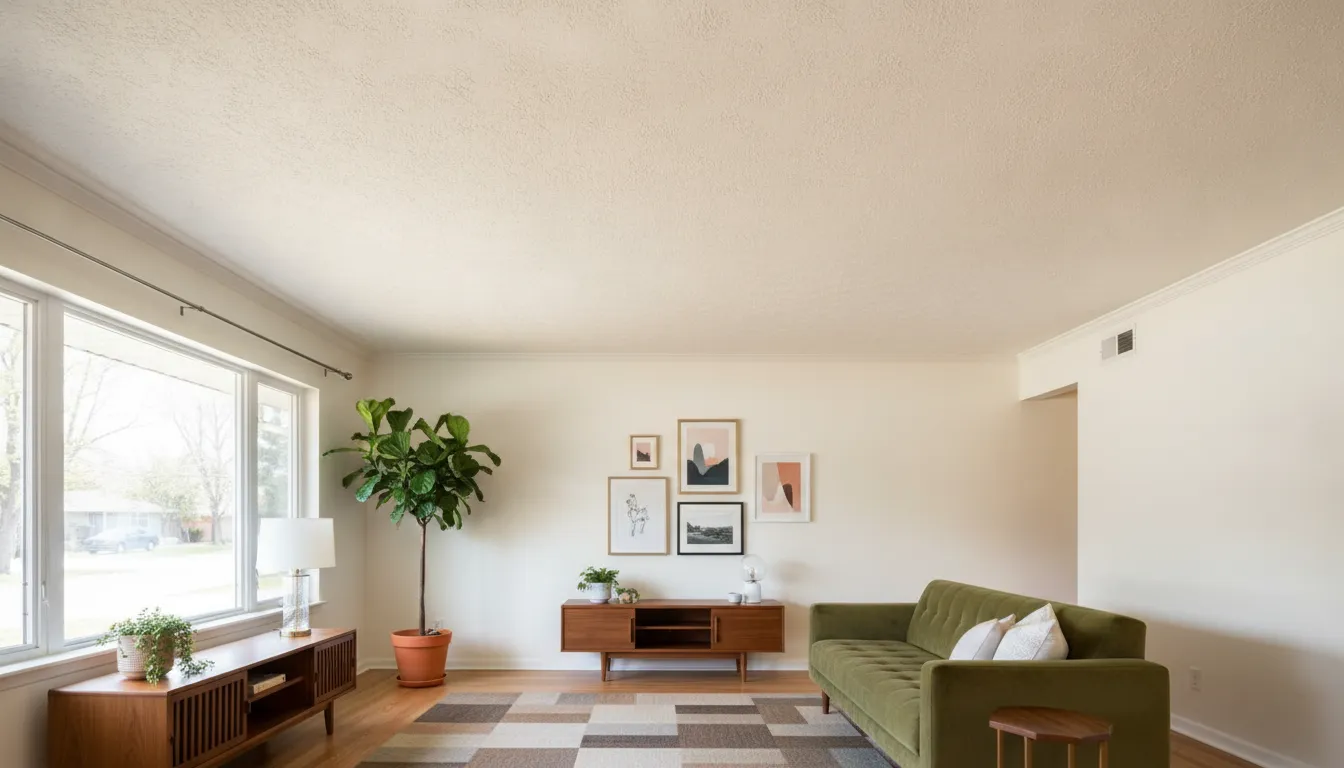
If you are searching for information about popcorn ceiling asbestos, the safest first step is not scraping, sanding, painting, or taking a sample yourself. A textured ceiling can look similar whether or not it contains asbestos, so visual inspection cannot give you a reliable answer. In a Boise-area home, treat an uncertain ceiling as suspect until a qualified asbestos professional explains the appropriate next step.
Request a painting quote for your Boise home when your ceiling is ready for safe refinishing
Can popcorn ceilings contain asbestos?
Popcorn, acoustic, and other sprayed or textured ceiling finishes may contain asbestos, but appearance alone cannot confirm or rule it out. The US Environmental Protection Agency says the only way to know whether a suspect material contains asbestos is qualified laboratory testing, with samples taken by a properly trained and accredited asbestos professional. Age can be a reason to ask questions, not proof of what is in the ceiling.
Asbestos is a concern because fibers may become airborne when a material is damaged or disturbed. A ceiling that is intact and will not be touched is a different situation from a ceiling that will be scraped, drilled for lights, repaired after water damage, or sanded before painting. The EPA advises homeowners to leave suspect material alone when it is in good condition and not scheduled for disturbance. Read the EPA guidance on testing suspect household materials for the federal starting point.
That distinction matters for Boise homeowners planning a remodel. A ceiling does not become safe to disturb because it has been painted before, looks clean, or has only a small damaged area. Likewise, a homeowner should not assume every popcorn finish contains asbestos. The responsible answer is to avoid guessing and get the right professional evaluation before work begins.
When should Boise homeowners stop work and arrange testing?
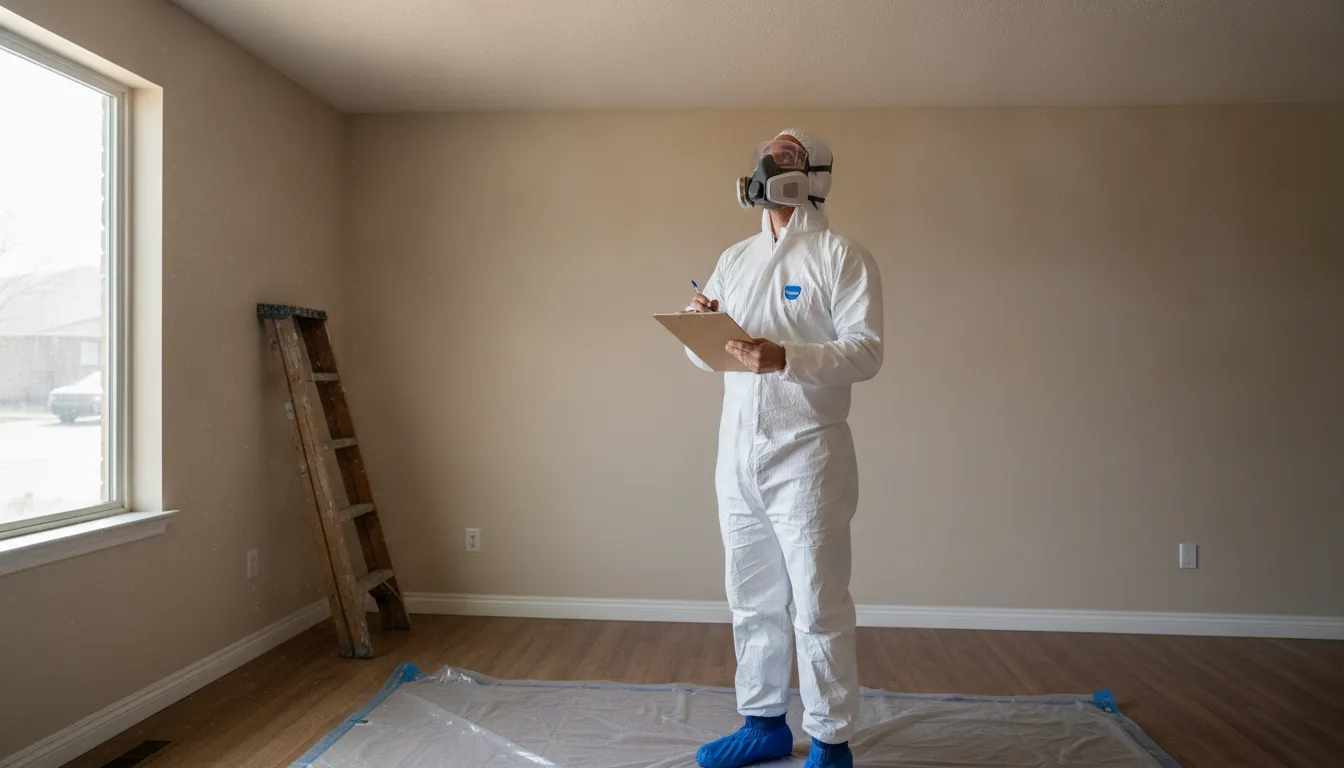
Stop work and seek qualified guidance before disturbing a popcorn ceiling if you are planning a renovation or if the texture is damaged. Testing is especially important when the project could scrape, sand, drill, cut, remove, or otherwise disturb the ceiling surface. Do not continue just because the area is small or the work seems cosmetic.
- You are preparing to scrape or remove the texture.
- You plan to sand, patch, drill, cut, or install lighting through the ceiling.
- The ceiling has water damage, crumbling areas, tears, abrasions, or loose material.
- A remodel will require access above the ceiling or changes to attached fixtures.
- You are buying, selling, or renovating an older home and need a documented evaluation.
- A previous contractor has recommended removal without addressing material testing.
Do not sweep, vacuum, scrape, brush, or collect loose texture as a way to investigate. Avoid moving furnishings through a visibly damaged area, and keep children and pets away from the work zone. If there has already been accidental disturbance, pause the project and contact an asbestos professional for advice about the situation. This article is general information, not an inspection, diagnosis, or health assessment.
What does professional testing for popcorn ceiling asbestos involve?
Professional testing is designed to answer a narrow question: does the suspect material contain asbestos, and what does that mean for the planned work? The process should be handled by a qualified asbestos inspector or other appropriately trained professional, not by a painting contractor or an untrained homeowner. A qualified laboratory analyzes the sample and the professional explains the result in the context of the project.
- Project discussion: The professional asks what work is planned, which surfaces could be disturbed, and whether there is visible damage.
- Visual assessment: The ceiling and surrounding area are evaluated without relying on appearance as proof of content.
- Controlled sampling, when appropriate: If testing is needed, the qualified professional determines how to collect and handle a representative sample.
- Laboratory analysis: The sample is sent to a qualified laboratory for analysis rather than judged by color, texture, or a hardware-store test kit.
- Written next steps: The result and project recommendations should be documented so the next contractor understands what work is and is not appropriate.
The EPA does not recommend do-it-yourself sampling because collecting a sample incorrectly can release fibers and create more risk than leaving the material undisturbed. A good testing conversation also covers adjacent materials that the renovation may affect. The ceiling is not the only surface worth considering if the project includes demolition, electrical work, or access through nearby finishes.
Ask the professional what credentials, laboratory, written report, and project-specific recommendations are included. You can also ask who is responsible for any required notifications, work controls, waste handling, and clearance decisions. Those questions help separate a genuine asbestos evaluation from a casual visual opinion.
What does licensed asbestos abatement involve?
If testing confirms asbestos-containing material, the next decision belongs with qualified asbestos professionals. Depending on the material condition and planned renovation, the responsible path may be leaving the material undisturbed, repairing or encapsulating it, or arranging controlled removal. Abatement is not ordinary ceiling prep, and a painting crew should not be asked to scrape or remove suspect texture.
For regulated renovation and demolition work, project requirements can include notifications, trained workers, containment and work practices, approved waste handling, and post-work verification. Idaho Department of Environmental Quality guidance explains that asbestos NESHAP notification requirements can apply when regulated asbestos-containing material is disturbed above specified thresholds, including wall or ceiling texture. Requirements depend on the building, project scope, material, and applicable authority, so use the Idaho DEQ compliance assistance guidance and ask the qualified asbestos contractor which rules apply.
Do not treat a positive test as an instruction to start demolition. A qualified asbestos inspector or abatement contractor should explain the work plan, responsibilities, cleanup, disposal, and any clearance or air-monitoring decisions that apply. The EPA recommends getting a written contract that identifies the plan and applicable regulations before asbestos work begins. Read the EPA’s homeowner guidance on protecting your family from asbestos exposure before hiring anyone to handle suspect material.
What can happen to the ceiling after testing or abatement?
Painting or refinishing can be considered only after the qualified asbestos professional has addressed the material and the surface is ready for the next trade. The correct finish depends on the test result, the condition of the ceiling, the work plan, and whether removal, repair, encapsulation, or no disturbance was selected. A safe painting plan starts with a clear handoff, not an assumption that a textured ceiling is ordinary drywall.
| Project situation | What to clarify before painting |
|---|---|
| Suspect material has not been tested | Pause disturbance and ask a qualified asbestos professional whether testing is needed before any prep. |
| Testing does not identify asbestos | Confirm the report covers the planned work, then plan repairs, primer, finish, and protection for the room. |
| Asbestos-containing material remains in place | Follow the asbestos professional’s written direction. Do not sand, scrape, drill, or paint over it casually. |
| Qualified abatement or encapsulation is complete | Obtain the appropriate handoff or clearance information and confirm the surface is ready for a painting contractor. |
| Texture has been removed and the ceiling is ready | Evaluate drywall repairs, skim coating, primer, sheen, lighting, and the desired smooth or replacement texture finish. |
Once the ceiling is cleared for painting, preparation still matters. Repairs may need to cure, patched areas may need uniform priming, and a smooth ceiling can show flaws that were hidden by texture. Paint Boise’s interior painting service includes ceiling painting and wall-repair work, but the company does not test for asbestos or perform asbestos abatement. For general ceiling finish ideas, see the existing ceiling painting guide after the safety question has been resolved.
How can Paint Boise help after the safety question is resolved?
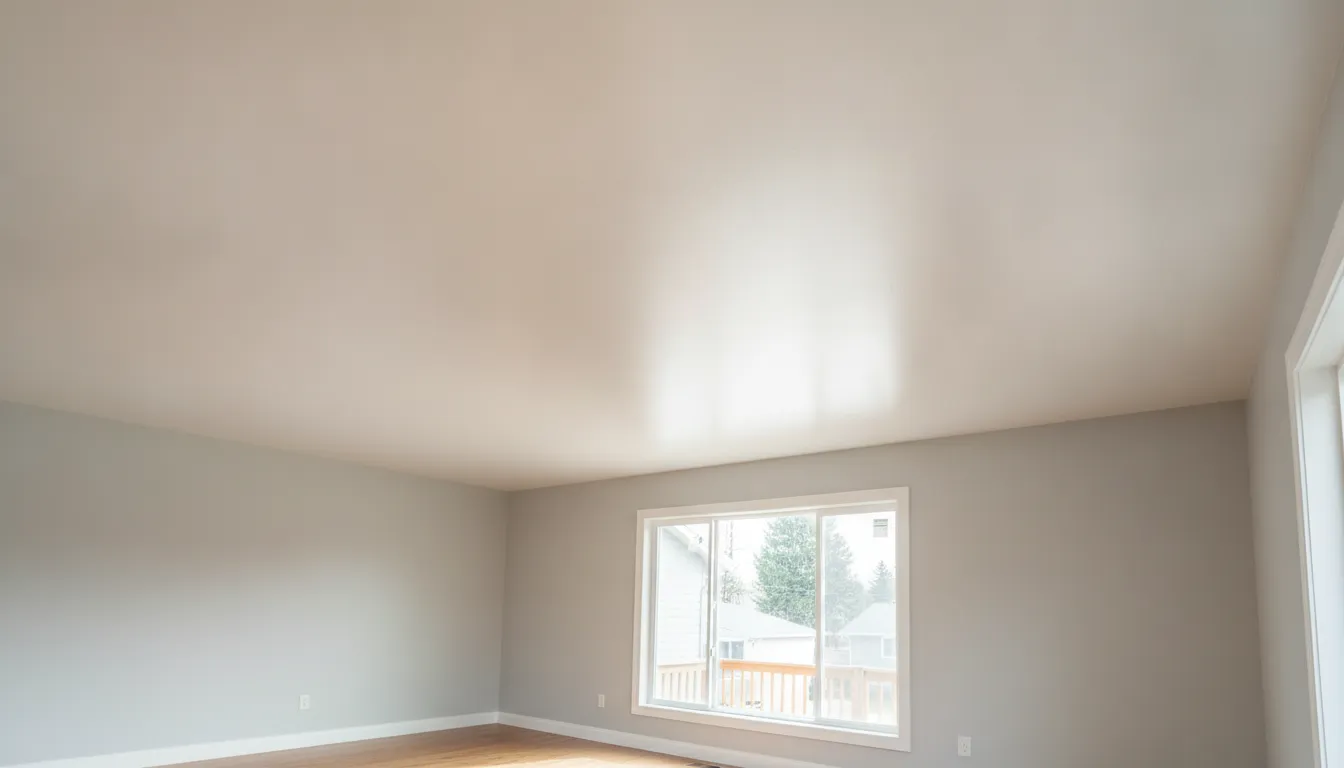
Boise Commercial & Residential Painting can help homeowners plan interior painting after a qualified asbestos professional has completed the necessary evaluation or abatement work and the surface is ready. The conversation can cover ceiling repairs, smooth finishes, color and sheen, protection of walls and furnishings, scheduling, and the relationship between ceiling and trim work.
Paint Boise is not an asbestos laboratory, asbestos inspector, or asbestos abatement provider. Do not ask a painting crew to sample, scrape, remove, contain, or dispose of suspect popcorn texture. Instead, use a qualified asbestos professional first, keep the written documentation, and share only the relevant handoff information with the painting contractor. That boundary protects your household and keeps each trade responsible for work it is equipped and authorized to perform.
For a Boise or Treasure Valley home that is ready for ordinary interior painting, you can contact Paint Boise online or call (208) 254-6615. The team serves Boise, Meridian, Eagle, Nampa, Caldwell, Star, Kuna, and Middleton with a focus on clear communication and careful preparation.
Request a quote for safe, professional interior painting after your ceiling is cleared
Popcorn ceiling asbestos FAQ
Can I tell if a popcorn ceiling contains asbestos by looking at it?
No. Texture, color, age, and paint history cannot confirm asbestos content. The EPA says qualified laboratory testing is the only way to know, and samples should be taken by a properly trained and accredited asbestos professional when testing is appropriate.
Should I scrape off a small sample to send to a lab?
No. Do not scrape or collect a sample yourself. Sampling can disturb the material, and the EPA does not recommend do-it-yourself sampling. Ask a qualified asbestos inspector whether testing is needed and how it should be handled.
Is an intact popcorn ceiling automatically dangerous?
No. An intact material that is in good condition and will not be disturbed is different from one that is damaged or part of a renovation. Leave suspect material alone and get professional guidance before drilling, sanding, scraping, cutting, or removing it.
Does Paint Boise test or remove asbestos?
No. Paint Boise provides painting and refinishing services, not asbestos testing, laboratory analysis, inspection, abatement, or regulated-material disposal. Use a qualified asbestos professional for those services and contact Paint Boise only after the ceiling is ready for painting.
Can a ceiling be painted after asbestos abatement?
Often, painting can be planned after qualified asbestos work is complete and the responsible professional confirms the surface and work area are ready. The painting scope may include repairs, primer, finish coats, and trim coordination. Share the written handoff or clearance information with the painting contractor before work begins.
Sources: US EPA testing guidance, US EPA homeowner protection guidance, and Idaho Department of Environmental Quality compliance assistance.