
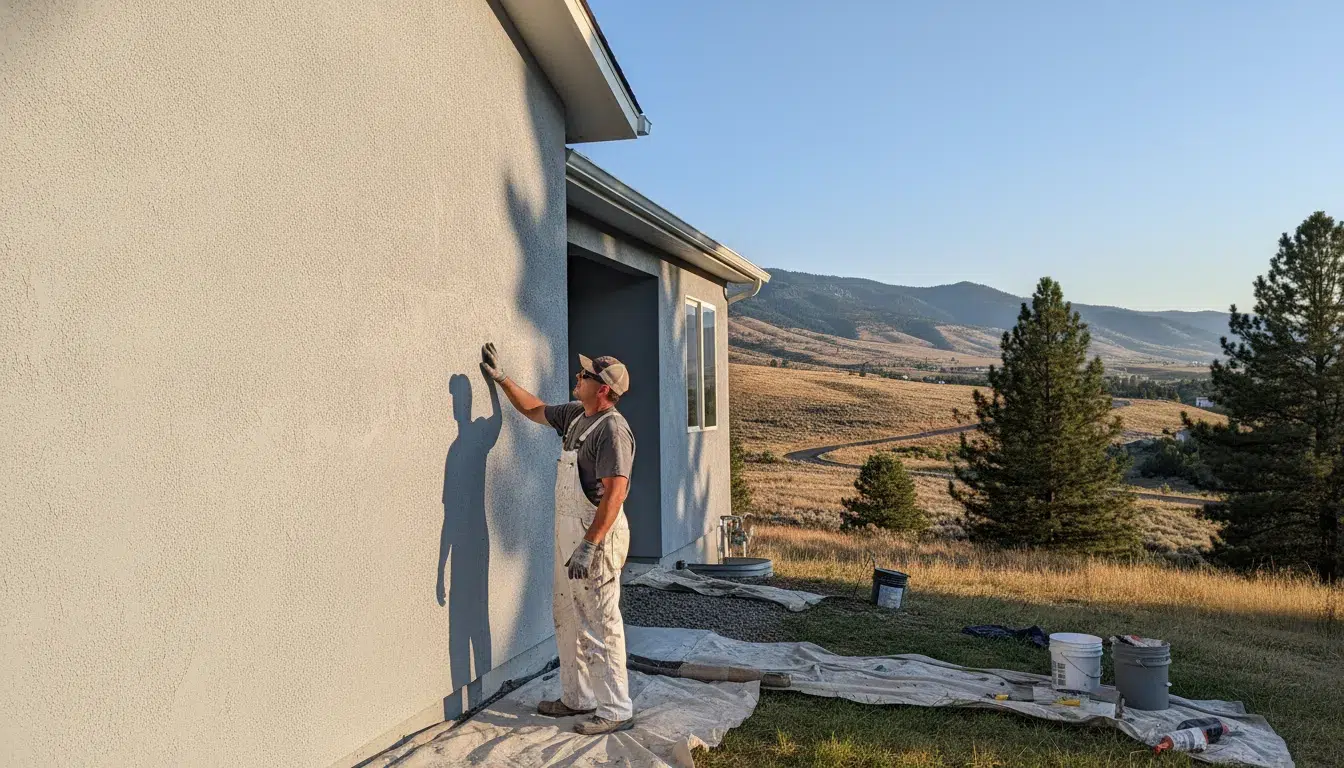
Idaho weather exposes every shortcut taken on a stucco exterior. A rushed repaint can trap moisture, miss cracks, and leave textured walls uneven. Preparation decides whether the finish lasts.
Planning a stucco exterior update? Request a professional exterior painting estimate before the weather window closes.
Painting stucco house exteriors in Idaho takes more than rolling on exterior paint. Start by cleaning away dirt and chalk, letting the wall dry completely, and repairing suitable hairline cracks with masonry-approved caulk. Use an alkali-resistant masonry primer on unpainted or chalky stucco. Choose a coating that fits the wall condition. For textured walls, spraying and immediate back-rolling can help paint reach the crevices. Plan around a dry weather window, and hire a professional when repairs, access, or coating selection exceed a safe DIY scope.
The best results start before paint touches the wall. Homeowners need to know whether their stucco is sound, dry, and ready for a coating system. This guide explains the practical decisions that matter in the Treasure Valley.
Painting stucco house exteriors starts with the surface
Painting stucco house exteriors in Idaho begins with a slow walk around the building. A fresh coat can hide clues that the wall needs repair first. Inspect each side in daylight. Pay close attention to lower walls near sprinklers and shaded elevations that dry slowly.
Small cracks and repair clues
Hairline cracks may look cosmetic, but prepare them before painting. Fill suitable fine lines with masonry-approved caulk after cleaning. Pause the paint plan when a crack is wide, growing, or paired with bulging stucco. Those signs call for closer review and repair, not a thicker coat of paint.
Look closely around windows, doors, hose bibs, vents, and wall penetrations. Note gaps, recurring stains, loose stucco, or soft areas. A coating should not serve as a patch for a leak path. Mark questionable spots with painter’s tape so they are easy to find after cleaning.
Cleaning and drying the wall
Stucco holds dust, dirt, and chalky residue in its texture. Clean the wall thoroughly, but avoid driving water into open cracks. Then let the surface dry completely. Painting damp stucco can trap moisture beneath the coating and contribute to bubbling or early failure.
Check the wall again after it dries. If a white powder returns after washing, stop and look for a moisture source. Do not treat a recurring deposit as surface dirt alone. The wall may need closer inspection before any coating is applied.
Pre-paint inspection checklist
- Walk every elevation in daylight and note shaded or sprinkler-exposed areas.
- Mark suitable hairline cracks for masonry-approved caulk.
- Flag wide or growing cracks, bulges, and loose stucco for repair review.
- Inspect edges around windows, doors, vents, and wall penetrations.
- Clean the texture thoroughly and let the wall dry completely.
- Recheck the surface for stains, soft spots, or returning white deposits.
If the inspection shows more than simple caulk work, consider hiring a professional exterior painting service. A careful surface review gives every later step a sound starting point.
How do you prepare stucco before painting?
Preparation for painting a stucco house starts with the wall, not the paint can. Stucco has a textured surface that can hide loose coating and small defects. A careful pass now gives the finish coat a better base and reduces avoidable surprises later.
Follow a practical preparation sequence
- Inspect the stucco. Mark loose paint, chalking, stained areas, and visible cracks. Look closely at edges around doors, windows, vents, and utility lines.
- Remove weak material. Scrape loose or peeling coating without gouging the stucco. Brush away debris so the wash reaches the stable surface.
- Wash the walls carefully. Remove dirt, dust, and chalky residue. Use a controlled approach around openings and damaged areas.
- Let the stucco dry fully. Do not paint a damp wall. Allow enough drying time for the current weather and the wall’s exposure.
- Repair suitable minor cracks. Fill appropriate hairline cracks with masonry-approved caulk. Seek an expert opinion for wide, recurring, or moving cracks.
- Mask nearby surfaces. Protect windows, doors, light fixtures, landscaping, walks, and driveways. Rough stucco creates splatter, so cover generously.
- Decide whether to prime. Use an alkali-resistant masonry primer on unpainted or chalky stucco. Confirm that exposed and repaired areas receive the right base coat.
Know the limits of minor repair
Hairline caulk work is different from diagnosing wall movement or water entry. Painting over a deeper issue can hide warning signs without solving the cause. If the damage extends beyond minor surface repairs, pause the project and ask for a professional review.
Primer choice also depends on the wall condition. Once the stucco is sound, clean, dry, and masked, review the options for selecting high-quality masonry paint. Product choice should follow the prepared wall, not a one-size-fits-all rule.
Which coating works best for an Idaho stucco exterior?
There is no single coating for every stucco wall. The right choice depends on the surface condition, earlier coatings, exposure, and any signs of moisture. A coating system needs to support the wall rather than cover up an unresolved problem.
Compare the role of each coating
| Coating choice. | Best fit. | Main benefit. | Important caution. |
|---|---|---|---|
| 100% acrylic masonry coating. | Sound exterior stucco. | Reliable finish for many homes. | Do not apply over damp or damaged stucco. |
| Elastomeric coating. | Walls with repaired hairline cracking. | More flexible coating film. | Confirm that the system fits the wall condition. |
| Alkali-resistant masonry primer. | Bare or chalky stucco before finish paint. | Supports finish-coat adhesion. | It is a prep layer, not the final coat. |
For many homes, a 100% acrylic exterior masonry coating is the practical starting point. It suits sound stucco and provides a durable finish. Elastomeric coating is more conditional. It can bridge repaired hairline cracks, but it should never become a shortcut for needed wall repair.
Think about moisture and permeability
A coating should not hide an active moisture issue. Start with drainage, leaks, cracks, and the wall assembly before selecting a finish. Stucco walls may need to release water vapor. A thick coating may be useful in the right case, but it can be the wrong answer on a damp surface.
Primer fills a different role from finish paint. Use an alkali-resistant masonry primer when stucco is unpainted or chalky. Previously painted stucco may require a different preparation plan after a close inspection.
Not sure which system fits your home? Ask Paint Boise about your exterior coating options.
When is the right time to paint stucco in Idaho?
Start with a dry wall
The right time for painting a stucco house is not just a sunny afternoon. Stucco must be dry before the first coat goes on. After washing, give the wall time to release moisture from its textured surface and small pores. Rushing this step can trap moisture beneath the coating.
Rain also resets the clock. Check more than the surface at eye level because shaded walls and deep texture may stay damp longer. Recent rain, a fresh wash, and overnight moisture all call for patience. If the wall still feels damp, wait and reassess.
Plan a practical weather window
Choose a stretch of stable weather, not a small gap between storms. Review the coating label before work starts because each product has its own application limits. The forecast should support surface preparation, drying, painting, and early cure time. If rain is close, waiting is safer.
Idaho sun also affects the plan. A wall in direct sun can warm faster than a shaded side of the same home. Work around the house in a way that avoids damp walls and harsh midday exposure. Review the evening and overnight forecast before opening the first can.
Timing affects long-term upkeep as well. Our guide on when to repaint your home’s exterior explains how surface material and local conditions shape that decision.
Should you spray or roll paint on stucco?
For many textured stucco walls, use a sprayer and back-roll the wet coating right away. Spraying distributes paint across the wall quickly. The roller then works that coating into low spots, pores, and deep crevices. This paired method helps reduce thin patches that become visible after drying.
Why texture changes the job
Stucco is not a flat surface. Its peaks, pockets, and rough edges create more area for paint to cover. A quick spray pass alone can coat the high points while missing recessed spots. Immediate back-rolling helps work the coating into that uneven texture.
Plan for the wall to use more paint than a smooth surface. Watch each section from more than one angle while you work. Side light often makes skips easier to spot. Do not rush coating onto damp stucco.
When rolling alone makes sense
Rolling alone can suit a small repair area, a short wall, or a place where overspray is difficult to control. Use a thick-nap roller, often 3/4 inch or greater, so the fibers reach into the texture. Reload it frequently. Use steady pressure instead of stretching a nearly dry roller.
Rolling an entire exterior takes more time and effort. It also makes it easier to leave shallow pockets undercoated. Check corners, trim edges, and sheltered areas before moving the ladder. Those spots can hide missed texture.
Choose a method for the actual site
Base the application plan on wall size, texture depth, wind, and nearby surfaces. Spraying requires careful masking around windows, doors, landscaping, vehicles, and neighboring property. Back-roll while each sprayed section remains wet. Work in sections that your crew can finish without stopping midway.
When should you hire a professional stucco painter?
A small touch-up on sound, easy-to-reach stucco may be a reasonable DIY job. A full exterior becomes a larger project when the wall has cracks, stains, broad worn areas, or difficult access. Decide whether the surface needs paint, minor patching, or closer repair review.
Consider access and wall condition
Ground-level touch-ups are easier to control. Hire a professional when the work reaches upper stories, steep slopes, or hard-to-reach elevations. Safe access matters, but so does finding the cause of visible damage before coating it.
Hairline cracks can call for masonry-approved caulk before painting. Wider, spreading, or recurring cracks need a closer look. White powder on masonry may also signal a moisture-related condition that needs investigation before new paint is applied.
Look for consistency across the exterior
A DIY repair is most practical when the area is small and a slight finish difference will not stand out. Full elevations are harder. Stucco texture can hold paint in deep crevices, and uneven coverage may show after the wall dries.
For a full exterior, professional help can reduce missed spots and patchy texture. Paint Boise brings more than 40 years of local experience in the Treasure Valley. Its guarantee includes no deposit, payment when satisfied, and a 5-year warranty. Homeowners can review the project guarantee before requesting an estimate.
Frequently Asked Questions
Is it better to spray or roll when painting a stucco house?
For textured stucco, spraying followed by immediate back-rolling is often a reliable approach. The sprayer distributes coating quickly, while the roller pushes paint into crevices. Rolling alone can work for a smaller wall, but it requires more time and careful coverage checks.
Does stucco require a special primer before painting?
Unpainted or chalky stucco usually needs an alkali-resistant masonry primer before the finish coat. Primer supports adhesion and creates a more consistent base. Previously painted stucco may need spot priming or a different preparation plan after inspection.
What roller nap size works for textured stucco?
A thick roller cover is usually practical for textured stucco. A 3/4-inch nap or greater can help reach deeper texture. Test a small area first, back-roll from more than one direction, and inspect the wall from several angles.
Can I paint stucco in humid or wet conditions?
No. Stucco should be fully dry before paint is applied. Moisture trapped beneath an exterior coating can contribute to bubbling and early failure. Check the forecast before washing or painting, and follow the selected coating manufacturer’s application instructions.
How often should a stucco house be repainted?
A stucco exterior does not follow one fixed schedule. Exposure, preparation, coating quality, and earlier repairs all affect service life. Inspect the walls each year for fading, chalking, peeling, cracks, and moisture stains. Address developing problems before a repaint becomes more involved.
Ready to protect your stucco exterior?
Waiting through another season can leave worn stucco more exposed and turn a manageable painting plan into a larger project. Starting with an inspection gives you time to review surface preparation, choose a suitable coating, and schedule the work around Idaho weather.
Request a free estimate for professional stucco exterior painting. Ask about the surface condition, coating system, scheduling, and any repair questions before deciding how to move forward.