
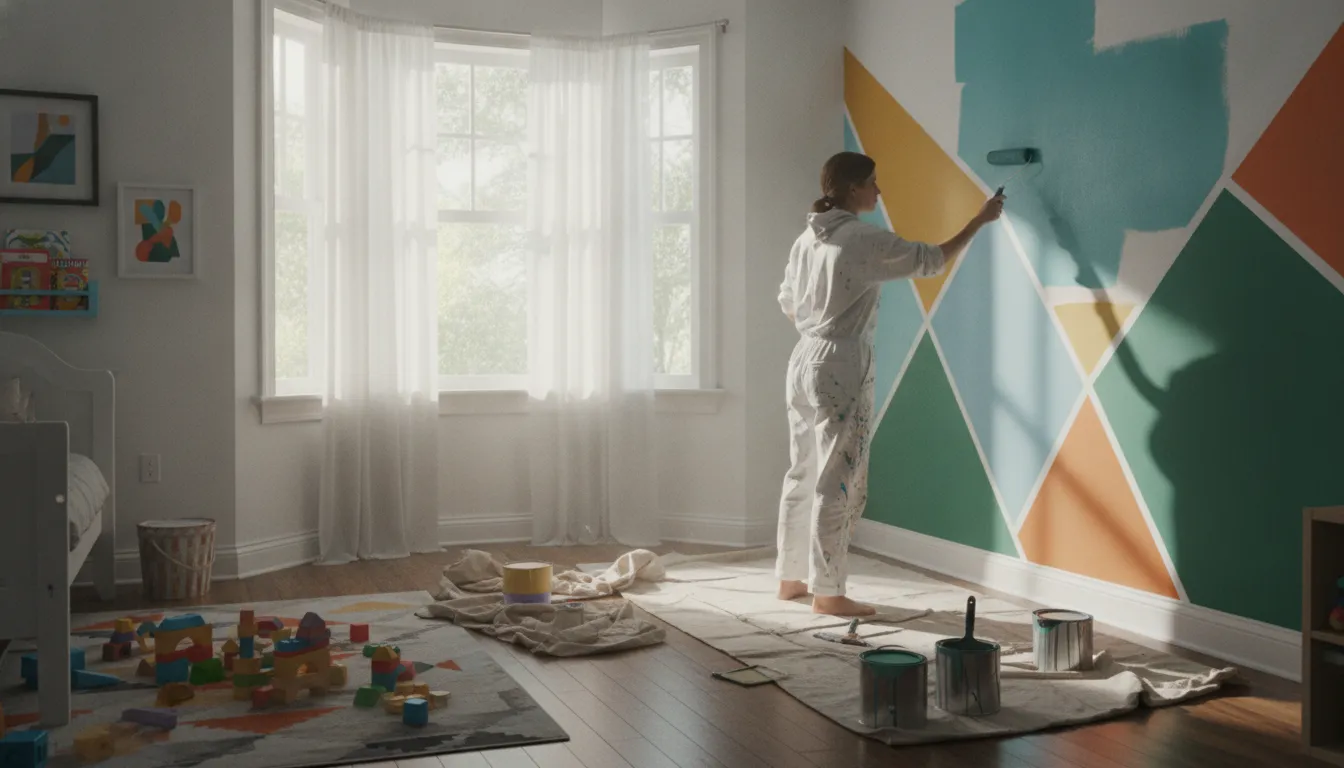
A child’s bedroom has to do more than look cheerful. It needs to handle fingerprints, toy marks, changing tastes, and the occasional spill without turning every small repair into a project. In Boise homes, the right paint plan balances indoor-air quality, easy cleaning, and a finish that can keep up with family life.
For kids bedroom painting Boise families can rely on, choose low-VOC or zero-VOC paint. Provide good ventilation during and after the work, and use a washable finish suited to the walls. These choices help create a comfortable room that is easier to maintain as your child grows.
Color still matters, but safety and performance should come first. We will start with the paint types and sheen options that make a children’s room both family-friendly and durable.
Kids Bedroom Painting Boise: Safe Paint Options for Children’s Bedrooms
Choosing paint for a child’s bedroom means balancing indoor-air considerations with the everyday realities of toys, fingerprints, and accidental spills. A quality water-based latex paint in a low-VOC or zero-VOC formula offers a practical starting point. Paint Boise uses premium Sherwin-Williams and Benjamin Moore low-VOC materials, helping Boise families choose a finish that looks polished without making safety an afterthought.
What Are VOCs and Why Do They Matter?
Volatile organic compounds, or VOCs, are chemicals released as gases from some solids and liquids. Paint can be one source of indoor VOCs, and the EPA notes that VOC exposure can contribute to health problems. This matters in a bedroom because it is an enclosed space where children spend many hours. You can read the EPA’s guide to indoor air quality for more background.
Low-VOC and zero-VOC paints are designed to reduce indoor air pollutants. They are not a substitute for good ventilation, however. Keep windows open when practical, use fans to move fresh air through the room, and follow the manufacturer’s re-entry and curing guidance. A paint may feel dry before it has fully cured, so plan the room’s return to normal use accordingly.
Best Paint Finishes for Kids’ Bedrooms
Eggshell and satin are usually the most useful choices for bedroom walls. Eggshell has a soft, low-sheen appearance that helps disguise minor wall imperfections while offering more cleanability than flat paint. Satin has a slightly higher sheen and is typically easier to wipe, making it a strong choice for active playrooms or walls likely to collect scuffs.
For a side-by-side explanation of sheen levels, see our Choosing the Right Interior Paint Sheen guide. Keep flat paint for areas where washability is less important, and consider semi-gloss for trim, doors, or other surfaces that need extra resistance to repeated cleaning.
Why Low-VOC Paint Is a Smart Choice
Low-VOC paint lets parents prioritize a healthier-feeling room while still getting the color and durability they want. High-quality latex paint is water-based, cleans up more easily during the project, and works well for most children’s bedrooms. When paired with an appropriate sheen and careful ventilation, it creates a comfortable foundation for a room that can handle daily life.
Before painting an older home, ask whether existing layers could contain lead-based paint. Disturbing lead paint can create a serious health hazard for children, so testing and proper management should come before cosmetic updates.
Color Ideas That Kids Love and Parents Approve
The best bedroom palette gives children room to express themselves while keeping the space comfortable for rest, reading, and everyday routines. Start with a small group of colors that works together, then let your child choose a favorite shade from that curated palette. This approach gives kids a meaningful role without leaving parents to repaint around an overly intense or short-lived trend.
Calming Colors for Better Sleep
Soft blues, muted greens, and gentle lavender can create a quieter mood than highly saturated primary colors. Pale blue can feel airy and restful, while a softened sage or eucalyptus green brings in a natural, grounded quality. Lavender adds personality without overwhelming the room when it is used as a wall color in a light, gray-leaning version.
Sherwin-Williams identifies Forever Lilac SW 9067 as a tranquil, comforting option, while Pure White SW 7005 provides a flexible neutral that works with changing bedding and furniture. These examples come from the brand’s kids’ bedroom color recommendations. A color consultation can also help you account for Boise’s changing natural light. Since the same sample may look cooler near a north-facing window and warmer in afternoon sun.
Bold Colors That Spark Creativity
Play areas can handle more energy than the sleep zone. Consider a sunny yellow, cheerful coral, blue-green, or a deep navy accent on one wall, inside a reading nook, or behind a desk. Used selectively, a bold color adds visual excitement without making every wall compete for attention. Sherwin-Williams describes Limon Fresco SW 9030 as a cheerful yellow that can make a room feel vibrant and fun.
For a more adaptable design, pair the accent with warm off-whites. Benjamin Moore’s Paper Mache and White Down are useful references for soft, welcoming neutrals. And the company’s kids’ room guidance also highlights the flexibility of off-white walls with colorful furnishings. Neutral backdrops can grow with a child, allowing artwork, sports gear, bedding, and accessories to change without requiring a new paint job every few years.
Keep the final choice practical by testing samples on more than one wall and viewing them in morning, afternoon, and evening light. The goal is not to limit creativity. It is to give your child a color they helped choose within a palette that feels balanced, livable, and easy for the whole family to enjoy.
Fun Accent Wall Techniques for Kids’ Rooms
An accent wall gives a child room to show personality without making the entire space feel busy. A playful pattern behind the bed, reading nook, or desk can become the room’s focal point while the remaining walls stay calm and flexible. For more inspiration, browse Paint Boise’s Accent Wall Ideas guide.
Painted Stripes and Geometric Patterns
Stripes are a simple way to add energy and visual structure. Vertical stripes can make a room feel taller, while horizontal stripes can make it appear wider. Choose two related colors for a softer look, or pair a neutral base with one brighter shade for more contrast.
Painter’s tape makes clean, intentional lines possible when the wall is properly prepared. A professional painter measures the layout, keeps spacing consistent, and seals tape edges to reduce paint bleed. That attention to detail matters with stripes because small inconsistencies are easy to see once the pattern covers an entire wall.
Geometric designs offer even more room for creativity. Triangles, diamonds, arches, diagonal blocks, and overlapping shapes can create a modern look that grows with a child. Keep the palette limited to two or three colors so the design feels expressive rather than overwhelming. Circles and polka dots are another approachable option, whether arranged in a regular pattern or scattered at different sizes for a more playful effect.
Chalkboard and Magnetic Paint Walls
Chalkboard paint can turn part of a wall into a space for drawing, practicing letters, or displaying changing artwork. It works especially well as a framed panel or lower-wall feature, rather than covering every surface. A defined section keeps the room balanced and gives the child a creative area with a clear boundary.
Magnetic paint offers a different kind of interactive feature. Used beneath a compatible topcoat, it can create a place for lightweight artwork, photos, or learning materials without relying on tape. Because these specialty finishes require careful preparation and even application, it is worth planning the placement before painting.
Whether you choose crisp stripes, bold geometry, polka dots, or an interactive wall, Paint Boise’s team can execute the design with professional preparation and sharp tape lines. The result is a personal feature that feels intentional and polished, not like a temporary project.
Durable Paint Finishes That Stand Up to Daily Life
| Finish | Appearance | Durability | Cleanability | Best Use in Kids’ Rooms |
|---|---|---|---|---|
| Flat / Matte | No shine, hides flaws | Low | Difficult to clean | Ceilings, low-contact accent areas |
| Eggshell | Soft, low sheen | Medium | Slightly washable | Lower-traffic bedrooms, nurseries |
| Satin | Gentle luster | High | Easy to wipe clean | Best overall for bedroom walls |
| Semi-Gloss | Noticeable shine | Very high | Very easy to clean | Trim, doors, baseboards |
Children’s bedrooms need a finish that can handle fingerprints, bumped furniture, craft projects, and the occasional wall-side adventure. The right sheen makes routine cleanup easier without making the room feel overly glossy. For most bedroom walls, satin is the best overall choice, while eggshell, flat, and semi-gloss each have a more specific role.
Satin: The All-Around Winner
Satin paint has a soft, low-luster appearance that works well with both playful colors and calmer bedroom palettes. More importantly, it offers a practical balance of durability and washability. You can usually wipe away light marks and everyday grime without the surface looking as utilitarian as a high-gloss coating.
That balance makes satin the best choice for bedroom walls in a child’s room. It stands up to daily wear while keeping the space comfortable and inviting. A quality latex, water-based formula in a satin sheen is a dependable option for many interior walls. Paint Boise can help match the product and sheen to the wall condition, lighting, and expected use.
Eggshell: A Solid Middle Ground
Eggshell has less sheen than satin, giving walls a softer, more understated look. It is slightly washable and can be a good fit when you want a refined finish but do not expect heavy contact or frequent scrubbing. Many homeowners choose eggshell or satin for nurseries and children’s spaces because both offer a balance between visual softness and cleanability.
Eggshell may work especially well in a lower-traffic room or for families who prefer a muted finish. Keep in mind that repeated aggressive scrubbing can affect any painted surface, so gentle cleaning and prompt attention to marks will help preserve the result.
Flat vs. High-Gloss: When to Use
Flat or matte paint minimizes reflection and can disguise minor wall imperfections, but it is difficult to clean. That makes it less practical for walls in a child’s bedroom, where scuffs and smudges are likely. It may still suit a ceiling or a low-contact accent area.
Semi-gloss is tougher, easier to wipe down, and more resistant to scuffs. Its stronger shine is usually better reserved for trim, doors, baseboards, and other surfaces that receive frequent handling rather than broad bedroom walls. For a side-by-side explanation of flat, eggshell, satin, and semi-gloss, see Paint Boise’s Complete Paint Finish Guide and Interior Paint Sheen guide. When planning kids bedroom painting Boise homeowners can trust, Paint Boise can help select the right finish for every surface.
Why Hire a Professional for Kids’ Bedroom Painting in Boise
Painting a child’s bedroom can look like a manageable weekend project, but the finished result depends on more than rolling color onto the walls. A professional team helps create a room that looks polished, holds up to daily wear, and is prepared with family comfort in mind. For families comparing options for kids bedroom painting Boise, the value is in the details that are easy to miss when time and equipment are limited.
The Value of Professional Preparation and Finish
Proper preparation is the foundation of a clean, durable finish. A professional painter evaluates the existing surface, fills nail holes and small imperfections, sands rough areas, and protects trim, flooring, furniture, and fixtures before applying paint. That preparation helps prevent visible patches, peeling, and uneven coverage as the room experiences toys, bumps, and frequent cleaning.
Professionals can also create crisp accent-wall lines and other decorative details without the bleed-through that often occurs when painter’s tape is applied to an uneven surface. A color consultation gives parents and children a practical way to balance personality with a palette that can grow with the child. The crew can further explain low-VOC material options, water-based products, and suitable washable sheens for a bedroom, then follow appropriate ventilation and curing practices.
Paint Boise offers professional interior painting in Boise for homeowners who want the project handled from preparation through final cleanup. That means less time moving supplies, correcting mistakes, and living around an unfinished room.
Paint Boise’s Commitment to Quality and Safety
Paint Boise uses premium Sherwin-Williams and Benjamin Moore materials and provides a free estimate with every project. The team has more than 40 years of experience serving families throughout the Treasure Valley, bringing local knowledge and clear communication to residential work.
There is also less financial risk in getting started: Paint Boise requires no deposit, with payment due only upon customer satisfaction. Completed work includes a 5-year workmanship warranty, giving homeowners added confidence that the finish will be addressed if a workmanship issue develops. Together, professional preparation, thoughtful material guidance, and a satisfaction-focused process make a child’s bedroom painting project easier to plan and less stressful to complete.
Frequently Asked Questions
What are the safest paints for a child’s bedroom?
Choose a low-VOC or zero-VOC, low-odor, water-based latex paint. These options help limit odors during the project while providing a practical finish for everyday family life. Keep the room ventilated and follow the product label for handling and re-entry guidance.
Which paint finish is easiest to clean in a kids’ room?
Eggshell and satin finishes are durable and easier to wipe clean than flat paint. Satin is often the best all-around choice for walls that may see fingerprints, art projects, or scuffs. Semi-gloss is usually better reserved for trim and doors.
How long should a child stay out of the room after painting?
Keep children out of the room until the paint is fully dry and the space has been well ventilated. A common planning window is 24 to 48 hours, but drying and ventilation time can vary with the product, temperature, and humidity. Follow the paint manufacturer’s instructions.
Can chalkboard or magnetic paint work in a child’s bedroom?
Yes. Chalkboard paint can create a small creative zone, while magnetic paint can support artwork and changing displays. Use these specialty coatings as an intentional accent rather than covering every wall, and follow the label instructions for application, drying, and cleanup.
Do Boise families need special paint for a child’s bedroom?
Boise families typically benefit from the same priorities as other homeowners: low odor, low-VOC or zero-VOC materials, and a washable finish selected for the room’s activity level. A local color consultation can also account for the child’s age, natural light, and how the space may need to grow with them.
Ready to Create a Bedroom Your Child Will Love?
A thoughtful color and durable, washable finish can make a children’s bedroom easier to enjoy and maintain as your family grows. Get your free estimate for a children’s bedroom painting project and talk through your goals with the Paint Boise team. Contact Paint Boise online or call (208) 254-6615 to get started.