
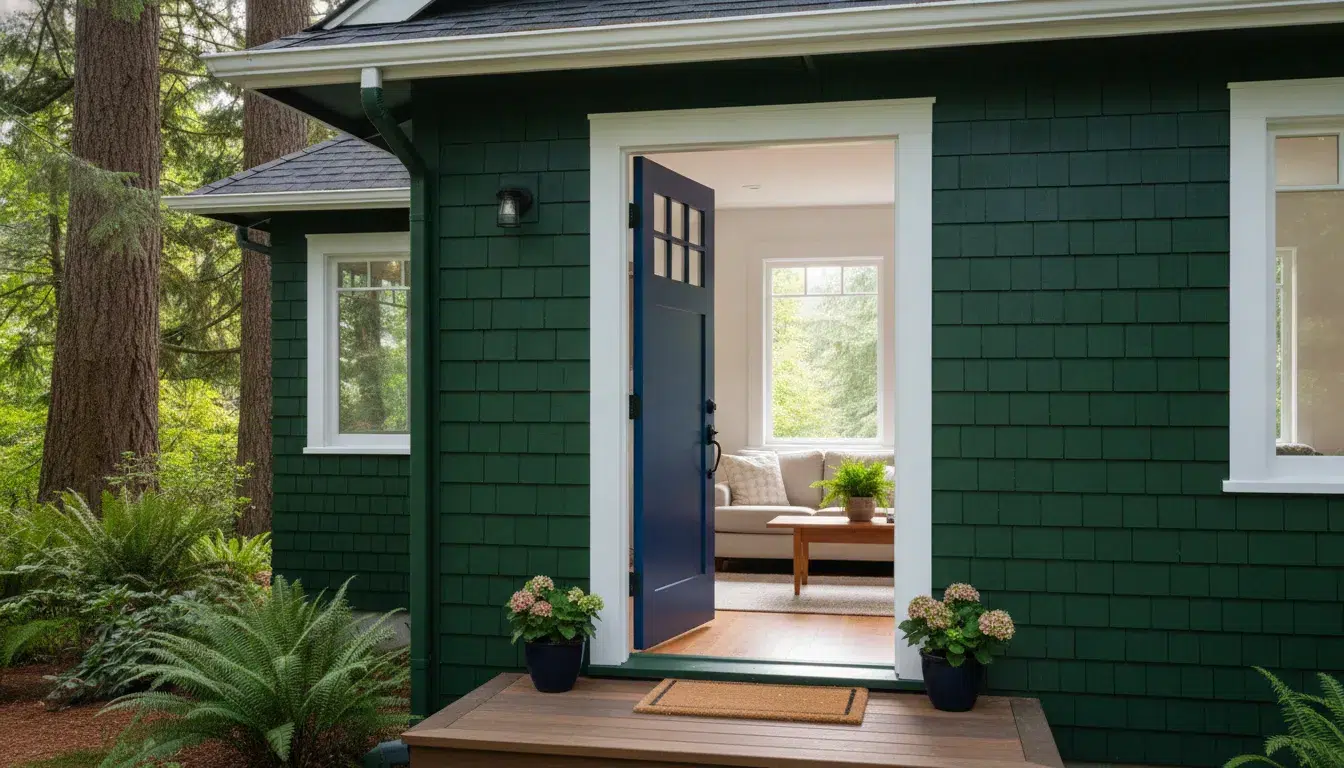
Choosing paint by color alone can create problems later. A coating made for a quiet bedroom wall has different performance demands than one exposed to Boise sun, moisture, and seasonal temperature swings.
Talk with Paint Boise about the right paint for your surface.
The key to interior vs exterior paint is the formulation, not just the label color. Interior products are built to handle scuffs, stains, and repeated scrubbing. Exterior products are designed to manage UV exposure, moisture, mildew, fading, and movement as surfaces expand and contract. Swapping them can lead to poor durability, unwanted emissions indoors, or premature peeling outdoors. Always confirm the intended surface and use on the label before buying.
Understanding what is inside the can makes that guidance easier to apply. The resin, pigments, solvents, and additives each influence how a paint behaves. So the next step is looking at how those ingredients are balanced for indoor and outdoor conditions.
How Interior vs Exterior Paint Differs in Formulation
Paint may look simple in the can, but its ingredients are selected for the surface and conditions it must handle. Interior coatings are built around everyday wear inside a home or business. Exterior coatings must continue performing through sunlight, moisture, mildew, and changing temperatures. That is why the best choice depends on where the paint will live, not just on its color or sheen.
What the main ingredients do
Most paints contain four basic ingredient groups. Pigment provides color and helps determine hiding power. Resin is the binder that holds the pigment together and forms the finished film after the paint dries. Solvent, which may be water or another liquid, keeps the product spreadable while it is in the can and evaporates as the coating cures. Additives are smaller-quantity ingredients that adjust properties such as flow, drying, mildew resistance, or shelf stability.
The formula changes when the performance target changes. Interior paint is generally made with a harder resin film, helping it resist scuffs, stains, and repeated washing. Exterior paint uses a softer, more flexible film so it can accommodate movement in outdoor materials as temperatures rise and fall. Lowe’s summarizes the practical distinction as interior paint resisting scrubbing and staining, while exterior paint is designed to resist fading, mildew, and harsh weather conditions.
Interior and exterior paint at a glance
| Formulation factor | Interior paint | Exterior paint |
|---|---|---|
| Resin film | Harder film for scuffs, stains, and repeated scrubbing | More flexible film for expansion and contraction outdoors |
| Primary stresses | Washing, fingerprints, impacts, and daily occupancy | UV sunlight, moisture, temperature changes, and weather |
| Additive priorities | Flow, cleanability, appearance, and indoor-use requirements | Resistance to fading, mildew, and outdoor exposure |
| Film movement | Designed primarily for stable indoor substrates | Designed to flex with outdoor substrates as conditions change |
These are formulation patterns, not a substitute for reading the product label. A coating can vary by substrate, sheen, manufacturer, and intended use. The label should identify whether the product is approved for interior or exterior application and may provide separate guidance for wood, masonry, metal, drywall, or previously painted surfaces.
Why the difference matters in practice
A hard indoor film can be useful on walls, trim, and other surfaces that receive frequent contact. Outdoors, however, a coating also needs to tolerate movement and environmental exposure. A rigid film may be more vulnerable when the underlying material expands and contracts. Conversely, an exterior formula is not automatically the best choice for an occupied room. Its resin and additive package is designed for outdoor conditions rather than the cleaning, comfort, and indoor-use requirements of living spaces. For a reliable result, match the formulation to the surface, exposure, and preparation work before opening the can.
See the formulation differences between interior and exterior paint.
What Is Exterior Paint Designed to Handle?
Exterior paint has to protect a surface while that surface sits in changing, sometimes demanding conditions. In Boise and the Treasure Valley, a coating may face strong sunlight, dry periods, rain, snow, outdoor moisture, mildew, and repeated temperature changes. The product is not simply an interior formula with a different color. Its ingredients and film properties are selected for exposure to the elements.
Sunlight and seasonal weather
Ultraviolet light can gradually contribute to fading and surface breakdown. Moisture creates a different set of concerns, especially when water reaches gaps, unsealed edges, or a surface that was not adequately prepared. Exterior coatings are designed to resist fading, mildew, and harsh weather conditions, as summarized in this overview of interior and exterior paint.
That does not mean exterior paint makes a wall, trim board, or siding waterproof. The substrate, caulking, flashing, drainage, and application conditions still matter. A sound coating system starts with identifying where moisture may enter and correcting preparation issues before paint is applied.
Movement in the paint film
Outdoor materials expand and contract as temperatures change. Wood can move across seasons, and other substrates can respond to heat and cold as well. Exterior resins are generally softer and more flexible than interior resins, helping the paint film accommodate some of that movement rather than behaving like a rigid shell. The underlying explanation of this flexibility is documented in this discussion of paint resin behavior.
Flexibility is useful, but it is not a guarantee against cracking, peeling, or premature failure. Paint cannot compensate for wet wood, loose previous coatings, contamination, movement beyond the film’s capacity, or an unsuitable product. Proper cleaning, scraping, repairs, priming where needed, and application within the product’s label conditions remain essential.
Different outdoor substrates need different choices
Exterior projects may involve wood siding, fiber cement, stucco, masonry, metal, composite materials, or vinyl. Each surface has its own requirements for adhesion, preparation, and product compatibility. Sheen, color, and climate exposure also influence the selection. For example, a vinyl surface calls for more than choosing a color that looks right; it requires selecting proper exterior paint for that substrate and its exposure.
In practical terms, exterior paint is designed to work as part of a complete system: a compatible coating over a properly prepared outdoor surface. That is why the best product for one Boise exterior may not be the right choice for another, even when both projects use the same color.
Can You Use Exterior Paint Inside or Interior Paint Outside?
Usually, no. Interior and exterior coatings are engineered for different environments, so swapping them can create avoidable problems with odor, cleanability, weather resistance, and long-term adhesion. A product that feels durable on a sample board is not automatically suitable for every surface or location.
Why interior paint is a poor choice outdoors
Interior paint is designed for the demands of occupied rooms. Its harder resin system helps the finish resist scuffs, stains, and repeated scrubbing or washing. Outside, however, the coating must handle direct sunlight, moisture, mildew pressure, and regular temperature fluctuations. Those stresses can cause an interior film to fade, chalk, peel, or crack sooner than an exterior product intended for the substrate and exposure.
Outdoor materials also move as they heat, cool, absorb moisture, and dry. Exterior formulations use resins and additives selected to help the paint film accommodate that movement. Interior paint generally does not provide the same level of flexibility or weather protection. Even when the initial color looks right, the finish can fail because it was not designed for the conditions around it.
Why exterior paint is usually a poor choice indoors
Exterior paint has a different job. Its resins and additives are selected for outdoor exposure, not for the cleaning patterns and occupancy conditions of a bedroom, hallway, kitchen, or office. That makes it a poor default for indoor walls and ceilings. It may not deliver the hard, washable surface expected from an interior coating, and its outdoor-focused formulation can create stronger odors during application or drying.
VOCs, or volatile organic compounds, are chemicals that can be released into the air as coatings dry. Indoor exposure matters because people occupy the space while the coating cures. Researchers have identified indoor VOC emissions as a public-health concern and have studied low-emission coatings in response. That does not mean every exterior product creates the same risk, or that a single exposure predicts a health outcome. It does mean the label’s intended-use, ventilation, and safety directions deserve careful attention, especially in occupied spaces. See the research discussion at PubMed.
Need help choosing the right coating for your surface? Contact Paint Boise for practical guidance.
Choose the coating for the exposure
The safest rule is simple: use an interior product indoors and an exterior product outdoors, unless the manufacturer specifically identifies another application. Read the label rather than relying on a color name or the word “durable.” Lowe’s summarizes the core distinction: interior paint is built for scrubbing and staining. While exterior paint is built to resist fading, mildew, and harsh weather. You can review that guidance at Lowe’s.
There are exceptions for specialty products, such as coatings made for floors, cabinets, masonry, metal, or other unusual surfaces. Those exceptions are product-specific, not a reason to interchange ordinary wall paint. In an interior vs exterior paint decision, identify the surface, exposure, occupancy, and cleaning needs first. Then select a coating whose technical label supports that exact use.
How to Read a Paint Label for the Right Surface
A paint can answers more than the color question. Its label helps you decide whether the coating belongs on an interior wall, exterior siding, trim, cabinets, masonry, metal, or another surface. Before buying based on a color chip or a claim such as “durable,” use this checklist to confirm that the product fits the job.
- Confirm the intended location. Look for language such as interior, exterior, or interior/exterior use. Do not assume a product is suitable for both settings because it is marketed as durable. Interior and exterior coatings are formulated for different demands. Interior products commonly prioritize scrubbing, scuffing, and staining, while exterior products must handle sunlight, moisture, temperature changes, and mildew. If the label is unclear, check the manufacturer’s technical information or ask a professional before applying it.
- Match the substrate. Read the surface guidance carefully. A product made for drywall may not be the right choice for wood siding, previously painted cabinets, masonry, galvanized metal, or vinyl. Check whether the label requires a primer, special preparation, or a particular compatible undercoat. Surface condition matters too. Peeling, chalking, glossy, stained, or porous surfaces may need cleaning, sanding, repair, or priming before the finish coat. For more help with understanding paint and primer products, review the preparation guidance before selecting a color.
- Choose the sheen for the surface and use. Sheen affects both appearance and maintenance. Low-sheen finishes can help hide minor surface variation, while higher-sheen finishes are often easier to wipe clean but may draw attention to uneven preparation. Consider whether the area receives fingerprints, cooking residue, moisture, or frequent contact. The label’s recommended uses can help you balance cleanability with the look you want.
- Read the cleanup directions. Cleanup instructions tell you what the coating is designed to work with, such as soap and water or a specified solvent. They also help you plan brushes, rollers, spills, and disposal before work begins. Never mix cleaning products or solvents unless the manufacturer specifically permits it. Follow the label rather than relying on assumptions based on the paint’s color or finish.
- Review ventilation and safety information. Read warnings, ventilation guidance, protective-equipment recommendations, drying restrictions, and recoat directions. Volatile organic compounds, or VOCs, can be a concern in occupied indoor environments, which is one reason low-emission coatings receive attention in indoor-air research. Open windows or improve airflow when the label calls for it, and keep occupants away from the work area as directed. Exterior products should not be brought indoors simply because the color is appealing.
- Check compatibility and the condition of old paint. Confirm that the new coating is compatible with the existing finish, primer, and substrate. Test an inconspicuous area when the surface history is uncertain. If the building or painted surface is old, pause before sanding, scraping, or disturbing it. Lead was historically used in paint, and managing older lead paint remains a public-health concern. Follow the CDC’s guidance at cdc.gov/lead-prevention/prevention/paint.html and use qualified professionals when testing or removal may be necessary.
When a label leaves an important question unanswered, the safest choice is to verify the product rather than guess. Correct compatibility and preparation usually matter more than a broad marketing claim on the front of the can.
How Paint Boise Selects Paint for Boise Projects
Paint selection starts with the surface and the conditions it must handle, not simply the color on a sample card. A living room wall, a kitchen, a commercial hallway, and an exterior siding system each place different demands on a coating. Paint Boise brings more than 40 years of Idaho climate experience to projects throughout Boise and the Treasure Valley. Helping homeowners, property managers, and business owners choose products that fit the work.
Preparation comes before the product
Before recommending a finish, the team considers the substrate and its current condition. Drywall, previously painted walls, wood, trim, metal, masonry, and siding can require different preparation and coating approaches. Cleaning, scraping loose material, repairing damage, sanding, caulking, and priming where appropriate all affect how the finished paint bonds and looks. The best product cannot compensate for a surface that was not properly prepared.
Exposure matters just as much. Interior areas may need to withstand fingerprints, scuffs, moisture, and repeated cleaning. Exterior surfaces in Boise and nearby communities face sunlight, precipitation, temperature swings, and seasonal movement. Those conditions influence the resin, additives, sheen, and application plan. If you are comparing professional interior painting with an outdoor project, the correct answer is not one universal paint. It is a coating selected for the environment and substrate.
Matching sheen and finish to daily use
Sheen is part of the decision because it affects both appearance and maintenance. A lower-sheen finish can help create a softer look on many walls, while a more washable finish may be practical in areas that receive frequent contact or cleaning. Kitchens, bathrooms, hallways, offices, and rental properties may each call for a different balance of appearance, durability, and ease of care. For more detail on choosing durable interior paint finishes, consider how the room is actually used before choosing a sheen.
Using premium products with clear communication
Paint Boise emphasizes premium manufacturers such as Sherwin Williams and Benjamin Moore. While still matching the specific product to the project rather than treating a brand name as a guarantee. The recommendation accounts for preparation needs, surface material, exposure, desired sheen, and the practical demands of the property. Product selection should be understandable, so clients can ask why a coating is being recommended and what preparation it requires.
For outdoor work, professional exterior painting includes the same attention to substrate, exposure, and preparation. That localized approach helps keep decisions clear from the initial discussion through application. Whether the project is a Boise home, a Meridian property, or a commercial space elsewhere in the Treasure Valley.
Frequently Asked Questions
What is the difference between interior and exterior paint?
Interior paint is formulated for indoor wear, including scuffs, stains, and repeated scrubbing. Exterior paint is formulated for outdoor stress such as sunlight, moisture, mildew, and temperature changes. Their resins and additives are selected for different conditions, so the best choice depends on the surface and its exposure.
Can I use interior paint for exterior surfaces?
It is generally not a good choice. Interior paint lacks the weather resistance needed for prolonged sun, moisture, and temperature swings. Outdoors, it can fade, chalk, peel, or crack sooner than a coating designed for exterior exposure. Check the label and choose a product approved for the specific exterior substrate.
Is exterior paint safe to use inside?
Exterior paint is not automatically appropriate for an occupied interior. Its solvents, resins, and additives may be intended for outdoor conditions rather than indoor cleaning and occupancy. Use a product labeled for interior application, and follow the label’s ventilation and cleanup directions.
What happens if you mix interior and exterior paint?
Mixing the two can change the coating’s performance in unpredictable ways. Product compatibility depends on the specific formulas, not simply on whether both cans share a color or sheen. Follow the manufacturer’s recommendations and avoid combining products unless the label or manufacturer approves the system.
Can I use exterior paint on the inside of my front door?
A front door has different exposure on each face. The exterior side needs protection from weather, while the interior side is part of an occupied space and may need a coating approved for interior use. Select products for each side according to the label, substrate, ventilation, and expected wear.
Ready to Choose the Right Paint System?
Interior and exterior surfaces face different demands, so the right product can make preparation, application, and long-term maintenance more straightforward. If you are planning a project in Boise or the Treasure Valley, contact Paint Boise to discuss the surface, conditions, and finish you have in mind. Our team can help you take the next step with a paint system suited to your indoor or outdoor project. Contact Paint Boise to discuss your project.