

Trying to figure out how to get rid of paint smell after a room makeover? The fastest reliable approach is not to cover the odor with candles. It is to control the work area, move odor-bearing air outdoors, choose the right paint for the room, and give the coating enough time to dry and cure. Boise homeowners also need to account for weather: open windows are helpful when outdoor conditions allow, but cold nights, smoke, wind, or winter heating can make a thoughtful ventilation plan even more important.
Planning an interior painting project? Get a free quote from Paint Boise.
This guide explains what causes that new-paint smell, what to do while the paint is wet, how long to ventilate, when low-VOC or zero-VOC paint helps, and when a smell that will not go away may point to a moisture or coating problem.
What causes paint smell?
Paint smell comes from compounds released as paint dries and cures. These may include water, solvents, coalescing agents, and other volatile organic compounds, commonly called VOCs. The exact emissions vary by product, colorant, primer, sheen, application thickness, room size, temperature, humidity, and airflow.
Water-based interior paints often have less odor than many solvent-based or oil-based products, but low odor does not mean no emissions. A room can smell strong even when the wall feels dry to the touch. Surface dry, ready for light use, and fully cured are different stages, so follow the product label rather than using smell alone as the only test.
The US Environmental Protection Agency recommends exhaust ventilation during remodeling and maximum ventilation for at least 72 hours after activities that can off-gas pollutants, when conditions allow. Its guidance also emphasizes keeping occupants away from the work area and preventing pollutants from spreading through the house. Read the EPA remodeling and indoor-air guidance.
How to get rid of paint smell: start with ventilation
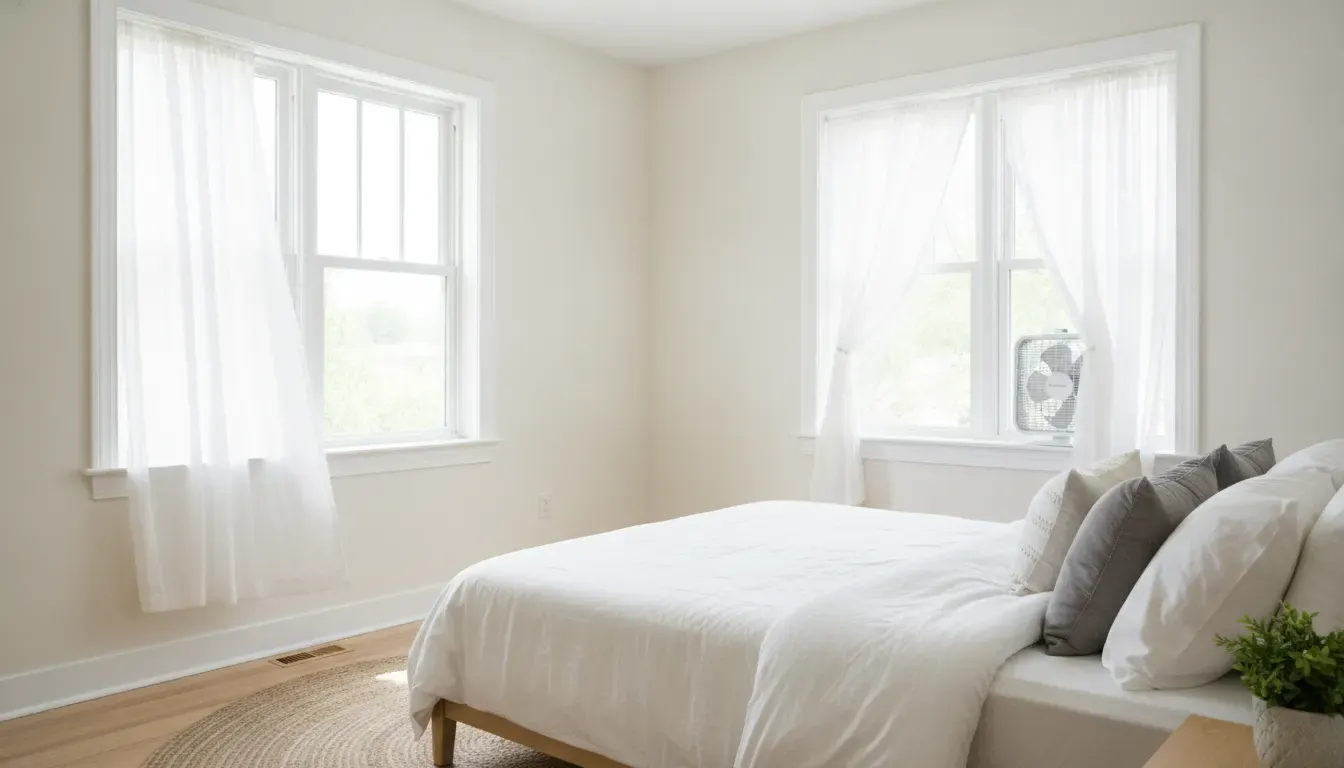
Ventilation is the most important step because it replaces odor-filled indoor air with outdoor air. A single open window may help, but it does not always create enough air movement. For better results, make one opening the fresh-air inlet and use another opening as the exhaust path.
- Open an outside window in or near the work room. Remove anything blocking the opening, such as heavy curtains or furniture.
- Place a box fan securely in a window, aimed outward. The goal is to exhaust air outdoors, not blow a strong stream directly at a wet wall. Keep the fan stable and protected from rain.
- Create a second opening for replacement air. This can be another window or an exterior door, depending on the layout. Cross-ventilation works best when air has a clear route through the room.
- Keep the exhaust path away from people and neighboring openings. Do not send fumes toward an adjacent open window, walkway, or another occupied unit.
- Continue the setup after the final coat. For many interior projects, plan on active ventilation during painting and for roughly 48 to 72 hours afterward when weather and the product label permit. Stronger-smelling coatings may need longer.
Never use an air conditioner as a substitute for outdoor exhaust, and do not assume a bathroom or kitchen fan vents outdoors unless you know how it is configured. If Boise weather makes open-window ventilation unsafe or impractical, isolate the room, use the home’s approved ventilation settings, and follow the paint manufacturer’s instructions.
Isolate the room so the odor does not spread
Removing odor from one room is easier when you do not let it circulate through the whole house. Close doors to nearby bedrooms and living areas, especially while the paint is being applied and during the first drying period. If the project requires a stronger containment setup, use painter’s plastic and tape to limit air movement around the doorway, but make sure the room still has a safe source of replacement air.
- Move children, pets, and anyone sensitive to strong odors away from the work area.
- Remove loose fabrics, rugs, and upholstered items when practical. Soft materials can hold odor and release it slowly.
- Keep paint cans, trays, and solvent-soaked materials closed or removed when they are no longer needed.
- Do not leave open containers in an adjacent garage, hallway, or utility room and expect the smell to stay in one place.
- Cover or temporarily close nearby HVAC supply and return registers only when the ventilation plan still provides a safe exhaust and replacement-air path. Avoid contaminating ductwork.
- In an apartment or townhouse, notify nearby occupants when a project could affect shared air and follow building rules.
The EPA notes that barriers and local exhaust can prevent pollutants from spreading from a work area to the rest of a home. That principle matters in open Boise floor plans, where a painted living room can quickly affect the kitchen, bedrooms, and entryway if doors and airflow are left unmanaged.
How long does paint smell last?
There is no single cure-time answer for every coating. A well-ventilated room painted with a water-based interior product may become much more comfortable within a day or two, while odor can remain noticeable for several days. Oil-based, alkyd, solvent-based, specialty, or unusually thick coatings may take longer. Cool temperatures, high indoor humidity, limited airflow, and porous or unsealed surfaces can extend the timeline.
Use this practical checklist before returning a room to normal use:
- The painted surface is dry according to the label, not merely dry in one small spot.
- The room has been ventilated for the period recommended by the product manufacturer.
- The odor is faint and continuing to decline rather than staying sharp or getting stronger.
- There is no tackiness, soft film, bubbling, discoloration, or unusual sheen on the surface.
- Children, pets, older adults, and people with breathing sensitivities can avoid the room until it is comfortable.
If anyone experiences eye or throat irritation, dizziness, headache, or breathing difficulty, leave the room for fresh air and follow the label’s safety instructions. Persistent or severe symptoms deserve medical guidance. This article is general home-care information, not a diagnosis or a substitute for product-specific or professional advice.
Do low-VOC and zero-VOC paint eliminate odor?
Low-VOC and zero-VOC products can reduce odor at the source, but they do not make ventilation unnecessary. Paint bases can contain very low levels of VOCs while colorants, primers, additives, or the surface preparation materials still contribute emissions. Zero-VOC is also not a guarantee that a tinted product has no odor.
When choosing paint for a bedroom, nursery, office, or other occupied space, compare the product label and technical data rather than relying only on a front-of-can claim. Ask about:
- Whether the product is designed for interior walls and the intended surface.
- VOC information for the specific base and tint, not just the untinted base.
- Primer requirements, especially over stains, repairs, smoke residue, or glossy existing paint.
- Recommended temperature, humidity, ventilation, recoat, and cure conditions.
- Whether the finish is durable enough for the room, so a lower-odor choice does not create a maintenance problem later.
Paint Boise’s low-VOC paint guide for Boise homes covers product-selection considerations in more detail. The key difference is this: a low-VOC article helps you choose a product before painting, while this guide focuses on removing odor during and after the project.
Want help choosing an interior paint system for your room? Talk with Paint Boise about your project.
What helps besides open windows?
If outdoor conditions limit window ventilation, a portable air purifier with a meaningful activated-carbon stage may help reduce some odors. Carbon is intended for gases and odors, while a HEPA filter is primarily for particles such as dust from sanding. Neither replaces a safe exhaust path or the cure time specified by the coating manufacturer.
Other common suggestions are less useful than they sound. Scented candles, fragrance sprays, and essential oils mask the odor rather than remove paint vapors. Bowls of baking soda or charcoal may have a limited effect in a small area, but they should not be treated as the main ventilation plan. The best sequence is source control, outdoor exhaust, isolation, and time.
Do not run an unapproved combustion appliance or create a strong draft around flammable solvent products. Keep electrical equipment, fans, and extension cords in good condition, and follow the paint label and the equipment manufacturer’s safety instructions.
When lingering paint smell signals a bigger problem
If the odor is still strong after the label’s cure period and several days of appropriate ventilation, do not simply keep adding fragrance. Look for a reason the coating is not curing or the odor source was not removed.
Moisture or humidity
A damp wall, bathroom humidity, condensation, plumbing leak, or exterior water intrusion can slow curing and cause a musty smell that gets mistaken for paint odor. Bubbling, peeling, staining, soft drywall, or recurring discoloration are signs to investigate the moisture source before repainting.
Coating or surface-preparation issue
Paint applied too heavily, applied outside the recommended temperature range, or applied over a contaminated or incompatible surface may stay soft or smell unusual. Smoke residue, grease, mildew, old oil-based layers, and unsealed repairs can also affect adhesion and odor. A fresh topcoat cannot permanently solve an underlying surface problem.
Hidden source or poor airflow
Check closets, trim, cabinets, stored rags, open paint cans, and adjoining rooms. Confirm that the exhaust fan is actually moving air outdoors and that a return-air path is not spreading the smell through the house. If the odor is localized to one wall or cabinet, the issue may be the substrate or an older coating rather than the entire room.
When you see these warning signs, pause before applying another coat. A professional painter can inspect the surface, identify preparation needs, and recommend a coating system that fits the room’s conditions.
How Boise homeowners can plan a lower-odor painting project
Odor control starts before the first roller stroke. Schedule interior painting when you can ventilate without bringing in wildfire smoke, heavy rain, extreme cold, or excessive outdoor humidity. Plan where children and pets will stay, identify the exhaust window, secure the fan, and decide how the room will be isolated.
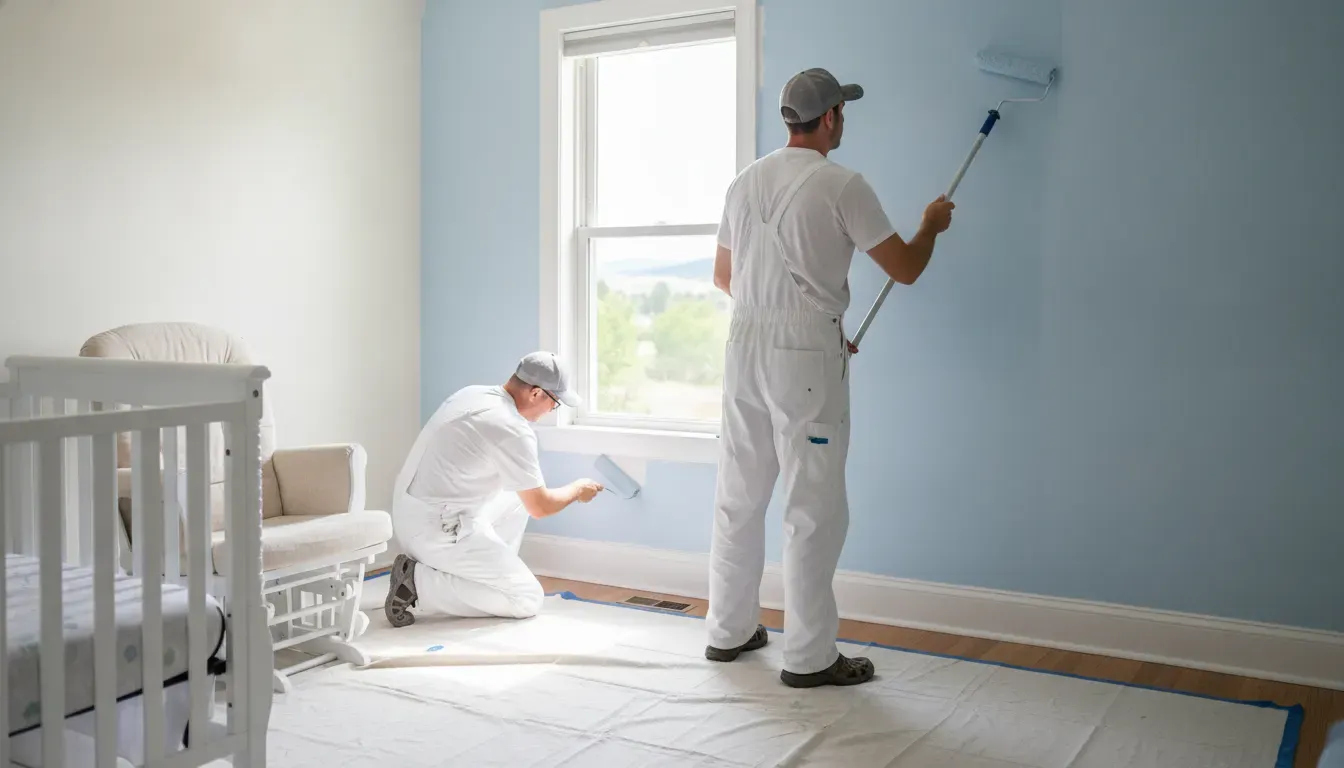
Ask your painting contractor what product family, primer, sheen, and cure conditions are planned. A professional process should include surface preparation, protection of furnishings, controlled application, cleanup, and a final walkthrough. Paint Boise provides interior painting services for homes across Boise and the Treasure Valley and can discuss the room, existing surface, ventilation options, and finish you want.
For a project quote, call Paint Boise at (208) 254-6615 or use the contact page. A site visit can help distinguish a straightforward repaint from a project that needs stain blocking, moisture correction, drywall repair, or other preparation before the finish coat.
Ready to plan a comfortable, well-ventilated repaint? Request a free estimate from Paint Boise.
Frequently asked questions
What is the fastest way to get rid of paint smell?
Create a safe exhaust path outdoors, use cross-ventilation, isolate the room, remove open paint materials, and continue airing out after the final coat. A carbon air purifier can supplement ventilation, but it should not replace outdoor airflow or the product’s cure instructions.
Should a fan blow into or out of a painted room?
When the goal is to remove odor, place a securely supported fan in a window blowing outward. Provide a second opening for replacement air so the fan has a path to pull air through the room. Avoid blowing directly across a wet surface or toward another occupied space.
How long should I wait before sleeping in a freshly painted room?
Follow the paint label and wait until the surface is dry, the room has been ventilated, and the odor is low. Many projects benefit from 48 to 72 hours of ventilation, but product type, room conditions, and occupant sensitivity can change the timeline. When in doubt, wait longer and ask the manufacturer or your painting professional.
Does low-VOC paint mean there will be no smell?
No. Low-VOC and zero-VOC products may reduce emissions and odor, but tint, primer, additives, surface conditions, and curing still matter. Continue to ventilate and follow the product instructions.
When should I call a professional about a lingering odor?
Ask for an inspection when the smell stays strong beyond the label’s cure guidance, returns after ventilation, or occurs with tackiness, bubbling, peeling, staining, soft drywall, or a musty odor. Those clues can point to a moisture, substrate, or coating issue that needs to be corrected before repainting.