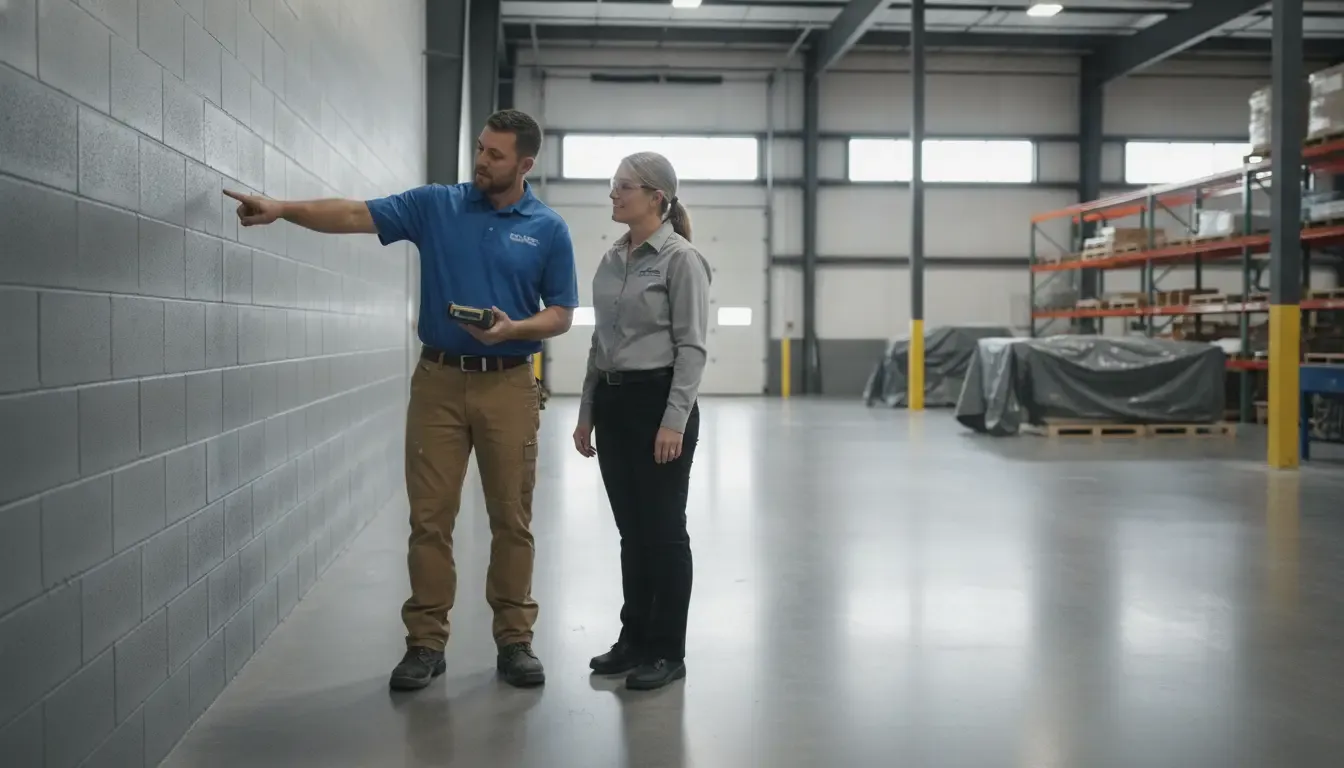
When a warehouse, office, retail space, hospitality property, or other commercial facility needs durable surface protection, choosing among commercial coating contractors in Boise takes more than comparing a few estimate totals. The right team should connect the condition of the property to a specific preparation plan, coating system, safety process, schedule, and quality-control checklist.
Request a commercial coating consultation and free estimate from Paint Boise.
This guide explains what facility managers, property managers, and business owners should look for before selecting a contractor. It also shows how to compare proposals without assuming that the lowest initial number represents the best value.
What should a qualified commercial coating contractor provide?
A qualified commercial coating contractor should be able to explain the work in project-specific terms instead of offering a one-size-fits-all product or process. At a minimum, the proposal and conversations should address:
- What surfaces will be coated and what condition they are in now.
- How the crew will clean, repair, profile, prime, and prepare each substrate.
- Which coating system is recommended for the property’s traffic, moisture, chemicals, weather, and appearance requirements.
- How the team will protect occupants, inventory, equipment, adjacent finishes, and air quality during the work.
- What areas are included, what is excluded, and how changes will be handled.
- When each phase will occur and how the contractor will communicate schedule changes.
- What documentation, warranty terms, touch-ups, and final inspection are included.
A strong team welcomes these questions because a clear scope reduces surprises for everyone involved. Look for practical answers tied to your building, not vague promises about a coating lasting forever or working on every surface.
1. Start with a detailed site assessment
Commercial coating projects begin with the substrate, not the color card. During a site assessment, the contractor should walk the property with the decision-maker or facility contact and note the surfaces, current coatings, visible damage, moisture concerns, traffic patterns, access points, and operating constraints.
For a warehouse, that may include concrete floors, masonry walls, loading areas, columns, safety zones, and equipment traffic. An office or retail property may require a different approach for drywall, metal, wood, trim, high-touch areas, and occupied spaces. A hospitality or food-service setting may require careful coordination around guests, staff, cleaning, odor, and operating hours.
Ask the contractor to identify conditions that could change the scope before the proposal is finalized. Useful questions include:
- Which surfaces require repair before coating?
- Are there areas where old paint, oil, dust, moisture, rust, or efflorescence could affect adhesion?
- Will testing or additional preparation be recommended if the surface condition is uncertain?
- Which areas must remain accessible during production?
- What decisions must the owner make before the crew starts?
An assessment does not need to be complicated to be useful. It needs to show that the contractor understands the building and has thought through the conditions that can affect the finished result.
2. Look for a specific substrate preparation plan
Preparation is often the difference between a coating that performs as expected and a finish that fails prematurely. A proposal should describe preparation by surface, rather than relying on a single phrase such as “standard prep.” The exact steps depend on the existing condition and the selected system, but may include cleaning, scraping, sanding, grinding, pressure washing, rust treatment, caulking, patching, crack repair, removal of loose material, priming, or surface profiling.
The contractor should also explain how the prepared surface will be checked before coating begins. That may involve a visual inspection, a dry and clean surface confirmation, or other project-appropriate checks. If repairs or conditions fall outside the original scope, the team should document them and explain the options before proceeding.
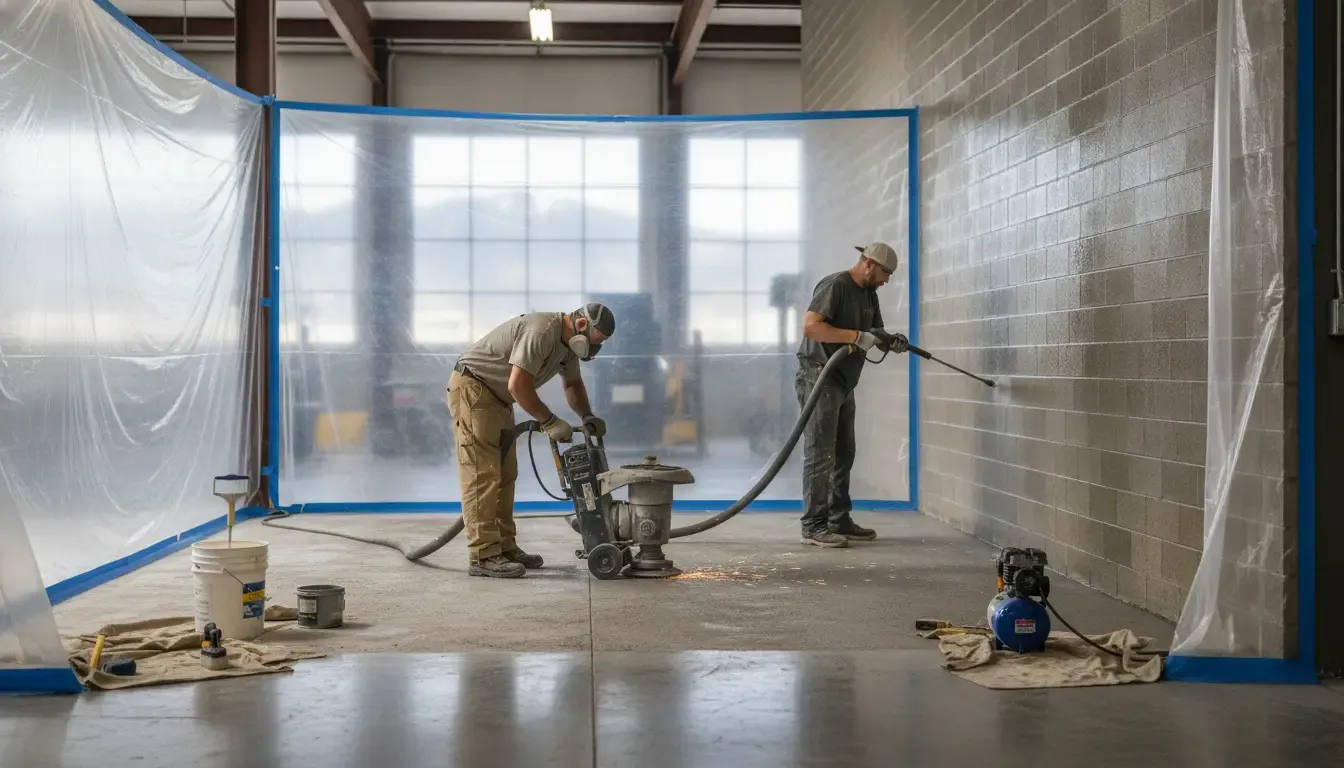
Questions to ask about preparation
- What preparation is included for each substrate?
- How will dust, debris, overspray, and cleanup be controlled?
- Which repairs are included and which would be priced separately?
- How will the crew protect finished areas and building contents?
- What happens if the team finds hidden damage after work starts?
Be cautious when a proposal focuses heavily on the product name but gives little detail about preparation. Even a well-selected coating cannot compensate for a dirty, damp, unstable, or poorly prepared surface.
3. Match the coating system to the property and use
There is no single best coating for every commercial property. The right system depends on the substrate, exposure, traffic, moisture, cleaning routine, appearance goals, maintenance plan, and expected service conditions. Qualified commercial coating contractors Boise property owners can rely on should explain why a system fits the site and what limitations the owner should understand.
Depending on the project, a proposal may discuss systems such as epoxy, urethane, elastomeric, acrylic, or other specialty coatings. The important question is not whether one product sounds advanced. It is whether the proposed system is compatible with the existing surface and the way the space will be used.
Consider the demands of each facility type
| Property or area | Questions the coating plan should answer |
|---|---|
| Warehouse or distribution space | How will the system handle equipment traffic, dust control, loading activity, and phased access? |
| Office or professional space | How will the team manage occupants, odor, furniture, trim, walls, and a clean return to service? |
| Retail or showroom | How will appearance, customer access, display protection, and off-hours work be coordinated? |
| Hospitality property | How will rooms, common areas, guests, staff, and quiet hours be handled during production? |
| Exterior commercial surfaces | How will weather, temperature, moisture, sun exposure, and seasonal scheduling affect the work? |
Ask for the coating manufacturer’s product data or system description when it is relevant to the decision. You do not need to be a coatings chemist, but you should be able to see the intended use, surface requirements, application conditions, recoat expectations, and care instructions for the proposed system.
4. Evaluate safety and business-continuity planning
Commercial work happens around people, equipment, inventory, tenants, customers, and other contractors. A qualified team should discuss how the project will be performed safely and how disruption will be managed before the start date.
The safety conversation may cover containment, ventilation, personal protective equipment, access control, fall hazards, equipment routes, cleanup, and separation of active work from occupied areas. The contractor should also ask about building rules, emergency access, security procedures, and any site-specific requirements from the owner or property manager.
Business-continuity planning should be concrete. Ask whether the work can be phased by floor, wing, tenant area, production zone, or exterior elevation. Confirm which areas will be unavailable, how long they will be restricted, and what must be ready before the crew arrives. Depending on the facility, flexible scheduling or off-hours work may reduce disruption, but it should be discussed as part of the actual scope rather than promised without a site review.
Paint Boise’s commercial painting team documents flexible scheduling and communication as part of its service approach. You can also review the company’s commercial painting services and industrial painting services to understand the related capabilities available for commercial properties.
Talk with a Boise commercial coating team about your property’s schedule and surface needs.
5. Compare proposals line by line
Once you have two or more proposals, compare the scope rather than only the final estimate total. Different totals can reflect different preparation assumptions, coating quantities, access plans, exclusions, or warranty terms.
Build a simple comparison using these categories:
- Areas included: Confirm rooms, elevations, floors, walls, ceilings, equipment zones, and exclusions.
- Preparation: Compare the cleaning, repairs, removal, profiling, priming, and protection steps.
- Coating system: Record the product family, number of coats, finish, color, and intended use.
- Access and schedule: Check mobilization, estimated production time, phases, working hours, and owner responsibilities.
- Protection and cleanup: Confirm masking, containment, dust control, daily cleanup, and final cleanup.
- Change handling: Ask how hidden conditions, owner changes, weather, and delays will be documented and approved.
- Closeout: Compare inspection, touch-ups, care instructions, documentation, and warranty terms.
A useful proposal should make it possible to understand what you are buying. If one estimate is much lower, ask what scope assumption explains the difference before treating it as a bargain. Conversely, a higher estimate is not automatically better. The best choice is the proposal that is complete, realistic, and aligned with the building’s actual requirements.
6. Confirm the documentation you will receive
Commercial owners and property managers often need more than a freshly coated surface. They may need records for maintenance planning, tenant communication, future repairs, warranty questions, or internal property files. Ask what closeout documents the contractor will provide and who will own them.
Depending on the project, useful documentation may include:
- Final scope and approved change records.
- Product names, colors, finishes, and coating system details.
- Areas completed and any areas intentionally excluded.
- Care, cleaning, and maintenance guidance.
- Touch-up information and recommended future inspection points.
- Warranty terms, coverage limits, exclusions, and the process for requesting service.
- Final photos or a completion summary when appropriate.
Documentation should match the work actually performed. Ask how the contractor will record approved changes so that the closeout file is useful rather than a generic template.
7. Read the warranty and guarantee language carefully
A warranty is only useful when its scope and conditions are clear. Before signing, ask what the warranty covers, how long it applies, what preparation or maintenance conditions affect coverage, and how a service request is handled. Also ask whether different surfaces or coating systems have different terms.
Paint Boise promotes a service guarantee and documents a five-year warranty for exterior work in its business materials. That does not mean every commercial interior, floor, or specialty coating has identical coverage. Ask the team to put the applicable warranty terms for your project in writing, including any exclusions related to substrate movement, water intrusion, impact, misuse, or conditions outside the contractor’s control.
Do not select a contractor solely because the warranty period sounds longest. A clear preparation plan, compatible system, realistic schedule, communication process, and documented final inspection are just as important to long-term value.
8. Plan for a documented final inspection
The final walkthrough should be more than a quick look from the doorway. It is the point where the owner and contractor confirm that the agreed scope is complete, protected areas are clean, and any touch-ups or punch-list items are documented.
During the inspection, review color and sheen, coverage, edges, transitions, repaired areas, overspray or drips, cleanup, access restoration, and any areas that were intentionally excluded. Note who is responsible for each remaining item and when it will be addressed. A professional team should be willing to discuss the finished work and make reasonable touch-ups that fall within the agreed scope.
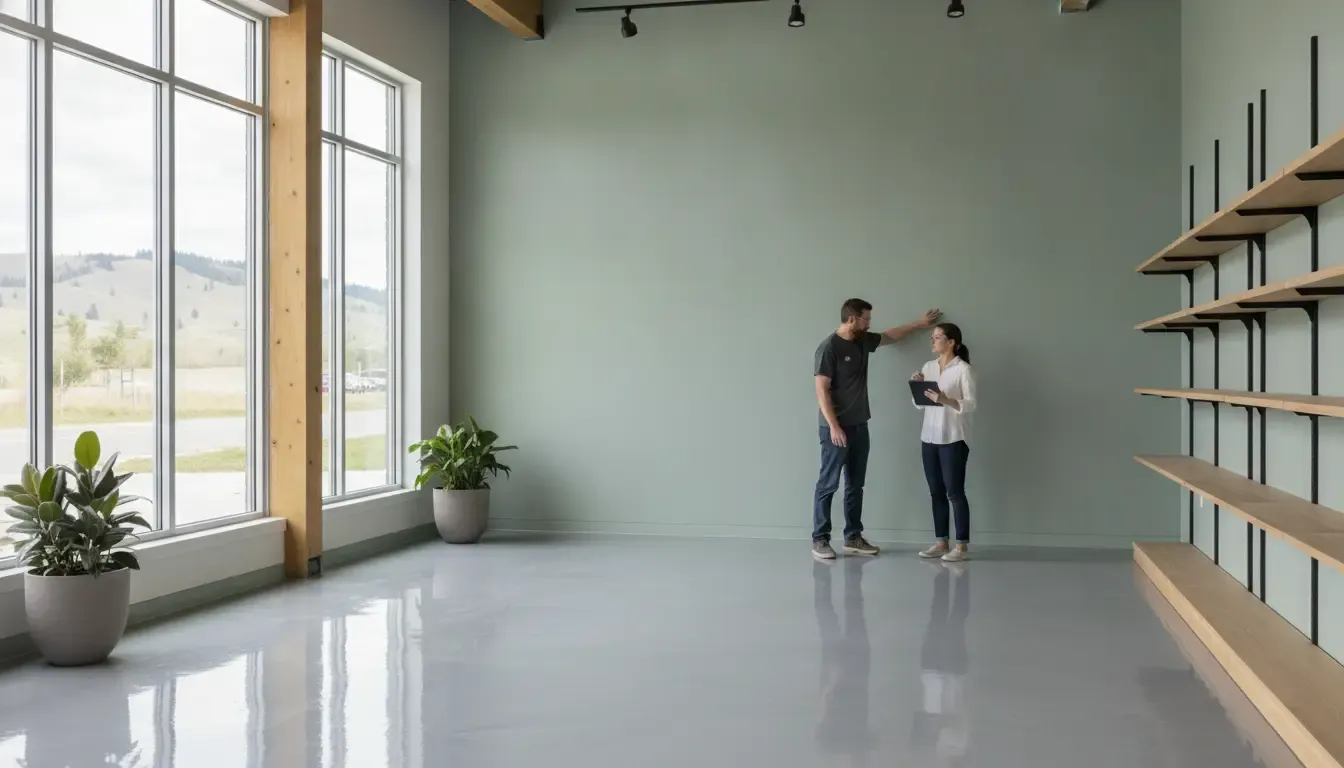
Questions to ask before hiring commercial coating contractors in Boise
Use these questions during your estimate conversations:
- Have you completed projects with similar substrates, operating conditions, or facility constraints?
- What preparation does each surface require, and what is included in the proposal?
- Why is the recommended coating system appropriate for this property?
- How will you protect occupants, equipment, inventory, and adjacent finishes?
- Can the work be phased or scheduled around our operating hours?
- How will daily communication, changes, delays, and approvals be handled?
- What documentation and care instructions will we receive at closeout?
- What warranty or service guarantee applies to this exact project?
- How will the final inspection and touch-up process work?
Clear answers help you distinguish a contractor with a repeatable process from one who is simply selling a product. They also give your team a better basis for comparing proposals and planning the work internally.
Get a clear commercial coating estimate for your Boise property.
Frequently asked questions
What do commercial coating contractors do?
Commercial coating contractors prepare and coat surfaces in business and industrial properties. Depending on the project, that can include walls, floors, masonry, concrete, metal, exterior surfaces, and specialty areas. The scope should be based on the substrate, site conditions, operating demands, appearance goals, and maintenance needs.
How do I compare commercial coating proposals?
Compare the included areas, preparation steps, repairs, coating system, number of coats, access plan, schedule, protection, cleanup, change process, documentation, and warranty terms. A lower estimate may contain a narrower scope, so compare what each contractor is actually promising to deliver.
Can commercial coating work be done while a business is open?
Sometimes. The answer depends on the areas being coated, preparation methods, ventilation, access, cure or recoat requirements, occupants, equipment, and the property’s operating rules. Ask the contractor about phasing, off-hours scheduling, containment, and which areas must be temporarily restricted.
What should happen during the first site visit?
The contractor should review the surfaces, existing coatings, damage, access, moisture or contamination concerns, operating constraints, and project goals. This visit should lead to a scope that explains preparation and coating recommendations rather than a generic estimate with little detail.
Does every commercial coating project have the same warranty?
No. Warranty terms can vary by substrate, coating system, location, exposure, preparation, and maintenance conditions. Request the warranty that applies to your exact project in writing, including coverage, exclusions, term, and the service-request process.
Does Paint Boise provide commercial coating estimates in the Boise area?
Paint Boise serves commercial property owners and managers in Boise and the surrounding Treasure Valley. Contact the team to discuss your facility, surface conditions, timeline, and estimate needs. Call (208) 254-6615 or use the online contact page.