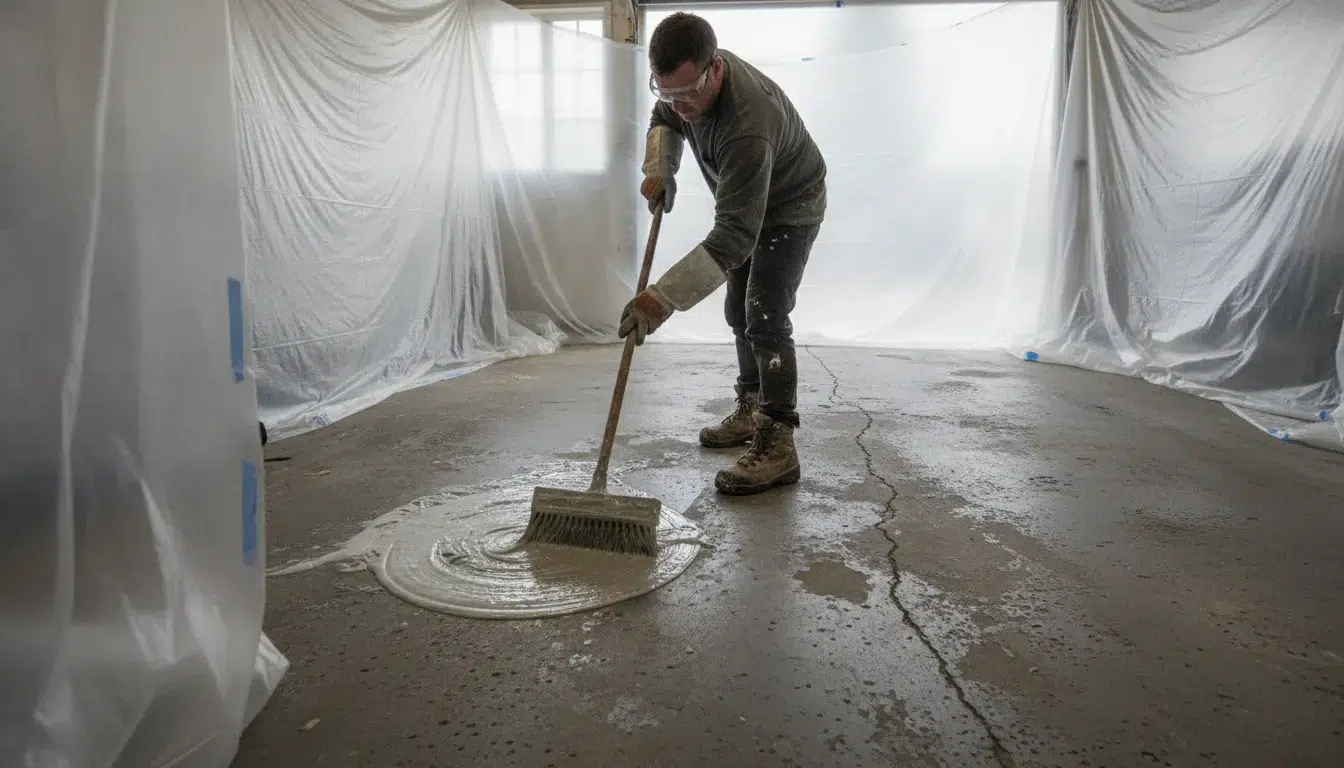
Removing old paint from a concrete patio, garage floor, walkway, or commercial slab is more than a cosmetic step. The right preparation determines whether a new coating bonds or peels again. A paint stripper for concrete can soften stubborn layers, but it must be selected, tested, contained, and removed according to the product label and the condition of the slab.
Talk with Paint Boise about safe concrete surface preparation and request a free estimate.
What is paint stripper for concrete?
Paint stripper for concrete is a chemical coating remover designed to soften paint, stain, sealer, or other film-forming coatings so they can be lifted from a porous masonry surface. It is different from a cleaner, degreaser, primer, or final floor coating. The right product depends on the coating, the concrete, the location, ventilation, and the manufacturer’s safety instructions.
For a property owner, the most useful question is not simply, “What is the strongest stripper?” It is, “What removal method can take off the existing coating without creating a bigger bonding, health, or cleanup problem?” A small test area should answer that before the entire slab is covered.
When is a concrete paint stripper the right choice?
A chemical stripper may be appropriate when paint or sealer covers a textured slab, when several thin layers need to be softened together, or when aggressive grinding could remove too much of the concrete surface. It can also help on edges, corners, and other areas where mechanical tools cannot reach cleanly. That does not make it the best method for every project.
| Situation | Possible first option | What to confirm |
|---|---|---|
| Thick, bonded paint or sealer on a relatively sound slab | Small-area chemical stripper test | Whether the coating wrinkles or softens and can be scraped without damaging the concrete |
| Loose flakes, thin residue, or isolated edges | Scraping or another controlled mechanical method | That dust, chips, and debris can be contained and the slab will not be gouged |
| Unknown coating, large commercial area, poor ventilation, or drainage risk | Professional assessment before removal | Product label, safety data, containment, waste handling, and the final coating requirements |
Do not assume that paint stripper is a shortcut around surface preparation. It may leave softened coating, dissolved residue, or chemical film in the pores of the concrete. If those materials remain, a new coating can fail even when the old color looks gone.
If the project is actually about choosing a new floor system, keep that decision separate from removal. Paint Boise’s Boise concrete floor coatings guide covers coating options, while this article stays focused on safe removal and substrate preparation.
How should you test a concrete surface before using stripper?
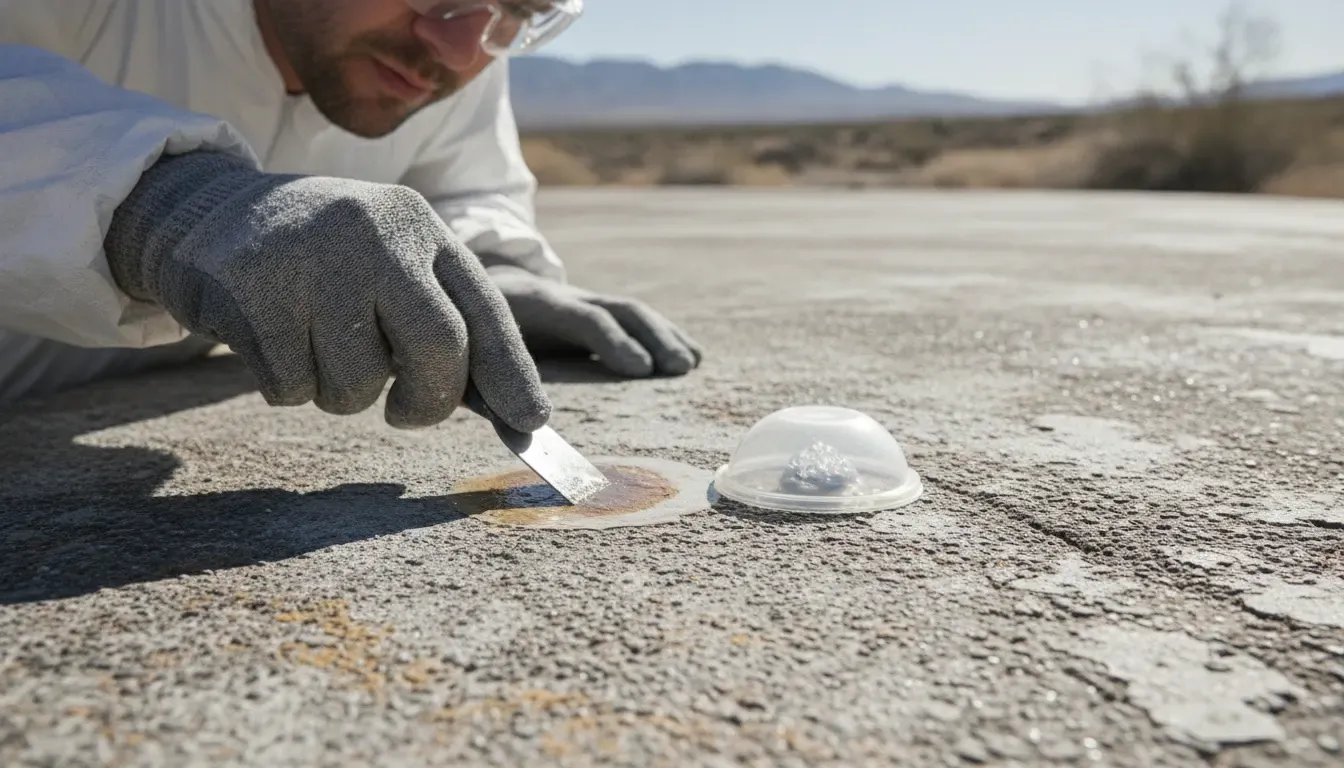
Test first in a small, inconspicuous area that represents the rest of the slab. A test does more than show whether the product works. It reveals how the existing coating reacts, how much residue is created, whether the concrete absorbs the product, and how difficult rinsing and drying will be.
- Identify the coating and surface. Note whether the slab is painted, stained, sealed, previously coated, bare, smooth, or heavily textured. Look for repairs, cracks, moisture, oil, and areas where the coating is already loose.
- Read the product label and safety data sheet. Confirm that the product is intended for concrete and the specific location. Check required gloves, eye protection, ventilation, dwell time, rinsing, storage, and disposal instructions.
- Protect a small work zone. Keep children, pets, bystanders, plants, drains, soil, and finished surfaces away from the test area. A chemical that works on concrete can damage nearby materials or landscaping.
- Apply only the stated amount. Do not mix products, dilute a product unless the label allows it, or substitute gasoline, kerosene, or another improvised solvent. Give the test the label’s full dwell time while preventing it from drying out if the instructions require that.
- Scrape a test section. Use the tool and pressure appropriate for the surface. The softened coating should lift without excessive force or deep gouging. Check whether the residue is gummy, dusty, liquid, or still bonded.
- Clean and inspect the concrete. Follow the label’s rinse or cleanup method, then allow the test area to dry fully. Look for remaining coating, discoloration, soft spots, powder, tackiness, or a visible film.
A failed test is useful information. It may mean the product does not match the coating, the dwell time is wrong, the slab needs a different removal method, or the concrete has a moisture or contamination problem that should be solved first.
How do you use paint stripper for concrete safely?
Safe use begins with control, not speed. The United States Environmental Protection Agency’s paint-stripper guidance advises users to read and follow the product label, wear gloves appropriate for the chemical, use fresh air and ventilation, and keep flammable products away from ignition sources. Its guidance also warns against using gasoline, lighter fluid, or kerosene as paint strippers.
- Plan containment before opening the container. Cover adjacent surfaces and block routes to storm drains, floor drains, soil, and landscaping. Keep the original container and label available.
- Wear the protection specified for that product. The correct glove material depends on the stripper. Add eye protection, protective clothing, and footwear as directed. Do not treat ordinary household gloves as universal chemical protection.
- Control air and ignition sources. Work outdoors when the product permits it. For indoor work, follow the label’s ventilation requirements. Do not use a flammable stripper near flames, pilot lights, heaters, sparks, or other ignition sources.
- Work in manageable sections. Apply a consistent layer, keep the product within the test-confirmed area, and prevent traffic through the wet zone. Avoid splashing or creating unnecessary spray.
- Wait for the coating to release. Do not scrape immediately just because the surface is wet. Follow the label’s dwell time and test a small spot. If the coating does not lift as directed, stop and reassess rather than adding an unapproved chemical.
- Collect softened coating and residue. Use the cleanup method on the label. Keep removed paint, sludge, used absorbent, and contaminated tools contained until you know how they must be handled.
Some older or stronger stripping chemicals can create serious exposure hazards. Never choose a product from a strength claim alone, and never rely on a respirator or glove material without confirming that it is suitable for the specific chemical. If the label, safety data sheet, ventilation, containment, or waste plan is unclear, professional preparation is the safer choice.
How do you remove stripper residue before recoating concrete?
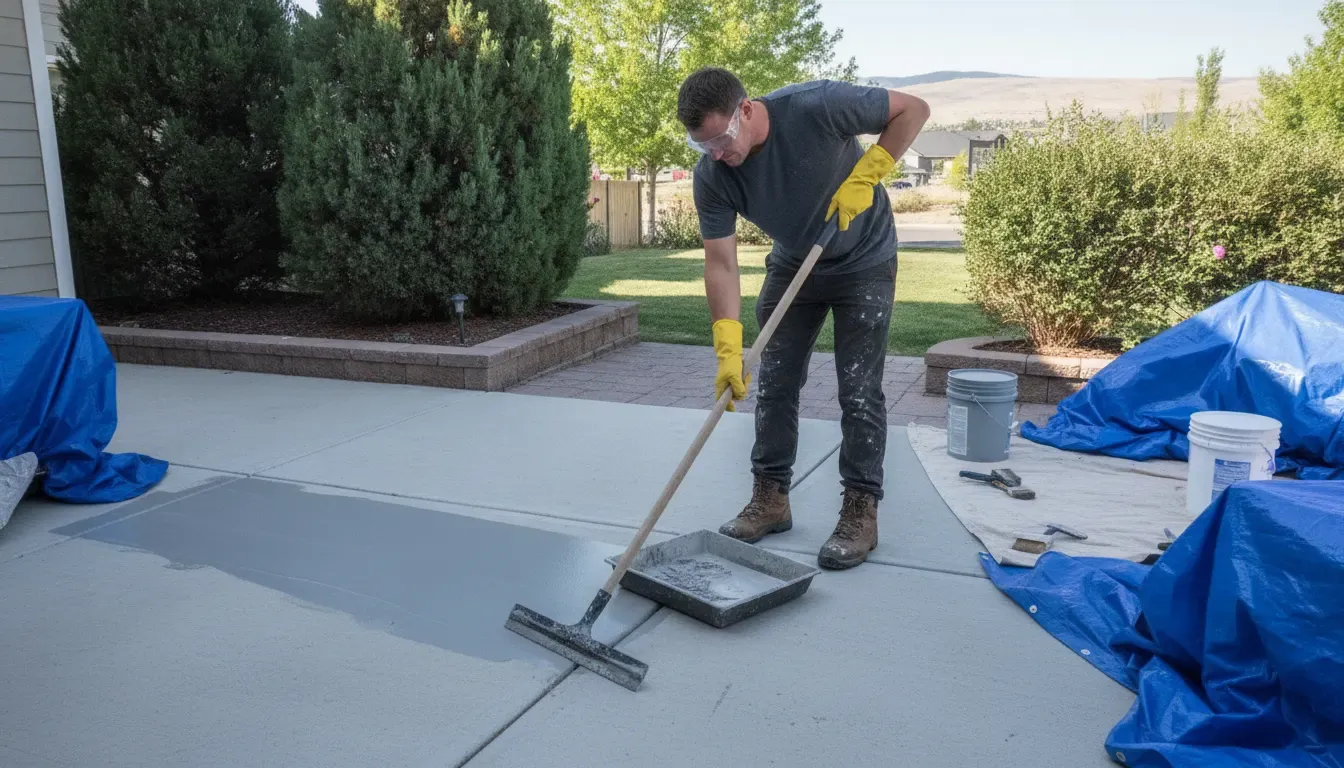
Residue removal is part of the stripping job, not an optional final rinse. Follow the product’s exact cleanup instructions and prevent the rinse water from carrying paint chips or chemicals into a drain, street, stream, soil, or planted area. Do not mix leftover stripper with another product, pour it down a drain, or transfer it into an unlabeled container.
The EPA classifies some leftover household products as household hazardous waste because they can be corrosive, toxic, ignitable, or reactive. Its household hazardous waste guidance recommends following the label, keeping material in the original container, never mixing incompatible products, and checking with the local environmental, health, or solid-waste agency for collection options. Concrete stripping waste from a business or commercial project may follow different requirements, so a facility manager should confirm the correct route before work begins.
- Remove the softened coating with the tool specified for the product and surface.
- Rinse, neutralize, or clean only as the label directs.
- Collect solids, sludge, used absorbent, and contaminated wash water instead of letting them run into a drain.
- Repeat the cleanup if a film, tackiness, powder, or visible residue remains.
- Allow the concrete to dry for the time required by the product and the planned coating system.
- Check the surface for soundness, cleanliness, moisture, and remaining coating before recoating.
Boise properties can have a mix of garage slabs, patios, walkways, and commercial concrete exposed to different moisture and weather conditions. A dry-looking surface is not automatically ready. The next primer, paint, stain, or coating must be compatible with the cleaned substrate and applied within its own temperature, moisture, and cure requirements.
When should you avoid DIY concrete paint stripping?
Pause the project and get qualified guidance when the coating’s age or ingredients are unknown, especially if it may be on a pre-1978 home or child-occupied facility. The EPA’s lead renovation, repair, and painting program sets lead-safe requirements for covered paid work in those buildings. Do not sand, grind, scrape aggressively, or chemically disturb a suspect coating until the lead-related risk and work requirements are understood.
Professional assessment is also sensible when:
- The work area is large, occupied, poorly ventilated, or connected to a business operation.
- The concrete is cracked, spalled, soft, damp, heavily contaminated, or structurally questionable.
- The surface drains toward landscaping, a storm drain, a waterway, or a neighboring property.
- The coating contains multiple unknown layers or previous repair materials.
- You need a predictable finish for a garage, commercial space, rental turnover, or scheduled project.
- You cannot confirm the product’s PPE, dwell time, cleanup, and disposal instructions.
Paint Boise’s exterior painting service includes thorough preparation for exterior surfaces, and its commercial painting team can help property managers plan work around access, protection, and operational needs. For a residential project, the house painting service is another starting point for evaluating the full surface condition.
How do you know concrete is ready for a new coating?
Before applying a new coating, inspect the slab in good light and confirm that the old coating and stripper residue are gone. The surface should be sound and clean, with no loose paint, oily film, tackiness, powder, or unexpected dampness. A coating manufacturer may also require a moisture test or a particular profile, primer, or cure period. Follow that system’s instructions instead of assuming that a visually clean slab is ready.
Removal may expose cracks, low spots, previous patches, or uneven color. Those conditions are separate preparation decisions. Paint stripper removes a coating; it does not repair structural movement or guarantee adhesion. Document what the test area reveals, then choose the next preparation step based on the actual concrete and the final coating system.
If you are comparing removal options for a Boise home or commercial property, Paint Boise can help you evaluate the surface before work starts. Call (208) 254-6615 or use the contact page to request a free estimate.
Request a free Boise concrete preparation estimate before you strip the entire surface.
Frequently Asked Questions About Paint Stripper for Concrete
Can I use any paint stripper on concrete?
No. Use only a product whose label specifically allows the concrete surface and the type of coating you are removing. Review the label and safety data sheet, test a small area, and confirm how the product must be contained, cleaned, and disposed of.
Will paint stripper remove every layer from a concrete slab?
Not necessarily. Results vary with the coating chemistry, number of layers, thickness, porosity, temperature, and dwell time. A test patch is the best way to learn whether the coating softens and lifts without excessive scraping.
Can I rinse paint stripper into a floor drain?
Do not assume that rinse water or residue is safe for a drain. Follow the product label and local disposal guidance. Keep paint chips, sludge, and chemical residue contained, and check with the appropriate local solid-waste or environmental agency.
Should I strip concrete before painting a patio?
It depends on the existing coating and the new finish. This article covers safe removal and substrate preparation. For patio-specific planning, see Paint Boise’s concrete patio painting guide and have the surface assessed before choosing the next coating.
What if the old paint may contain lead?
Stop before disturbing it and learn whether lead-safe requirements apply. Paid renovation, repair, and painting work in many pre-1978 homes and child-occupied facilities is covered by the EPA’s Renovation, Repair and Painting program. A qualified professional can help determine the safest next step.
How can I prepare a large commercial concrete surface?
Start with a written assessment of the coating, access, ventilation, containment, waste handling, schedule, and final coating requirements. A commercial painting contractor can help coordinate preparation while the property remains safe and usable.