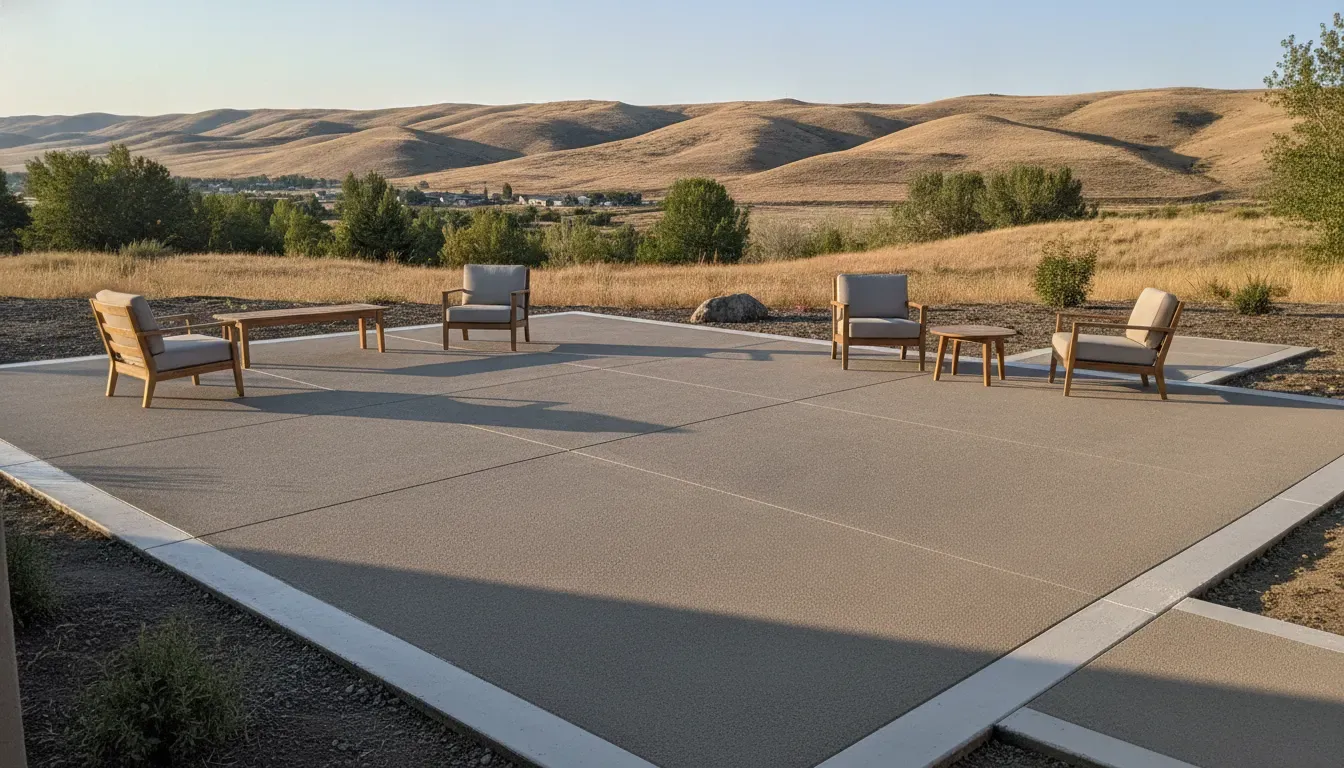
For homeowners researching painting concrete patio projects in Boise, a lasting result depends on more than choosing a color. Boise patios face intense summer sun, winter moisture, freeze-thaw movement, dirt, and foot traffic. This guide explains how to evaluate the slab, prepare it, choose a coating, improve traction, and plan around Treasure Valley weather.
Request a patio painting consultation from Paint Boise
Painting a concrete patio works best when the slab is fully cured, dry, clean, sound, and prepared for the selected exterior product. Use a coating labeled for outdoor horizontal concrete, add traction where needed, and schedule the work during a stable Boise weather window. Paint alone cannot correct active moisture, movement, or major concrete damage.
Is Painting a Concrete Patio a Good Idea?
Painting a concrete patio is a good option when the slab is structurally sound and you want a refreshed color. Easier cleaning, or a more finished appearance without replacing the concrete. It is not the right first step for a slab with active water problems, severe spalling, unstable cracks, or movement that will continue beneath the coating.
Exterior patio coatings can make a plain slab feel more intentional and can help protect the surface from everyday wear. They are especially useful when the concrete is serviceable but stained, visually dated, or difficult to blend with an updated exterior. The goal is a compatible coating system, not simply a layer of paint over whatever is already there.
Start with the slab’s condition:
- Sound concrete: The surface should not be soft, powdery, flaking, or hollow in large areas.
- Stable cracks: Hairline cracks may need a compatible repair, while wide or moving cracks require a different evaluation.
- Controlled moisture: Water should not be pushing through the slab or collecting from drainage problems.
- Manageable contamination: Oil, grease, algae, dirt, efflorescence, and old loose coatings must be removed.
- Safe slope and drainage: The patio should move water away rather than keeping the coating wet for long periods.
Painting will not fix settlement, a leaking downspout, or a slab that continually moves. If the underlying problem is ignored, the new finish may crack, blister, or peel even when the product itself is appropriate.
How Long Should a Concrete Patio Cure Before Painting?
A new concrete patio should meet the coating manufacturer’s cure and moisture requirements before painting. Many concrete projects use about 28 days as a common cure benchmark, but the label, slab conditions, and moisture evaluation control. A patio that feels hard can still hold moisture that interferes with adhesion.
Do not judge readiness by appearance alone. Concrete continues to release moisture after it looks dry, and an exterior coating can trap that moisture at the bond line. Ask these questions before planning the job:
- When was the slab poured or repaired?
- Has the surface been exposed to rain, irrigation, snowmelt, or washing recently?
- Does water drain away, or does it sit against the house or in low spots?
- Is there a sealer, curing compound, paint, stain, or other film on the surface?
- Does the selected product specify a minimum concrete age, temperature, or moisture limit?
Older patios are not automatically ready either. Aged concrete can have absorbed oil, developed salts, or accumulated layers that prevent a new coating from bonding. Preparation and testing are what determine readiness.
What Preparation Does a Concrete Patio Need?
Concrete patio preparation normally includes inspection, cleaning, removal of loose material and failed coatings. Repair of suitable cracks or surface defects, and profiling the concrete so the new coating can bond. The surface then needs to dry within the product’s requirements. Preparation should be matched to the coating, not treated as a one-size-fits-all checklist.
If an old coating is tightly bonded and needs to be softened before the rest of the patio preparation, review Paint Boise’s paint stripper for concrete guide before choosing a removal method.
A practical preparation sequence looks like this:
- Inspect and map the surface. Mark cracks, spalled areas, low spots, stains, old coatings, and places where water collects.
- Remove furniture and protect nearby finishes. Cover siding, doors, plants, masonry, and drainage paths before washing or coating.
- Clean thoroughly. Sweep first, then remove dirt, grease, algae, and efflorescence with a method compatible with the concrete and product. Rinse residue away rather than leaving cleaner in the pores.
- Remove weak layers. Scrape or mechanically remove peeling paint, powdery material, and incompatible coatings. A new coating cannot make a weak layer sound.
- Repair appropriate defects. Use a compatible repair material for suitable cracks, chips, or small surface defects. Allow repairs to cure before coating.
- Profile the slab. Smooth, dense concrete may need mechanical abrasion or a compatible etching process so the coating can grip. Follow the coating label and safety requirements.
- Confirm dryness and cleanliness. Dust, residue, and moisture can undermine the finish even after an otherwise careful prep.
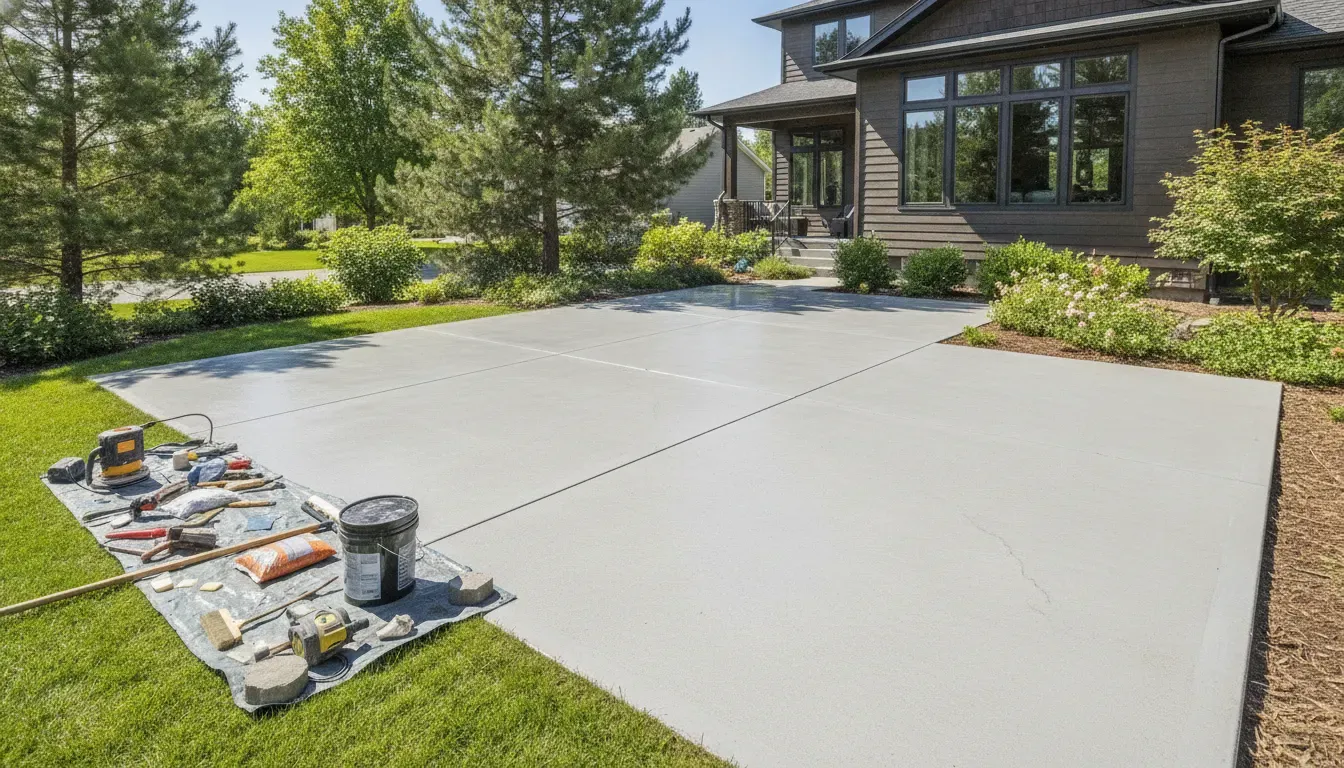
Power washing can help remove outdoor dirt, but it is not a substitute for every preparation step. It can also force water into joints, adjacent materials, or the slab itself. Allow enough drying time after washing, and avoid coating until the surface meets the product instructions.
For a neutral overview of the basic concrete-painting sequence, see this concrete painting guide from Sherwin-Williams. Product instructions remain the controlling source for the coating you actually use.
Which Coating Is Best for a Concrete Patio?
The best patio coating is the exterior product system that matches the concrete, weather exposure, traffic, finish goal, and available cure time. Look for a product specifically labeled for outdoor horizontal concrete and confirm whether it needs a primer, sealer, topcoat, or traction additive. Do not substitute interior wall paint for a patio coating.
Product names can be confusing because homeowners may see porch and floor enamel, concrete or masonry coatings, acrylic systems, sealers, and resin-based options. Compare the complete system rather than choosing by color or gloss alone.
| Option | May fit when | Questions to ask |
|---|---|---|
| Exterior porch and floor coating | You want a colored finish for a sound residential patio with normal foot traffic. | Is it rated for horizontal outdoor concrete, sun, moisture, and the expected temperature range? |
| Concrete or masonry coating | The product is specifically approved for the patio surface and exposure. | Does it require primer, a particular surface profile, or a compatible topcoat? |
| Sealer | The goal is to protect or change the appearance of concrete without a thick painted film. | Will it provide the color, wear resistance, and traction the space needs? |
| Decorative or resin-based system | You need a more built-up finish, added durability, or a specialized appearance. | How will moisture, UV exposure, repairs, and future maintenance be handled? |
Gloss can affect both appearance and safety. A very smooth finish may be easier to clean but can become slick when wet. A matte or textured finish may provide more visual softness and traction, but texture can hold dirt and may require different cleaning. Match the finish to how the patio is used, especially around pool areas, steps, outdoor kitchens, and shaded sections that stay damp.
Talk with Paint Boise about an exterior coating plan for your property
How Can You Add Slip Resistance to a Painted Patio?
Slip resistance comes from the coating system and surface texture, not from color alone. A contractor can discuss a compatible traction additive, broadcast aggregate, or textured finish for areas exposed to rain, irrigation, snowmelt, food spills, or frequent barefoot use. The additive must be compatible with the product and applied evenly.
Plan for traction before the first coat. Adding a random gritty material after the finish has dried can create uneven texture, poor appearance, or a surface that is difficult to clean. Instead, discuss:
- Where water, snowmelt, or irrigation reaches the patio.
- Whether children, older adults, pets, or barefoot guests use the space.
- How much texture can be cleaned comfortably with a broom or low-pressure wash.
- Whether steps, transitions, and sloped areas need extra attention.
- How the finish will look in direct sun versus shaded portions of the patio.
Traction does not replace good drainage. Correcting a downspout, grading issue, or irrigation overspray may do more for safety and coating life than increasing surface texture.
How Does Boise Weather Affect Patio Painting?
Boise weather affects patio painting through temperature swings, summer UV exposure, rain, irrigation, snowmelt, and freeze-thaw movement. Schedule coating during a stable dry period, follow the product’s air and surface temperature limits, and protect the slab from moisture during application and initial cure.
Freeze-thaw and winter moisture
Water that enters cracks or porous areas can expand when it freezes and contract when it thaws. That movement may widen defects or place stress on a coating film. Before winter, keep drainage paths clear, direct downspouts away from the slab, and address cracks or spalling instead of sealing over an active problem.
Do not paint late in a day when the surface may cool quickly after sunset. Even if the afternoon feels comfortable, overnight conditions can affect drying and cure. The product label should specify minimum air and surface temperatures, humidity limits, and protection requirements.
Summer sun and UV exposure
Direct Boise sun can heat the patio and accelerate fading or chalking in products that are not intended for sustained exterior exposure. A UV-suitable topcoat or color choice may help, but shade patterns still matter. The section under an awning may dry differently from the section in full sun, so application timing and consistent coverage are important.
Rain, irrigation, and daily use
Plan around forecasted rain and pause automatic irrigation before and after coating as directed. Keep pets, furniture, grills, and foot traffic off the surface for the full return-to-service window, not just until it feels dry to the touch. A patio can be dry on top while the underlying film is still developing its final performance.
What Is the Process for Painting a Concrete Patio?
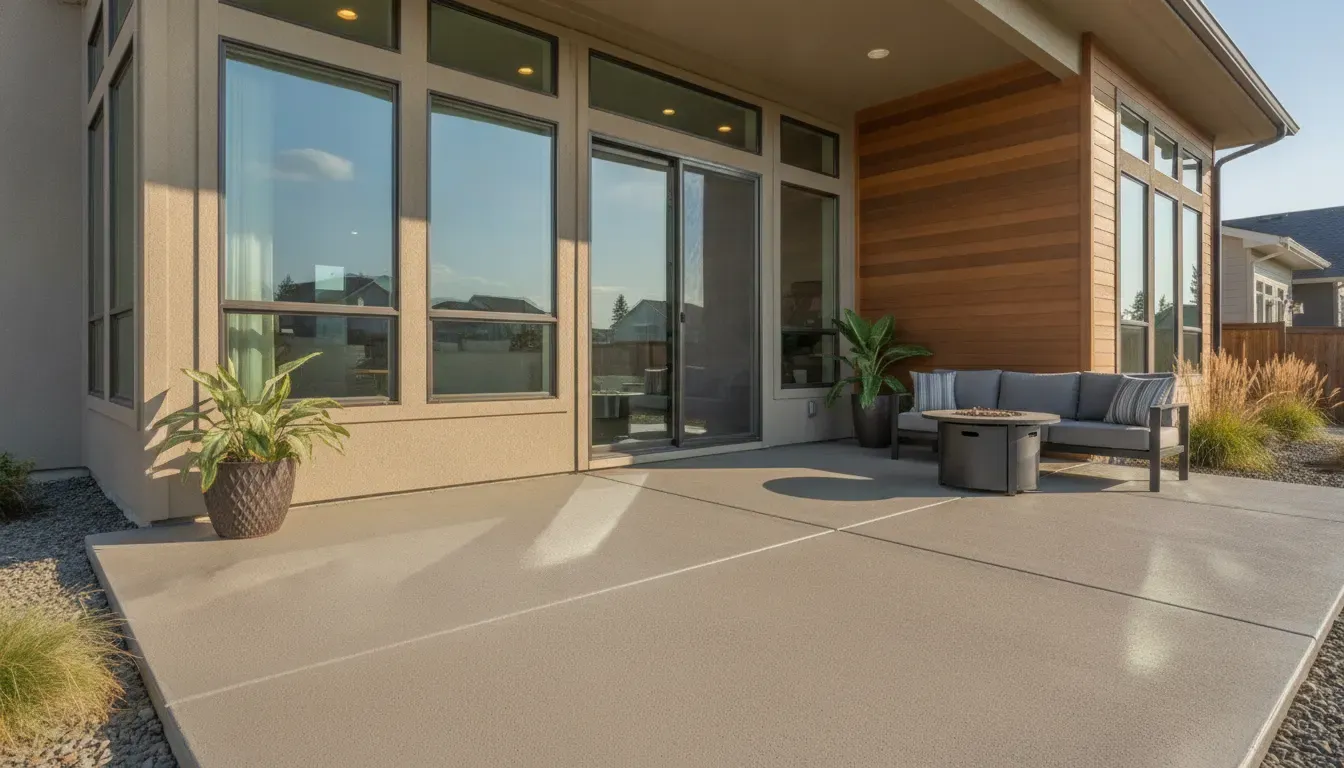
A typical concrete patio coating process is inspect, clean, repair, profile, dry, prime when required. Apply the compatible coating, add traction if specified, and allow the system to cure before use. The exact number of coats and cure time depend on the product, weather, slab condition, and finish selected.
A professional scope should make each stage clear:
- Assessment: Review slab age, moisture, cracks, old coatings, drainage, use, and access.
- Preparation: Clean, remove weak material, repair suitable defects, and create the required profile.
- Masking: Protect the home, nearby surfaces, landscaping, drains, and expansion joints.
- Application: Apply the specified primer, base coating, texture, or topcoat at the required spread rate.
- Inspection: Check coverage, edges, transitions, texture, and visible defects before reopening the patio.
- Cure and maintenance: Follow the product’s cure window and clean with the recommended method.
Expansion joints should not be casually bridged with a rigid film. They are part of how a slab accommodates movement, so the coating plan should address them intentionally. Ask whether joints will remain open, receive a compatible flexible treatment, or be handled in another approved way.
How Do You Maintain a Painted Concrete Patio?
Maintain a painted concrete patio by sweeping regularly, cleaning spills promptly, using the product-approved cleaner. Avoiding harsh tools that can damage the film, and inspecting cracks or peeling before small problems spread. Keep drainage clear and refresh or repair the coating according to its actual wear and exposure.
- Sweep grit and leaves before they are ground into the finish.
- Rinse ordinary dirt with a gentle method approved for the coating.
- Clean grease, food, and plant debris promptly rather than letting stains sit.
- Do not use aggressive pressure or harsh chemicals unless the product instructions allow them.
- Check edges, steps, joints, and shaded damp areas at the beginning and end of the outdoor season.
- Keep furniture feet and planters from trapping moisture against the coating.
Maintenance is also a chance to catch a drainage issue. If one area repeatedly stays wet, address the source before touching up the surface. Recoating a symptom without correcting water movement usually produces a short-lived repair.
When Should You Hire a Boise Painting Professional?
Hire a professional when the patio has unknown coatings, extensive cracking or spalling. Moisture concerns, difficult edges, drainage problems, or a finish that needs reliable traction and even coverage. A professional assessment can separate a coating project from concrete repair and help prevent applying an expensive finish to an unstable surface.
A professional can also help when the patio connects to siding, steps, doors, landscaping, or other finished surfaces that need careful protection. Paint Boise serves homeowners and property owners across Boise and the Treasure Valley with surface preparation, exterior painting, and coating guidance.
Keep the use case clear when comparing quotes. A patio is not a garage floor, even though both are concrete. If your project is actually a vehicle or workshop floor, review the separate garage floor painting and coating service rather than applying patio recommendations to that surface.
For broader home exterior work, the Paint Boise house painting service can help coordinate the patio with siding, trim, doors, or other painted areas. Paint Boise also explains its service guarantee for customers evaluating project risk and communication.
Get a free estimate for your Boise concrete patio project
FAQs About Painting Concrete Patio in Boise
Can I paint over old paint on a concrete patio?
Only if the existing coating is compatible, firmly bonded, clean, and suitable for the new product. Peeling, chalking, or unknown layers should be tested and removed or prepared before recoating. Painting over a weak layer transfers that failure risk to the new finish.
How long does painted concrete last outside?
Service life varies with surface preparation, coating quality, sun, moisture, traffic, drainage, and maintenance. A patio with sound concrete, proper preparation, a compatible exterior product, and controlled water exposure generally performs better than one coated over a damp or contaminated slab. Inspect it each season rather than relying on a fixed promise.
Can I paint a concrete patio in direct sun?
Direct sun can heat the slab and change how quickly the coating sets. Follow the product’s surface-temperature and application-window instructions, and plan the work so the coating can be applied evenly and protected during cure. A contractor may adjust the timing around shade and the daily forecast.
What is the best color for a concrete patio?
The best color depends on the home’s exterior, landscaping, furniture, sun exposure, and how much dirt you want the surface to show. Mid-tone grays, warm neutrals, and earth tones are often practical starting points, but test the actual coating or sample in both direct sun and shade before deciding.
Is painted concrete slippery when wet?
It can be if the finish is too smooth for the location or if water, algae, grease, or snowmelt is present. Discuss a compatible traction additive or textured system for wet or sloped areas, and address drainage and cleaning as part of the safety plan.
Ready to improve an outdoor space without guessing at the prep or product? Visit Paint Boise’s contact page or call (208) 254-6615 to discuss your patio and request a free estimate.