
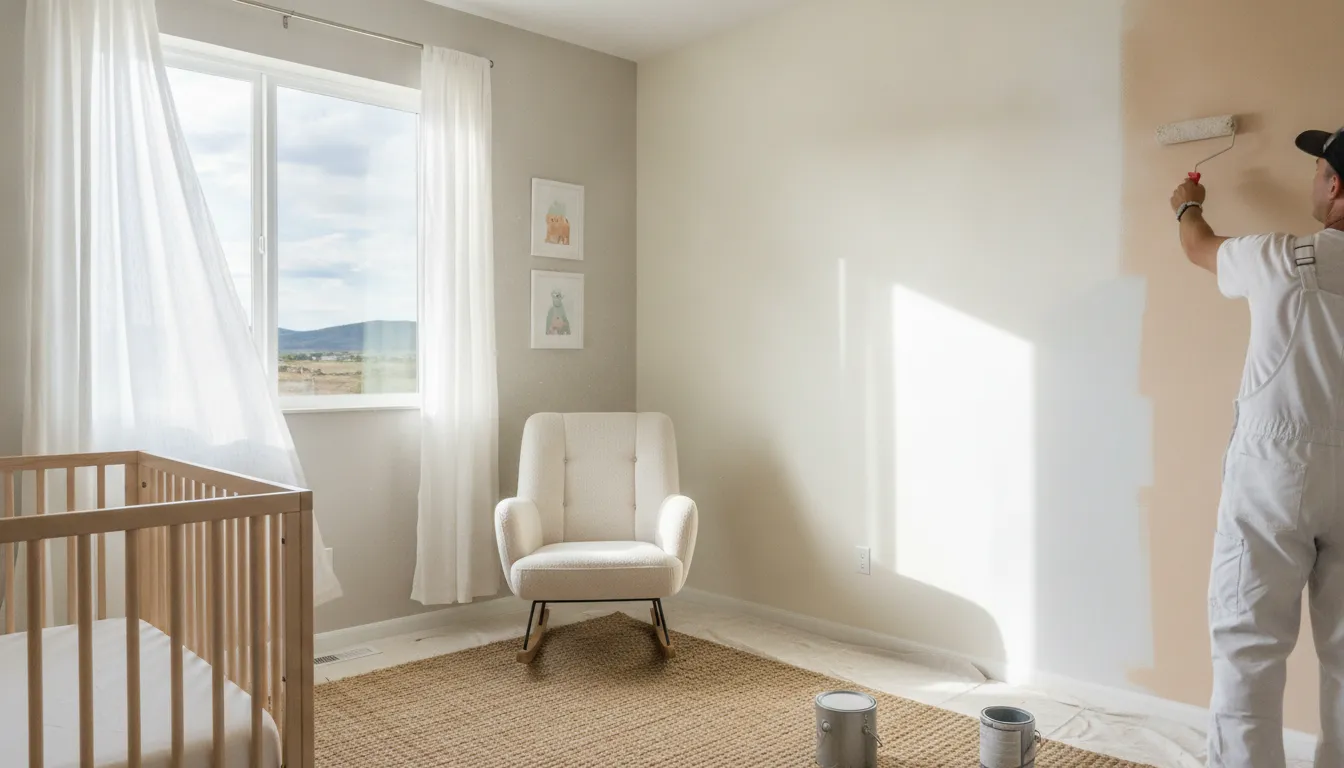
Boise families often face lingering chemical smells after a fresh coat of interior paint. Low VOC paint can reduce those odors without forcing homeowners to compromise on color, coverage, or finish quality.
Get a free quote for professional interior painting from Paint Boise.
Low VOC paint refers to wall paints that contain much fewer volatile organic compounds than old oil or latex products. These compounds are chemicals that turn into gas at room temperature, which causes that strong “new paint” smell. According to the EPA, levels of these gases are often up to ten times higher indoors than outside. To be called low-emission, most brands limit these chemicals to less than 50 grams per liter. Using these paints can lower paint-related emissions during your home project while still giving you a tough, high-quality finish on your walls. This makes them a practical choice for bedrooms and nurseries where Boise homeowners may want to reduce paint odors.
Many people want to reduce paint odors and emissions without giving up on great style. Knowing what low VOC paint is can help you make a better choice for your next home project. The facts about these paints are simple to follow. Start by comparing product data sheets, the room’s use, and the ventilation you can provide during the project.
What is low VOC paint?
Low VOC paint is a type of coating with lower levels of volatile organic compounds (VOCs) than standard paints. These organic compounds are chemicals that turn into gases at room temperature. Many common items like house paints, stains, and varnishes use these chemicals to help the product stay liquid and dry quickly after use.
When you paint a room, VOCs release into the air as the finish dries. This process can cause the strong smell often linked with fresh paint. Using low VOC paint for indoor health helps reduce these odors and keeps the air in your home cleaner. While these products are safer for your family, they still provide the same high-quality finish and durability you expect from premium paint brands.
Understanding gas release
The main issue with traditional paint is that it releases gases for a long time. These chemicals can be up to ten times higher indoors than outdoors according to the EPA. This is why choosing the right product is so vital for local homeowners. In the Treasure Valley, we spend more time indoors during the cold winter months, making air quality a top priority for most families.
Low-VOC paints use water as a base rather than harsh solvents. This change keeps the chemical count low without losing the paint’s ability to stick to your walls. Modern formulas from brands like Sherwin Williams allow us to give you a beautiful, long-lasting look while keeping your indoor air fresh and safe for your pets and children.
Labels and product data
Not all paint labels use the same rules for what counts as “low” or “no” VOC. The industry uses these terms to mean the paint meets certain safety limits, but the exact levels can vary. For most interior flat paints, a “low-VOC” tag means the product has less than 50 grams of VOCs per liter. This is a big drop from older oil-based paints that had much higher counts.
You should always check the product data sheet or the label on the back of the can. These documents list the exact grams per liter (g/L) of chemicals in the base paint. Keep in mind that adding color to the paint can raise the VOC count. Darker colors often need more tint, which can add more chemicals back into the mix. Our team can help you pick the best low VOC paint options for your specific project goals.
Low-VOC vs. zero-VOC paint
Low-VOC paint limits volatile organic compounds, while zero-VOC paint starts with an even lower measured VOC level before tint is added. Neither label replaces ventilation. The best choice depends on the room, selected color, finish requirements, and the product’s technical data sheet.
Choosing the right paint for your home is about more than just the color. In Boise, many owners now look for ways to keep their indoor air clean. Low VOC paint and zero-VOC choices are two top picks. Both help reduce the gases that new paint can release into your home. These gases, known as volatile organic compounds (VOCs), can contribute to odors and indoor air concerns.
Understanding low VOC paint
Low VOC paint has fewer chemicals that turn into gas at room temperature. These paints often have a milder smell than older types of paint. At Paint Boise, we use best paints like Sherwin-Williams and Benjamin Moore. These brands make high-quality low-VOC choices that cover well and last a long time (F011). Using these paints is a great way to start your project. They are tough and stand up well to cleaning.
Our team of inside painters often suggests these for busy homes in the Treasure Valley. They offer a good mix of safety and high-quality results. Most people find that low-VOC paint works well for almost any room in the house.
The zero VOC difference
Zero-VOC paint takes air quality a step further. These paints have very low levels of organic solvents. While the name says zero, they may still have tiny amounts of VOCs. Most rules allow for a small trace, often less than five grams per liter (F006). This makes them a top pick for rooms where air quality is key, like baby rooms or bedrooms.
Even with zero-VOC paint, good air flow is still a must. We always make sure there is fresh air during and right after the job (F009). This helps clear any stray smells or gases fast. If you are painting during the winter months in Idaho, we can help you plan for safe air flow (F012).
Why product specs matter
It is vital to check the full details of any paint you buy. One big factor is the tint or color added to the base. Even if the base paint is zero-VOC, some tints can add VOCs back into the mix (F006). This can change the total level of gases in the room.
We help our clients compare these products to find the best fit. We look at the total VOC count after the color is added. This ensures you get the clean air you want with the color you love. Our expert house painters can guide you through these choices to keep your home safe.
| Feature | Low-VOC Paint | Zero-VOC Paint |
|---|---|---|
| VOC Content | Under 50 grams per liter | Under 5 grams per liter |
| Odor Level | Milder than old paints | Very low to no odor |
| Durability | Tough for all surfaces | Good for most rooms |
| Best Use | High-traffic halls | Bedrooms and nurseries |
| Color Tint | May add small amounts | May add trace amounts |
| Air Safety | Good for home air | Best for air quality |
When should Boise homeowners prioritize low-VOC paint?
Boise homeowners often prioritize low VOC paint for bedrooms, nurseries, and projects completed while the home remains occupied. It is also useful when winter weather limits ventilation. The product label, tint, room use, and available airflow should all guide the final choice.
Choosing to use low VOC paint depends on how you use your rooms. Most people in the Treasure Valley spend more time inside during the cold winter months. Because VOC levels are often higher indoors than they are outside, picking the right paint is key for your air quality. Some projects need these low-odor paints more than others to keep your home fresh and pleasant.
Protecting nurseries and bedrooms
You should pick low VOC paint for rooms where people sleep. This is very important for nurseries and kids’ rooms. Babies and young children can react more to the gases that new paint releases. Using a low-odor paint helps the room feel ready to use much faster. It also helps you feel better about the air your family breathes while they rest at night.
When you are using low VOC paint for indoor health, you reduce the sharp smell often found in new projects. These paints have less than 50 grams of VOCs per liter. This low limit means fewer chemicals go into the air as the walls dry. For a main bedroom or a nursery, this choice makes the space better to use soon after the job is done.
Painting while you live in your home
Many Boise owners choose to stay in their homes during a project. If you are living in your house while we work, low VOC paint is a smart move. It allows you to use your kitchen or living room without a strong chemical scent. This is helpful if someone in your house has asthma or reacts poorly to strong smells. You can go about your day without the headache of heavy paint fumes.
Older adults and pets also do better with these choices. Some people find that old-style paints cause itchy eyes or a scratchy throat. Modern low-VOC formulas solve this problem while still being very tough. These paints are easy to clean and last a long time, so you do not have to give up quality for a pleasant home. Our team at Paint Boise uses top brands that offer these safe and durable options.
Fresh air and winter projects
In Boise, we do a lot of expert interior painting when it is too cold to work outside. Since windows often stay shut in the winter, you need to think about air flow. Even with low-odor paint, you still need good air flow to help the walls dry. Our team makes sure to set up fans to keep the air moving through your home. This helps keep your indoor air clean while giving your walls a fresh new look.
How to plan a low-VOC painting project in an occupied home
Painting while you live in your home takes a bit of thought. While indoor air levels of some gases can be ten times higher than outdoor levels, the right paint helps. Using low VOC paint is the first step to a safer project. It keeps odors down and makes the work area much more pleasant for your folks.
Picking the right rooms
Start by picking which rooms to paint first. It is best to work in one zone at a time so you can keep other areas clear. This way, you do not have to move all your beds and chairs at once. If you are worried about the price of the job, using low VOC paint for indoor health is a smart way to plan your budget. We suggest starting with bedrooms or home offices that you need to use daily. This keeps your home life stable while the painters are on site.
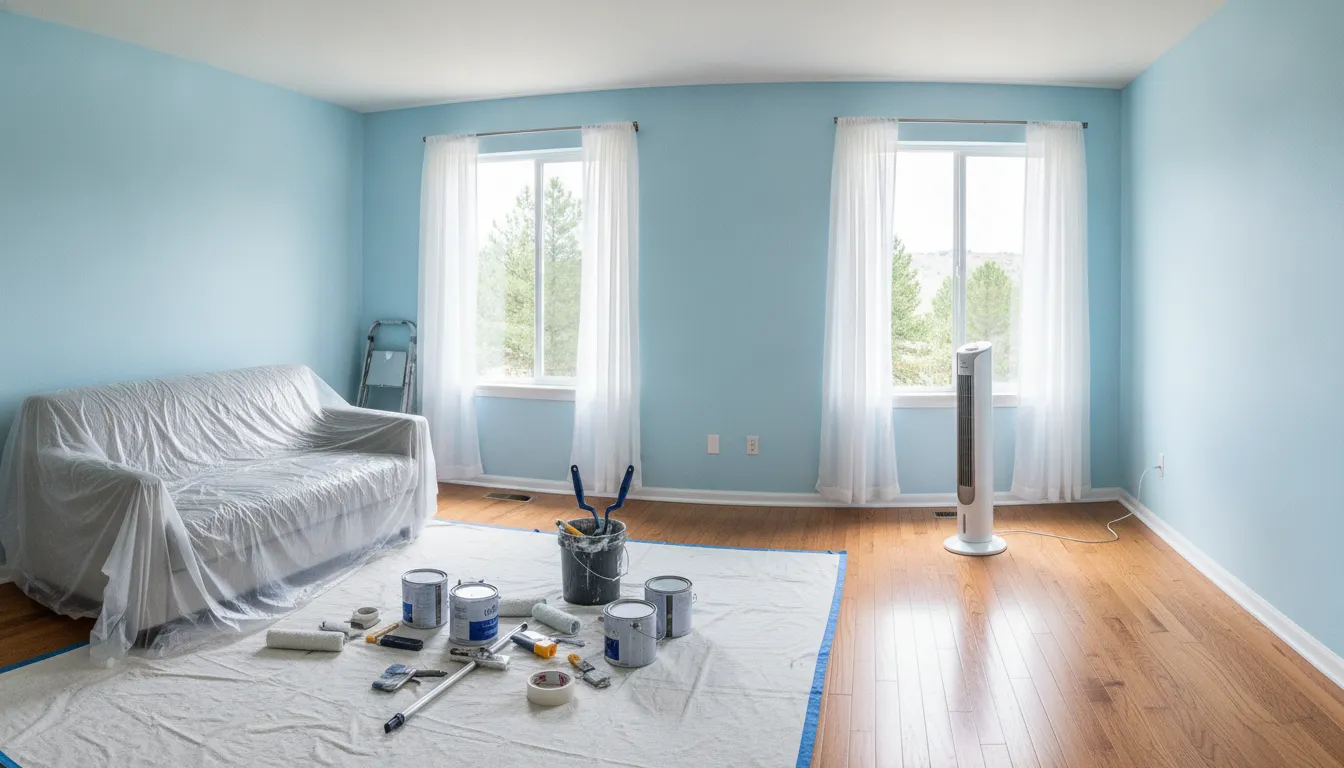
Clear out as much as you can from the work zone. Cover anything that stays behind with thick plastic sheets and tape. This protects your items from dust and small paint drops. Keep the doors to other parts of the house shut to stop dust from spreading. This is key when you want to keep your living space clean and fit for use during the job. Check the label on the paint can for the maker’s rules on how to prep each surface for the best results.
Managing air flow and safety
Good air flow is a must for any indoor job. Even with safe paint, you still need to move fresh air into the room to help it dry. Open windows on other sides of the house to create a cross breeze. This helps the paint dry fast and carries away any light odors that may still last. Small fans can also help push air out through a window to speed up the work and keep the air fresh.
Keep children and pets away from the wet paint until it is dry to the touch. Most low-odor paints dry quickly, but you should still follow the timing on the label. This keeps everyone safe and stops simple smudges on your walls. Once the paint is dry, you can move your things back and enjoy the fresh look. Proper drying time is vital before you place beds or chairs back against the fresh walls.
Follow these steps to ensure your home project goes smoothly from start to finish:
- Choose your supplies: Buy high-grade paint that meets low-VOC rules to keep air quality high.
- Order your rooms: Plan to paint one area at a time so you always have a clean space to relax.
- Set up air flow: Open windows and use fans to move fresh air through the work zone during and after the job.
- Clear the workspace: Move small items out and cover large beds with plastic to prevent damage.
- Mark closed-off areas: Use tape or shut doors to keep kids and pets away from wet walls.
- Check the label: Read the maker’s rules on dry times to know when the room is safe to use again.
- Allow for dry time: Wait for the paint to fully cure before you put items back against the walls.
Does low-VOC paint perform as well as standard paint?
Modern low VOC paint can provide durable, washable interior finishes when the product suits the surface and receives proper preparation, application, and cure time. VOC content alone does not determine performance. Compare the coating’s intended use, sheen, coverage, and technical specifications.
Many homeowners worry that incorporating low VOC paint for indoor health will mean they lose out on strength. In the past, this was a real fear. Early water-based paints did not always stick well. They also did not last as long as oil-based types. But today, the level of volatile organic compounds does not decide how well a paint works. Modern tech has changed how we make these goods. High-grade resins now do the work that harsh solvents used to do.
Strength and scrubbing
Modern low-VOC paints are built to be tough. They use new resins that create a hard, tight bond on your walls. This makes the finish easy to clean and strong. You can wipe away marks or dirt without thin spots or shine changes. This is vital for busy spots like halls or rooms for kids. We use top brands like Sherwin Williams that focus on these new, tough blends. These paints often last just as long as old types while keeping the air in your home clean.
In the Boise area, we often paint inside during the cold winter months. Because people stay in the house more, a paint that stays strong but has low odor is a big win. You do not have to wait for summer to get a high-end look. The resin tech lets these paints hold up to the daily use of a local home or office. A good paint job is a great value, and these new types protect that asset well. Our team ensures that your home stays beautiful and safe all year round.
Finish and shine grade
How your walls look depends on the shine and color depth. You can find low-VOC paints in every shine level from flat to high gloss. These paints give a smooth, even coat that looks great in any light. The colors stay true and do not turn yellow over time. This is a big plus over old oil paints that often turned tan as they aged. When you pick a low-VOC paint, you get the rich look you want without the heavy smell.
Many people find that these paints cover just as well as standard ones. You might need fewer coats to hide an old color. This helps save time and money on your work. Whether you want a soft matte look or a bright shine, these blends work well. They flow well off the brush and level out to hide tool marks. The result is an expert finish that stays in good shape for a long time.
Surface prep and cure time
Great results always start with the work you do before the paint goes on. Prep is the most vital step for any indoor job. You must clean, sand, and prime the walls so the paint can grip the surface well. Even when you use low VOC alternatives to traditional alkyds, prep remains the key. If the wall is oily or dusty, no paint will stick well, no matter its VOC level.
The time it takes for paint to cure is also key. While these paints dry fast to the touch, they need more time to get hard. You should be careful with the new finish for the first few weeks. It is also wise to keep the air moving in the room. Good air flow helps the paint set and ensures any trace smells fade fast. Taking these simple steps helps your new paint work at its best.
How to choose the right low-VOC paint
To pick the best paint for your home, you must look at more than just the color on the lid. Low VOC paint options help keep your indoor air clean and safe. But each brand and product line works in its own way. You want a paint that is tough, looks good, and is easy to use. At Paint Boise, we help local owners pick the best inside painting products for their rooms. We know which paints work best in the Idaho air.
The technical data sheet
Every pro paint has a technical data sheet you can read online or in the store. This sheet is like a map for your work. It shows how many square feet one gallon will cover. It also lists what parts, or substrates, the paint will stick to best. Some paints are made for wood trim, while others work better on drywall.
The sheet also tells you the VOC levels in grams per liter. This is vital because volatile organic compounds can be much higher indoors than outside. By reading the sheet, you can see if the paint meets the latest safety rules. You will also find the recoat and cure times.
Recoat time tells you when you can add a second coat. Cure time is how long it takes for the paint to reach its full strength. Following these times helps stop peeling and keeps the finish smooth.
VOC levels after tinting
Many paints claim to have zero VOCs on the label. But that mostly only refers to the base paint before any color is added. When you pick a dark or bright color, the shop adds tint to the can. These tints often contain solvents that raise the VOC count.
If you want to keep levels low, ask about the tinting system used by the store. Some modern brands use water-based tints that do not add many solvents. This is a big deal if you react to smells or have young kids in the house. A good pro can guide you to a house painters‘ top pick that stays safe even with deep colors.
Sheen and coverage options
The sheen of the paint changes how it looks and how well it wears over time. Flat sheens are great for bedrooms because they hide wall flaws. But they can be hard to scrub if they get dirty. Semi-gloss or satin sheens are better for kitchens or baths where you need to wipe the walls.
You should also look at the coverage rate. High-quality paint covers better and may only need two coats. Lower-grade paint might need three or four, which costs more in the long run. No matter which paint you choose, you must keep the room well ventilated. Even low-VOC paints need fresh air to dry right. Use fans and open windows to keep air moving. This helps the paint cure faster and keeps your home smelling fresh and clean.
Do you still need ventilation with low-VOC paint?
Yes. Low VOC paint contains fewer volatile organic compounds, but fresh air and steady airflow still help move odors out and support drying. Paint Boise recommends planning ventilation for every occupied-home project, especially during Boise winters when windows may not stay open for long.
Yes, you still need to air out your home when using low VOC paint. While these products have fewer chemicals than old paints, they are not fully free of fumes. Even zero-VOC options often have trace parts of organic gases that can build up in a closed room. This is why our team at Paint Boise makes air movement a main goal for every indoor project we handle in the Treasure Valley.
Why air movement still matters
The main reason to keep air moving is that volatile organic compounds can be ten times higher indoors than outdoors. When you paint a room, these gases release into the air as the liquid dries. Even a small amount can cause a strong smell or eye soreness if the air stays still. Using low VOC paint for indoor health helps reduce these odors and emissions, but it does not remove them all.
Fresh air helps the paint dry fast and well. It also carries away any smells that might stay in your rugs or chairs. We suggest keeping windows open during the work and as directed by the product manufacturer after the job is done. This ensures that any leftover gases have a clear path out of your living space.
How color impacts paint safety
Many people do not know that the color you choose can change the chemical mix of the paint. Most base paints start with very low levels of solvents. But the tints used to create deep or bright shades can add those chemicals back into the mix. This is a key fact to keep in mind when choosing paint for your home.
A “zero-VOC” label often applies only to the base paint before the color is added at the store. If you choose a dark navy or a rich red, the VOC levels might rise above the start limit. Because of this, we treat every paint job as if it needs full airflow, no matter the label on the can. It is the best way to keep your family safe and happy.
Airflow tips for Boise homes
In Idaho, we often do indoor painting during the cold winter months. This makes it hard to air out a room. You do not want to let too much freezing air inside. The paint needs to stay warm to stick well. We suggest using box fans in windows to pull air out of the room rather than just blowing cold air in.
Moving air from one side to the other is the best way to clear a room. You can do this by opening windows on other sides of the house. If you have an HVAC system, you can also run the fan all the time to help clean the air. These steps ensure that your new paint looks great and that your home stays a healthy place to live.
Frequently Asked Questions
What is the difference between low VOC and zero VOC paint?
Low-VOC paint has less than 50 grams of VOCs per liter. Zero-VOC paint has less than 5 grams per liter. While zero-VOC options have fewer chemicals, they may still have trace amounts. Adding color to the paint can also raise these levels. Both choices are lower in VOC content than many older paint formulas. At Paint Boise, we help you pick the best low-VOC brand for your next house project.
Why is low VOC paint better for indoor air quality?
The EPA says VOC levels are often much higher indoors than they are outdoors. These gases come from many products like old paints and thinners. Low-VOC paint releases far fewer chemicals and smells into your rooms. Using these paints helps reduce the paint-related emissions introduced into your rooms. This matters a lot during Boise winters when windows stay shut. Our team uses top-tier brands to ensure the best results for your home.
Does low VOC paint affect how well the paint lasts?
Modern low-VOC paints are made to last and stay easy to clean. They work just as well as old paints in most cases. You can still get a high-quality finish and rich colors for your walls. These types are tough and work great for busy parts of your home like kitchens or hallways. At Paint Boise, we use strong products from Sherwin Williams and Benjamin Moore to give you a look you will love.
Do I need to air out the room when using low VOC paint?
Yes, you should still keep the air moving when you paint. Even with low-VOC products, good airflow helps the paint dry and helps move odors out of the room. You should open windows or use fans during the work and for a short time after. This is a standard part of our safety plan for every indoor job. Good airflow ensures a fast dry time and a better time for everyone in the house.
Ready to start your inside painting project?
Low VOC paint can be a practical fit for bedrooms, nurseries, and occupied-home projects, but the right product still depends on your walls, color, finish, and ventilation plan. Paint Boise can help you compare options and deliver a clean, durable interior finish.