
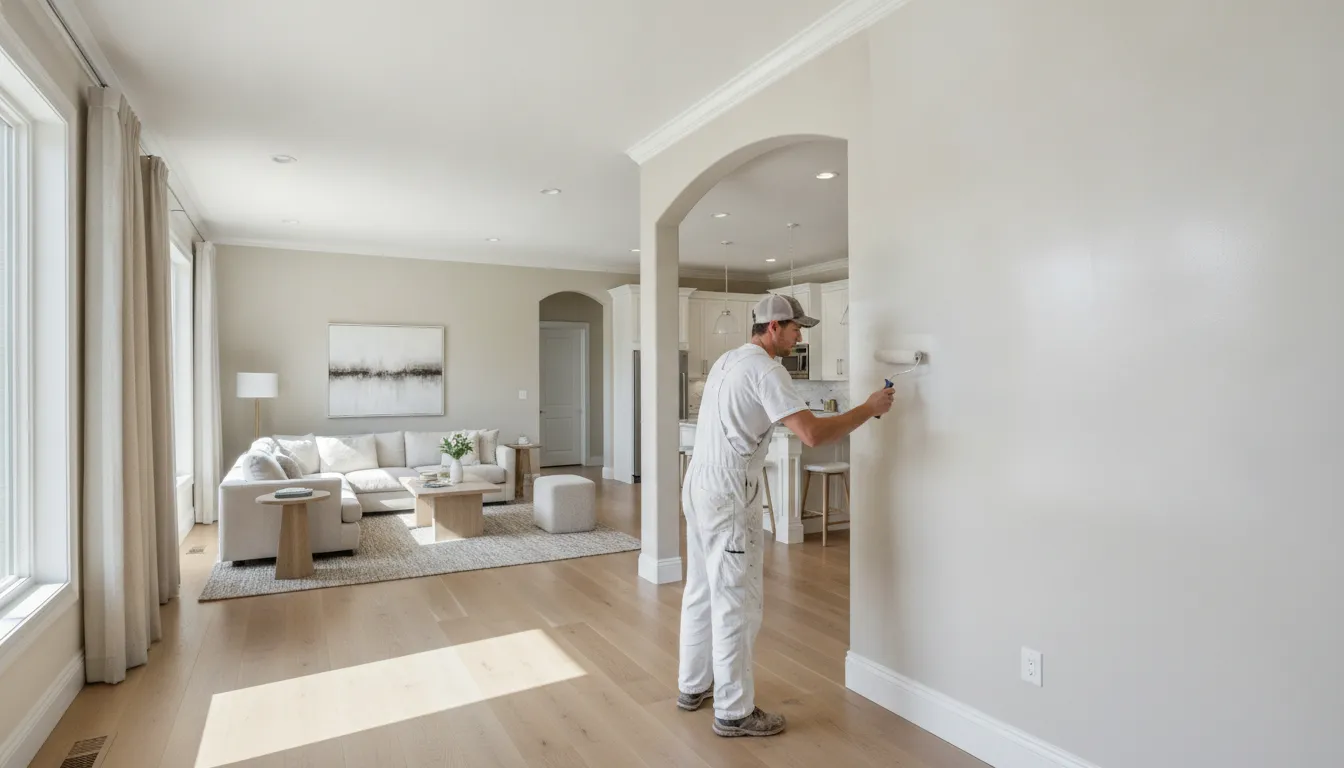
Best Paint Sheen for Every Room in Your Home
The best paint sheen for every room depends on what that room has to handle. Living room walls usually look best in eggshell, busy hallways benefit from satin, and trim typically needs washable semi-gloss. The right finish balances appearance, cleaning, moisture resistance, and the condition of the surface beneath it.
Want a polished finish without second-guessing the details? Ask Paint Boise about professional interior painting for your Treasure Valley home.
Sheen can change how a color looks as much as lighting can. A reflective finish may make a color feel brighter and more energetic, while a flatter finish creates a softer, calmer look. It also affects how clearly you can see patches, dents, brush marks, and drywall texture. This room-by-room guide explains where flat, matte, eggshell, satin, semi-gloss, and gloss finishes work best, plus when it makes sense to break the usual rules.
Quick Answer: Which Paint Sheen Is Best for Each Room?
For most homes, use flat paint on standard ceilings, eggshell on adult bedroom and living room walls, satin on high-traffic or moisture-prone walls, and semi-gloss on trim and doors. Choose the finish according to the surface, not just the room. A bathroom ceiling, for example, faces different conditions than bedroom walls.
| Room or Surface | Best Starting Sheen | Why It Works |
|---|---|---|
| Living room | Eggshell | Soft appearance with practical wipeability |
| Dining room | Eggshell or matte | Refined look with low glare |
| Kitchen walls | Satin | Handles frequent wiping and splashes |
| Bathroom walls | Satin | Better suited to humidity and cleaning |
| Adult bedroom | Eggshell or matte | Comfortable, low-reflection finish |
| Kids’ room or playroom | Satin | Easier to clean after everyday wear |
| Hallway, entry, or mudroom | Satin | Durable in high-contact spaces |
| Laundry room | Satin | Practical for humidity and scuffs |
| Home office | Eggshell | Balanced finish that limits screen glare |
| Standard ceilings | Flat | Hides surface variation and reduces glare |
| Trim and interior doors | Semi-gloss | Durable, washable, and visually crisp |
| Cabinetry | Satin or semi-gloss coating | Durable and easier to maintain |
This table is a reliable starting point, not a rigid formula. Paint product lines define their sheens differently, so one brand’s eggshell may look close to another brand’s satin. Always compare the exact product and view a sample in the room before committing.
What Is Paint Sheen?
Paint sheen is the amount of light a dried paint finish reflects. The common sheen spectrum runs from flat and matte, which reflect very little light, through eggshell and satin, to semi-gloss and gloss, which create a more noticeable shine.
As sheen increases, a finish generally becomes easier to wipe down and more resistant to everyday contact. However, higher sheen also makes wall texture and repair work more visible. That is why the shiniest option is rarely the best option for an entire room.
- Flat: Minimal reflection and excellent at disguising imperfect surfaces, but typically less washable.
- Matte: Soft and low-luster, often with a little more durability than traditional flat paint.
- Eggshell: A subtle finish with a small amount of reflection and broad use on interior walls.
- Satin: Noticeably smoother and more washable, making it useful in active rooms.
- Semi-gloss: Reflective, durable, and well suited to trim, doors, and other high-touch surfaces.
- Gloss or high-gloss: The most reflective option, best reserved for intentional accents and very smooth surfaces.
How Should You Choose Between Flat, Eggshell, Satin, and Semi-Gloss?
Start with the room’s daily demands. Then consider the surface condition and the look you want. The best choice is the lowest sheen that can comfortably handle the necessary cleaning and wear.
Consider traffic and touch
Hallways, entries, playrooms, doors, and trim collect fingerprints and scuffs faster than quiet bedrooms. Satin and semi-gloss finishes make sense where repeated cleaning matters. A formal dining room may not need that extra durability.
Account for moisture and ventilation
Kitchens, bathrooms, and laundry rooms face steam, splashes, and more frequent wiping. A suitable satin finish is a common wall choice. Good ventilation still matters because paint sheen alone cannot correct ongoing condensation or moisture problems.
Look closely at the surface
Light bouncing off semi-gloss can emphasize every ridge and patch. If older walls have visible texture or repaired areas, eggshell or matte usually creates a more forgiving result. Trim and doors should be carefully prepared before receiving a reflective finish.
Evaluate real light at different times
Morning light, afternoon sun, and artificial lighting can make the same sample look different. Reflective finishes may also create glare near large windows. Test your preferred color and sheen on a movable sample board, then view it on several walls throughout the day. Paint Boise’s color consulting service can help coordinate color, sheen, and lighting decisions.
Best Paint Sheen for Living Rooms and Dining Rooms
Best starting choice: eggshell. Eggshell gives living room and dining room walls a soft, finished appearance while remaining more practical to maintain than traditional flat paint. It reflects enough light to add depth without creating the sharp highlights associated with glossier finishes.
Choose matte if the space is low-traffic, the walls have visible imperfections, or you want a particularly soft look. Choose satin if the living room doubles as a busy family room where pets, children, or frequent gatherings make regular cleaning likely.
For formal dining rooms, matte or eggshell often complements decorative lighting and creates a calm backdrop. In open-concept homes, keeping one consistent wall sheen across connected living, dining, and kitchen spaces can make the transition feel intentional. You can still use semi-gloss on baseboards, window trim, and doors to give the room definition.
Best Paint Sheen for Kitchens
Best starting choice for walls: satin. Kitchen walls need to tolerate wiping, food splatters, and changing humidity. Satin offers a practical balance: it is easier to clean than eggshell without putting as much emphasis on wall texture as semi-gloss. For a step-by-step kitchen application resource, read our kitchen wall painting guide.
Semi-gloss can work on a backsplash-adjacent painted area, trim, and doors. It is also a familiar choice for surfaces that receive frequent contact. However, using semi-gloss across every kitchen wall can create more glare and reveal imperfections, especially beneath bright task lighting.
Cabinets are a separate decision from walls. They need careful cleaning, preparation, and a coating designed for cabinetry. Satin and semi-gloss are common cabinet finish levels because they balance appearance and maintenance. If cabinets are part of your project, professional cabinet painters can help create a smoother, more durable result than ordinary wall paint.
Best Paint Sheen for Bathrooms and Laundry Rooms
Best starting choice: satin. Bathrooms and laundry rooms experience moisture, splashes, and frequent cleaning, so a washable finish is valuable. Satin walls usually provide enough durability without making every drywall variation stand out.
Semi-gloss is useful for trim, doors, and some heavily used small spaces. The best bathroom product also depends on the manufacturer’s intended application, so check the label for moisture-prone interior areas. No finish can prevent problems caused by a leak, inadequate ventilation, or surfaces painted before they were fully dry.
Bathroom ceilings deserve special attention. Flat ceiling paint can work in a well-ventilated powder room, but a full bathroom with regular showers may benefit from a coating specifically suited to humid conditions. Prioritize the product’s bathroom suitability over a general sheen rule.
Best Paint Sheen for Bedrooms, Kids’ Rooms, and Playrooms
Best choice for adult bedrooms: eggshell or matte. These finishes create a restful look and usually provide enough durability for lower-traffic walls. Matte is especially useful when you want minimal reflection or need to soften the appearance of less-than-perfect drywall.
Best choice for kids’ rooms and playrooms: satin. These spaces tend to see more fingerprints, bumps, and routine cleaning. Satin offers added wipeability while still looking appropriate on broad wall surfaces. If the walls are highly textured or patched, test a satin sample first to see how it reacts to side lighting.
Planning more than one room? Explore available financing options and ask Paint Boise for a project estimate.
Best Paint Sheen for Hallways, Entries, and Mudrooms
Best starting choice: satin. Hallways and entries are high-contact zones. Hands brush the walls, bags and shoes leave marks, and narrow layouts can make bumps hard to avoid. Satin stands up well to that reality and is easier to maintain than a low-sheen alternative.
Eggshell may still work in a wide, lightly used hallway. Semi-gloss is usually better reserved for the baseboards, doors, railings, and trim rather than all wall surfaces. This split creates subtle contrast and puts the more durable finish exactly where contact occurs.
Mudrooms often need the most practical finish in the home. Satin walls and semi-gloss trim form a sensible combination. Before painting, repair damage and address any moisture entering around doors or windows.
Best Paint Sheen for Home Offices
Best starting choice: eggshell. Eggshell provides enough durability for a working room while reducing the glare that a shinier finish can create near monitors or video-call lighting. It also gives colors a more dimensional appearance than flat paint.
Consider matte for a quiet office with controlled traffic and strong natural light. Satin can be useful in a shared workspace, craft room, or office that doubles as a homework zone. If you plan to use a deep or dramatic color, sample more than one sheen because higher reflection can noticeably change how the color reads.
Best Paint Sheen for Ceilings, Trim, Doors, and Cabinets
Ceilings: flat in most rooms
Flat paint minimizes reflection and helps disguise small variations across a large ceiling plane. It is the standard choice for bedrooms, living rooms, and many other dry spaces. A moisture-prone ceiling may require a more specialized coating.
Trim and interior doors: semi-gloss
Semi-gloss makes baseboards, casings, and doors easier to clean and gives them a crisp visual separation from the walls. Because it highlights flaws, careful sanding, filling, and caulking are essential. Satin is a quieter alternative if you prefer less contrast.
Cabinets: satin or semi-gloss coating
Cabinetry needs more than a sheen choice. Degreasing, surface preparation, bonding, application method, and cure time all affect the result. A purpose-appropriate satin or semi-gloss coating is common, but the system should be selected for the cabinet material and desired finish.
Gloss: use as a deliberate accent
Gloss and high-gloss finishes can create striking doors, furniture, or architectural accents. They also reveal surface defects and application marks more readily than other finishes. Use gloss only where the surface is exceptionally well prepared and the shine supports the design.
Cleaning and Durability: What Homeowners Should Know
A higher sheen is generally easier to clean, but paint quality and product formulation matter too. Modern premium matte finishes may outperform older assumptions about low-sheen paint. Compare products within the same manufacturer’s line rather than assuming all paints with the same sheen name perform identically.
- Allow the finish to cure: Dry-to-touch does not necessarily mean ready for scrubbing. Follow the manufacturer’s care and cure guidance.
- Start gently: Use a soft cloth or sponge with mild soap and water. Aggressive scrubbers can burnish a low-sheen finish and leave a shiny spot.
- Test first: Try any cleaner on a discreet area before using it across a visible wall.
- Keep touch-up paint: Save the product name, color, sheen, and batch details when possible. Touch-ups are most noticeable on higher-sheen walls.
- Fix the cause: Paint cannot solve leaks, persistent condensation, grease buildup, or damaged drywall by itself.
Preparation remains one of the biggest factors in durability. Clean surfaces, repaired damage, appropriate primer, quality application, and adequate drying time help the selected sheen perform as intended.
Common Paint Sheen Mistakes to Avoid
- Choosing only by appearance: A beautiful flat finish may frustrate you in a mudroom that needs regular wiping.
- Using high sheen to compensate for weak preparation: Gloss makes poor surface preparation more obvious, not less.
- Assuming sheen names are universal: Eggshell and satin vary by manufacturer and product line.
- Sampling color but not sheen: The reflection level can change both color perception and the visibility of wall texture.
- Using one sheen everywhere: Walls, ceilings, trim, doors, and cabinets perform different jobs and should be treated accordingly.
- Scrubbing fresh paint too soon: Give the coating time to cure before routine cleaning.
Frequently Asked Questions About Paint Sheen
What is the most popular paint sheen for interior walls?
Eggshell is a popular all-purpose choice for interior walls because it offers a soft appearance with moderate wipeability. Satin is often preferred for kitchens, bathrooms, hallways, kids’ rooms, and other active spaces.
Is eggshell or satin better for a living room?
Eggshell is usually best for a typical living room because it has a gentle finish and is reasonably easy to maintain. Satin may be better for a heavily used family room that needs frequent cleaning.
Should bathroom paint be satin or semi-gloss?
Satin is a balanced choice for most bathroom walls, while semi-gloss is well suited to trim and doors. Choose a paint product intended for moisture-prone spaces and make sure the bathroom has effective ventilation.
Does higher sheen make a room look brighter?
A higher sheen reflects more light and can make a color feel more vivid, but it can also create glare and reveal surface imperfections. Test the finish in the room’s actual lighting before deciding.
Can I use the same paint sheen on walls and trim?
You can, but using eggshell or satin on walls and semi-gloss on trim usually improves durability and creates a crisp, intentional contrast. The difference also makes baseboards and door casings easier to clean.
What sheen hides wall imperfections best?
Flat and matte finishes hide dents, patches, and texture best because they reflect the least light. Eggshell is a practical compromise when walls need some wipeability but still benefit from a forgiving finish.
Choose a Finish That Fits How You Live
The best paint sheen for every room is the one that meets the surface’s real demands without adding more shine than you want. Begin with eggshell for comfortable living spaces, satin for active or moisture-prone rooms, flat for standard ceilings, and semi-gloss for trim and doors. Then adjust for your walls, lighting, cleaning habits, and preferred style.
A careful sheen plan makes colors feel more cohesive and helps a new paint job remain easier to maintain. For a professional recommendation, thorough preparation, and a high-quality finish, request an interior painting estimate from Paint Boise. Every project is also backed by Paint Boise’s service guarantee.