
Office Painting Boise: A Planning Guide
A worn office can make clients question the details and leave employees uninspired. A well-planned repaint gives the workplace a cleaner, more professional feel without forcing the business to pause.
Request a free office painting estimate from Paint Boise today.
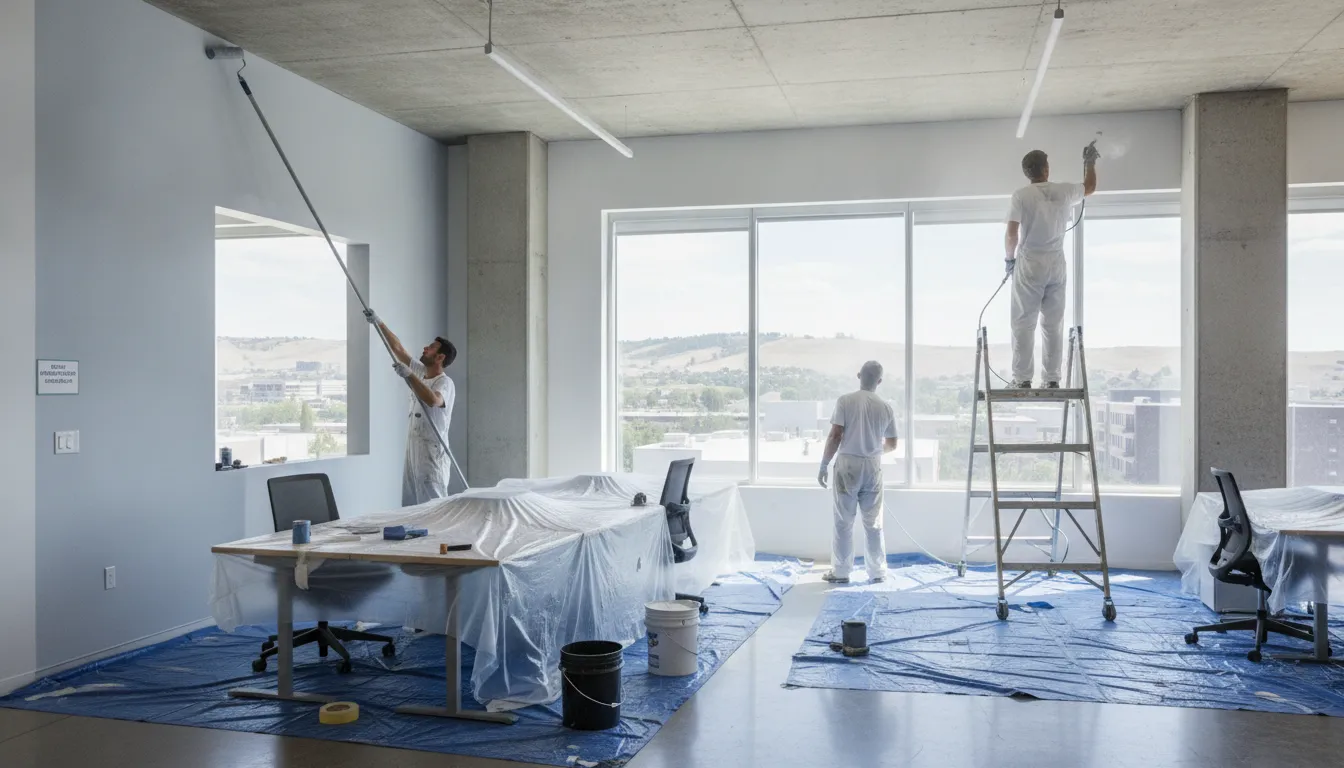
An office painting Boise project succeeds when managers define the scope, choose durable finishes, schedule work around operations, and agree on a clear inspection process. Early planning helps a professional crew protect furniture, reduce disruption, and deliver consistent results while employees and customers continue using the building.
This guide gives Boise business owners, facility managers, and property managers a practical process for planning an interior repaint. It covers schedule, color, sheen, surface preparation, proposal review, and final quality control so you can make confident decisions before work begins.
Office painting Boise projects start with a clear scope
A useful scope tells painters exactly which surfaces need attention, what repairs are expected, and when each part of the office is available. It makes proposals easier to compare and reduces change orders once work begins. Start with a room-by-room walkthrough and record what you see.
Document every surface and repair
List walls, ceilings, doors, frames, baseboards, built-ins, and other painted surfaces separately. Note drywall dents, failed caulk, water stains, peeling areas, and old wall coverings. A painter may need different primers or preparation methods for each condition. Photos help bidders understand the work, but an on-site assessment is still important.
Separate must-do work from optional upgrades. The lobby, conference rooms, and client-facing hallways may need a full refresh, while storage rooms may only need touch-ups. If the budget changes, this priority list helps you adjust the project without losing the most important improvements.
Set operational requirements early
Identify secure rooms, alarm procedures, parking rules, elevator access, loading areas, and any hours when noise is restricted. Choose one manager who can answer questions and approve minor decisions. Tell the crew about sensitive equipment and areas that cannot be taken offline.
- Create a room-by-room surface list.
- Mark repairs and stains that need investigation.
- Prioritize customer-facing and high-traffic areas.
- Choose a single project contact.
- Document access, security, and cleanup expectations.
Paint Boise provides commercial painting services for offices and other business properties throughout the Treasure Valley.
How long does an office repaint take?
A small office suite may be completed over a weekend, while a larger or occupied workplace can take several days or weeks. The most reliable schedule comes after an on-site review. Square footage matters, but wall condition, trim, furniture, access, and drying time often affect the schedule just as much.
What affects the timeline?
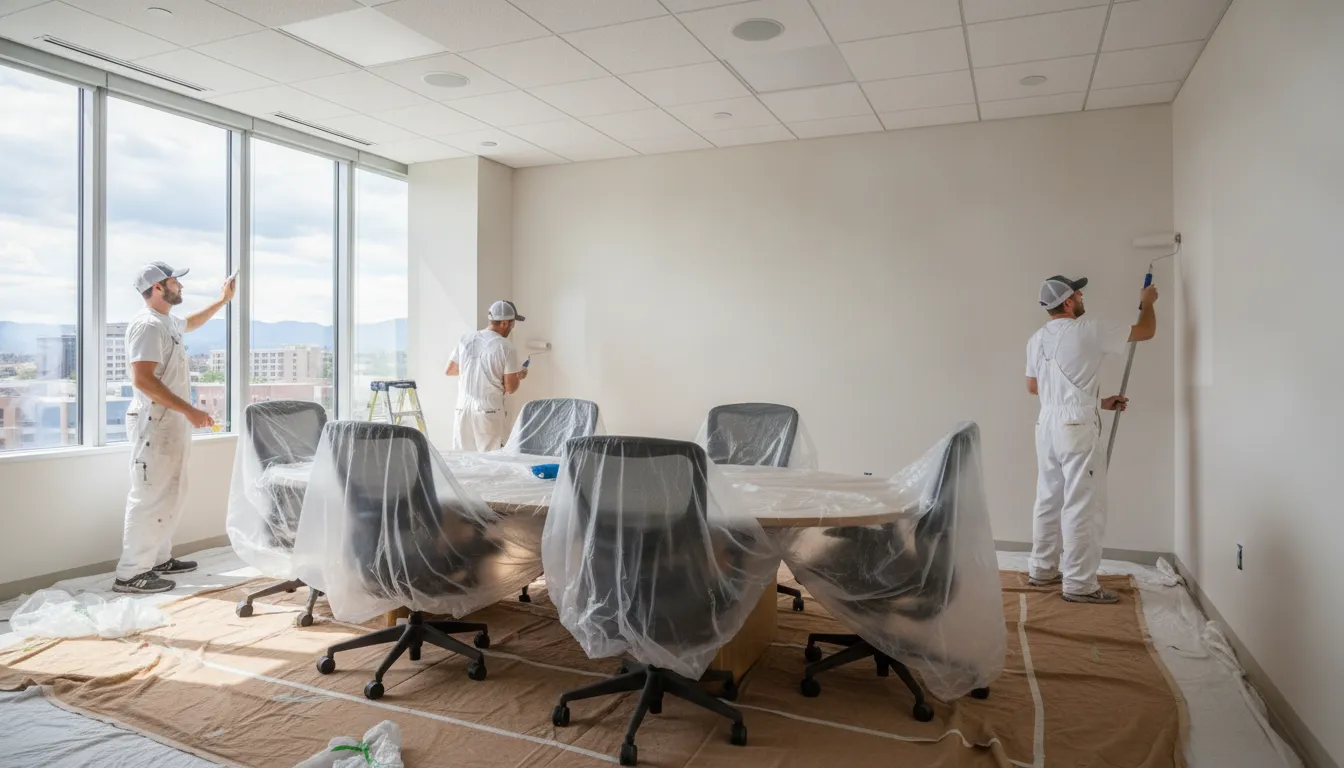
An open office with sound walls is faster to paint than a similar-sized building divided into many rooms. Extensive patching, wallpaper removal, dark-to-light color changes, doors, trim, and high walls add labor. Occupied offices also take longer when crews must uncover, clean, and reset each area before employees return.
Ask bidders to separate preparation, painting, drying, inspection, and touch-up time. A schedule that only lists painting days can hide the steps that create a professional result. The plan should also state whether the crew will complete one area at a time or work across several areas at once.
Use phases to keep the office open
Phasing lets a crew finish one wing, floor, or department before moving to the next. Employees can temporarily shift into completed areas, and managers can inspect each phase before work continues. This approach may extend the calendar, but it usually limits operational disruption.
Night and weekend work can be helpful when access and security arrangements are clear. Schedule high-noise preparation and furniture movement outside business hours. Reserve quiet tasks and drying periods for times when employees are present.
How can managers minimize disruption?
The best disruption plan coordinates people, spaces, and communication before painters arrive. Employees should know which rooms are unavailable, when they need to clear personal items, and where they will work temporarily. Painters need a reliable daily access plan and clear boundaries around occupied areas.
Build a simple communication plan
Send an initial schedule before work starts, then provide brief daily updates during the project. Updates should identify the next work area, any furniture employees must move, and when completed rooms can be used again. Post signs around active work zones so visitors do not enter by mistake.
Assign one person from the office and one from the painting crew to handle communication. This keeps decisions consistent and prevents employees from giving conflicting directions. If an unexpected repair changes the schedule, the two contacts can quickly agree on the next step.
Protect people, equipment, and workflow
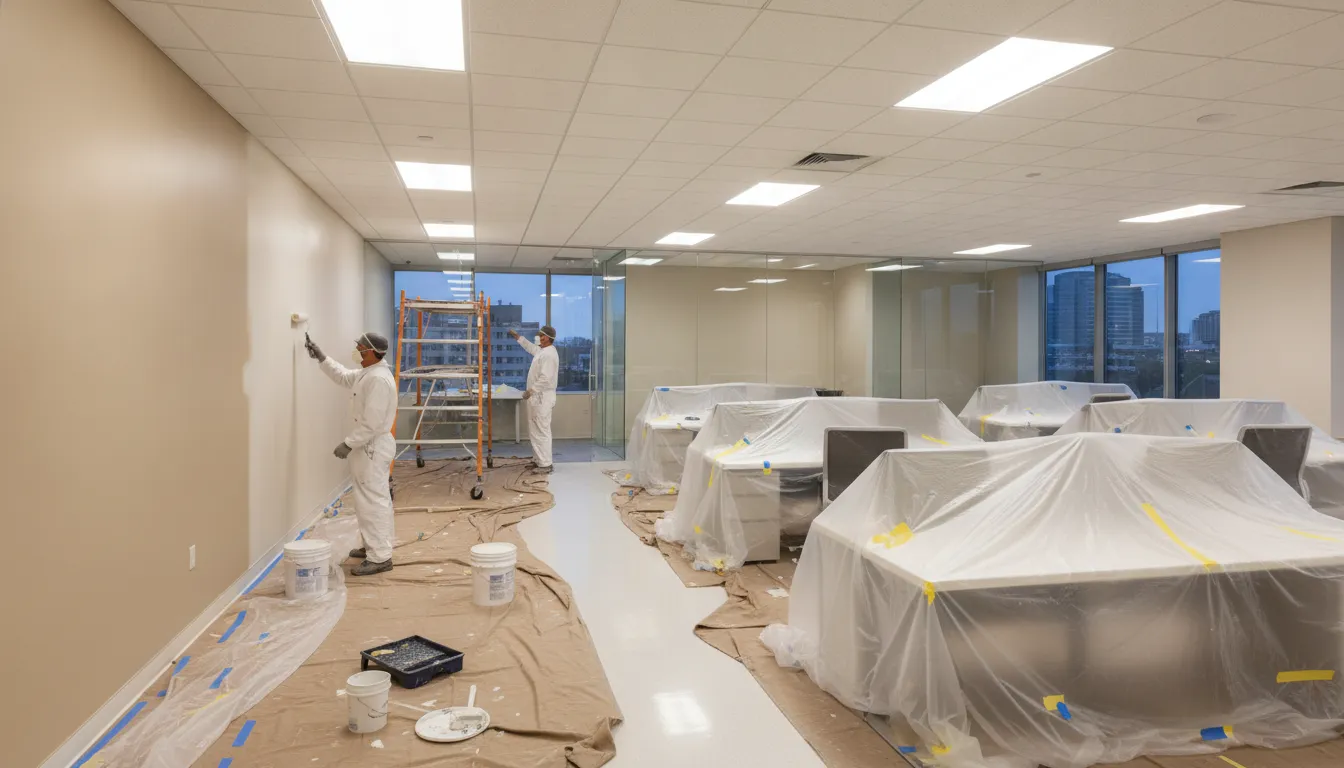
Move small personal items and sensitive electronics before work begins. Painters should protect floors, desks, fixtures, and remaining equipment from dust and splatter. Discuss ventilation and product selection if employees will occupy nearby rooms, especially in workplaces where odors may be a concern.
- Confirm the phase schedule with department leaders.
- Clear personal items and secure sensitive equipment.
- Mark alternate routes around active work areas.
- Schedule noisy preparation outside normal hours.
- Inspect and reset each area before employees return.
Explore Paint Boise’s commercial painting approach for local businesses.
Choose office colors in the actual space
Office colors should support the work happening in each room, complement the brand, and look right under the building’s lighting. A color that appears neutral on a small swatch may look noticeably warmer, cooler, darker, or brighter across an entire wall.
Match color to the room’s purpose
Client-facing areas often benefit from clean, welcoming colors that create a polished first impression. Work areas usually need comfortable tones that do not create excessive glare. Accent colors can reinforce the brand in a reception area or conference room without overwhelming every wall.
Consider existing flooring, furniture, doors, and trim before finalizing a palette. Repainting walls is only one part of the visual environment. A color that coordinates with permanent finishes will make the completed office look intentional rather than pieced together.
Test colors under office lighting
Apply large samples to more than one wall and observe them throughout the day. Natural light, warm bulbs, and cool LED lighting can change how the same paint appears. View samples beside flooring and furniture, then let the decision-makers approve the final color before materials are ordered.
A professional interior painting crew can help managers evaluate the condition of existing surfaces and plan a clean, consistent refresh.
Which paint finish works best for an office?
The best sheen depends on traffic, cleaning needs, surface condition, and lighting. Lower-sheen finishes help conceal imperfections and reduce glare. Higher-sheen finishes are generally easier to clean but can highlight dents, patches, and uneven texture when light crosses the wall.
Compare office paint finishes
| Finish | Best office uses | Main consideration |
|---|---|---|
| Flat or matte | Ceilings and low-traffic rooms | Hides flaws but is less suited to frequent cleaning |
| Eggshell | Private offices and general walls | Balances a soft appearance with light cleaning |
| Satin | Hallways, break rooms, and busy shared spaces | More washable with a noticeable sheen |
| Semi-gloss | Doors, frames, trim, and baseboards | Durable but highlights surface imperfections |
Do not select one finish for every surface simply to make purchasing easier. Doors and trim experience different wear than conference room walls. Matching the product and sheen to each area helps the office remain presentable longer and makes routine cleaning more practical. For heavy-duty storage, warehouse, or production areas that require specialized, ultra-durable coatings, consult our industrial painting services to select the proper chemical-resistant or epoxy systems.
Ask product questions before approval
Ask which product line, primer, sheen, and number of coats are included. Confirm whether the proposed coating is suitable for the existing surface and expected cleaning routine. If odor or indoor air quality is a priority, discuss lower-VOC options and ventilation before the schedule is finalized.
What creates a professional commercial painting finish?
A professional finish depends on preparation, consistent application, sharp transitions, and careful inspection. Paint cannot hide loose material, dirty walls, failed caulk, or poor repairs. The crew should correct surface problems first, then apply the specified coatings under suitable conditions.
Preparation protects the result
Preparation typically includes protecting floors and furniture, cleaning surfaces, filling holes, repairing cracks, sanding patches, caulking appropriate gaps, and priming where needed. The exact process should match the wall condition. Ask the contractor to explain what preparation is included instead of accepting a vague promise to “prep as needed.”
Consistent application matters too. Cut lines should be straight, coverage should be even, and repaired areas should blend with surrounding walls. Doors and trim should be free of drips, heavy brush marks, and paint on adjacent hardware.
Inspect before the crew leaves
Complete a walkthrough under normal office lighting after paint has dried. View walls from typical working and customer-facing positions, not only from inches away. Mark legitimate touch-ups, confirm cleanup, and verify that fixtures and furniture are returned to the agreed locations.
Paint Boise emphasizes quality work, clear communication, competitive pricing, and customer satisfaction. Its process includes a final walkthrough, and customers can ask about the company’s no-deposit payment approach when requesting an estimate.
How should you compare office painting proposals?
Compare proposals line by line rather than choosing the lowest total alone. A useful proposal identifies surfaces, preparation, products, coats, schedule, protection, cleanup, and exclusions. When one bid is much lower, check whether it omits repairs, trim, premium materials, or after-hours scheduling.
Questions to ask each contractor
- Which rooms and surfaces are included?
- What repairs and preparation are included?
- Which paint products, sheens, and coats are specified?
- How will furniture, floors, and equipment be protected?
- Can work be phased or scheduled outside business hours?
- Who manages daily communication and final inspection?
- What is excluded or priced as an optional item?
Ask for a written process for changes. If hidden damage appears after preparation begins, you should know who approves additional work and how pricing will be documented. Clear expectations protect both the manager and the contractor.
Frequently asked questions
Can an office stay open during painting?
Yes, many offices remain open by dividing the project into phases and scheduling disruptive work at night or on weekends. The plan should separate occupied areas from active work zones and allow time for cleanup and drying before employees return. For hospitality businesses, Paint Boise’s hotels and restaurants painters follow a similar phased scheduling approach to keep customer-facing areas accessible.
When is the best time to paint a Boise office?
Interior office painting can be planned throughout the year because crews work in a controlled environment. The best time is usually the period that creates the least disruption for the business, such as a slow season, weekend, or planned employee closure.
Should office managers move furniture before painters arrive?
Managers should remove personal items, paperwork, and sensitive electronics. Confirm in the proposal whether the painting crew will move larger furniture, how it will be protected, and who is responsible for resetting each room.
How do I choose a durable office paint?
Match the product and sheen to traffic and cleaning needs. Eggshell often suits general walls, while satin or semi-gloss may work better in high-touch or frequently cleaned areas. A contractor can recommend compatible products after inspecting the surfaces.
What should be included in an office painting estimate?
A useful estimate should define the scope, preparation, products, number of coats, schedule, protection, cleanup, exclusions, and change process. Detailed proposals are easier to compare and reduce surprises after the work begins.
Plan a cleaner, more professional Boise office
A successful office repaint starts with a detailed scope and ends with a careful walkthrough. When the schedule, colors, finishes, and quality expectations are clear, your team can stay focused while the workplace receives a lasting refresh.
Contact Paint Boise to request your office painting estimate.