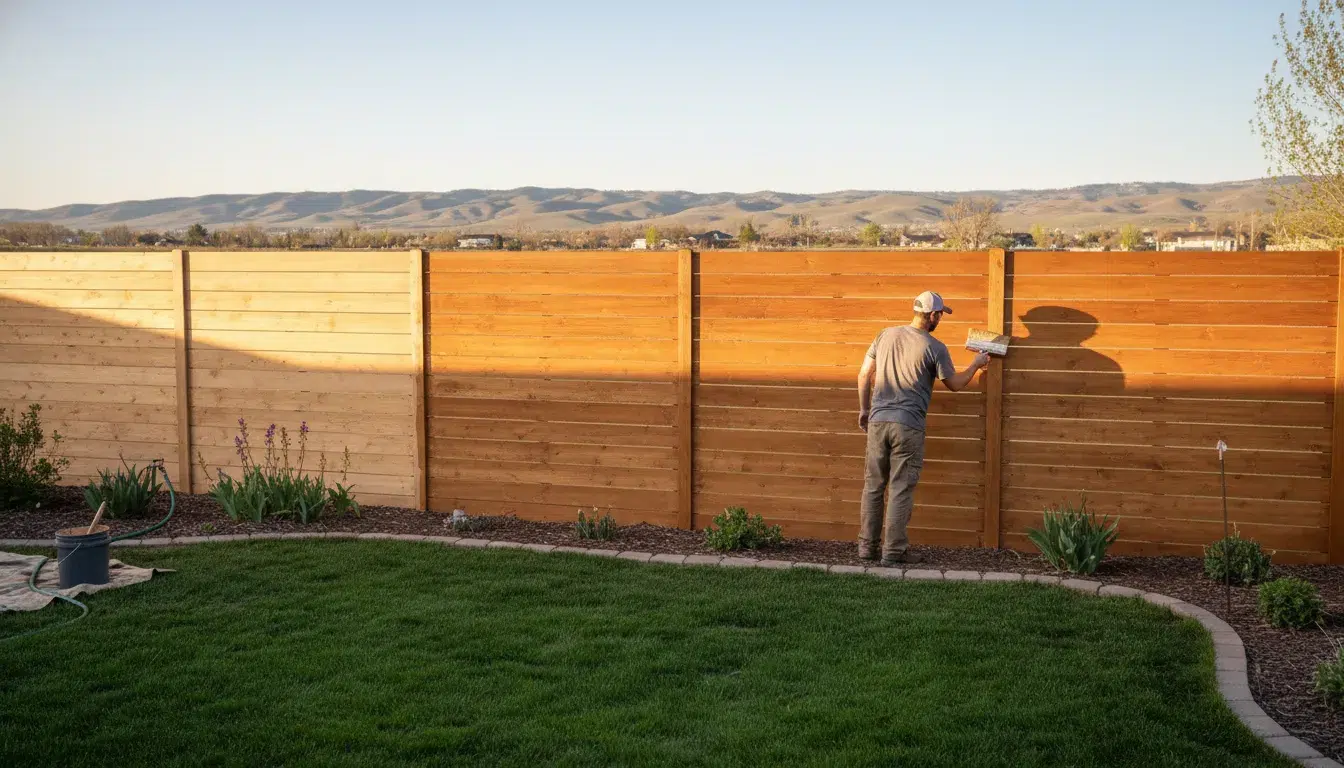
Boise fences face dry summer sun, irrigation spray, and shifting seasonal weather. A neglected finish can leave wood faded, thirsty, and harder to protect before the next hot season arrives.
Request a Boise fence staining estimate for your property.
Fence staining Boise homeowners plan for is a practical way to protect exposed wood while keeping its natural grain visible instead of hiding it. In the Treasure Valley, a vertical fence often needs attention every three to five years, depending on sunlight, irrigation spray, wear, and finish condition. Stain soaks into the wood, while paint covers it with an opaque layer that hides grain and creates a more uniform color. Published exterior wood guidance from the University of California says finishes protect underlying material from degrading light and moisture exposure. Start with cleaning and sound, dry wood; then choose the finish that suits your desired look and realistic maintenance plan.
The first decision is not color alone; it is reading what weather and moisture have already done to your boards. The right finish and timing follow the fence condition on your property.
Fence staining Boise starts with local wood exposure
Quick answer: Start by checking the sunniest, wettest, and most worn sections of your fence. Boise exposure can differ from one fence run to the next, so surface condition should guide the finishing plan.
Read the fence, not only the calendar
A wood fence stands in the open every day. One run may sit in full sun, while another stays close to sprinklers or shaded plants. Those exposure patterns are useful when planning fence staining in Boise. Start by noting which boards look most worn.
A finish is more than a color choice. University of California guidance on exterior wood finishes explains that finishes help protect wood from light and moisture. Stain penetrates wood and leaves more grain in view. Paint forms an opaque coating over the boards.
Neither option removes the need to inspect a fence. The right plan depends on the wood, its current finish, and the wear seen today. Homeowners who want professional help can review Paint Boise’s deck and fence staining or painting service.
If you prefer the look of painted wood, our guide on painting an exterior house covers the complete process.
Map signs of finish wear
Start with a slow walk along both sides of the fence. Look at boards near gates, posts, sprinklers, and areas with strong daily sun. Record faded or uneven areas, even if most boards look sound. This gives you a clear map for closer checks.
Place a few drops of water on clean, dry boards and note whether they stay on top or darken the wood. Do not make the finish choice from this check alone. Consider it with visible fading, splinters, rough grain, and damaged boards.
Study any old coating as well. Note small cracks, lifted paint, bare areas, or patchy stain. A new finish should not simply cover loose coating or damaged wood. Cleaning and surface preparation come first.
Decide where attention is needed first
Use the inspection to sort the next step. A fence with an even, sound finish may be monitored for changes. A fence with fading, water absorption, splinters, cracks, or failed coating deserves closer review before another season of exposure.
Exposure can vary across one fence line. Inspect the most worn stretch, then compare it with sheltered boards. If one area shows more wear, note direct sun, spray, plants, and soil contact before selecting a finish.
Should you stain or paint a Boise fence?
Quick answer: Choose stain when you want the wood grain visible; consider paint when you want an even, opaque color. Both choices depend on surface preparation and the existing finish.
Compare how each finish looks and wears
Stain and paint can both finish an outdoor fence, but they give wood a different look. Stain lets more grain and texture show through. Paint creates a solid color surface, which can coordinate with painted trim, siding, or another outdoor feature.
The key difference is where the finish meets the surface. Paint Boise describes stain as penetrating wood and paint as adding a layer over the boards. That starting point helps a homeowner compare appearance and upkeep without treating both products as the same choice.
| Decision point | Stain | Paint |
|---|---|---|
| Finished look. | Shows more wood grain. | Creates solid color. |
| How it meets wood. | Penetrates boards. | Forms a surface layer. |
| Wear to watch. | Fading or uneven color. | Peeling or bare spots. |
| Homeowner goal. | Natural wood character. | Opaque, coordinated color. |
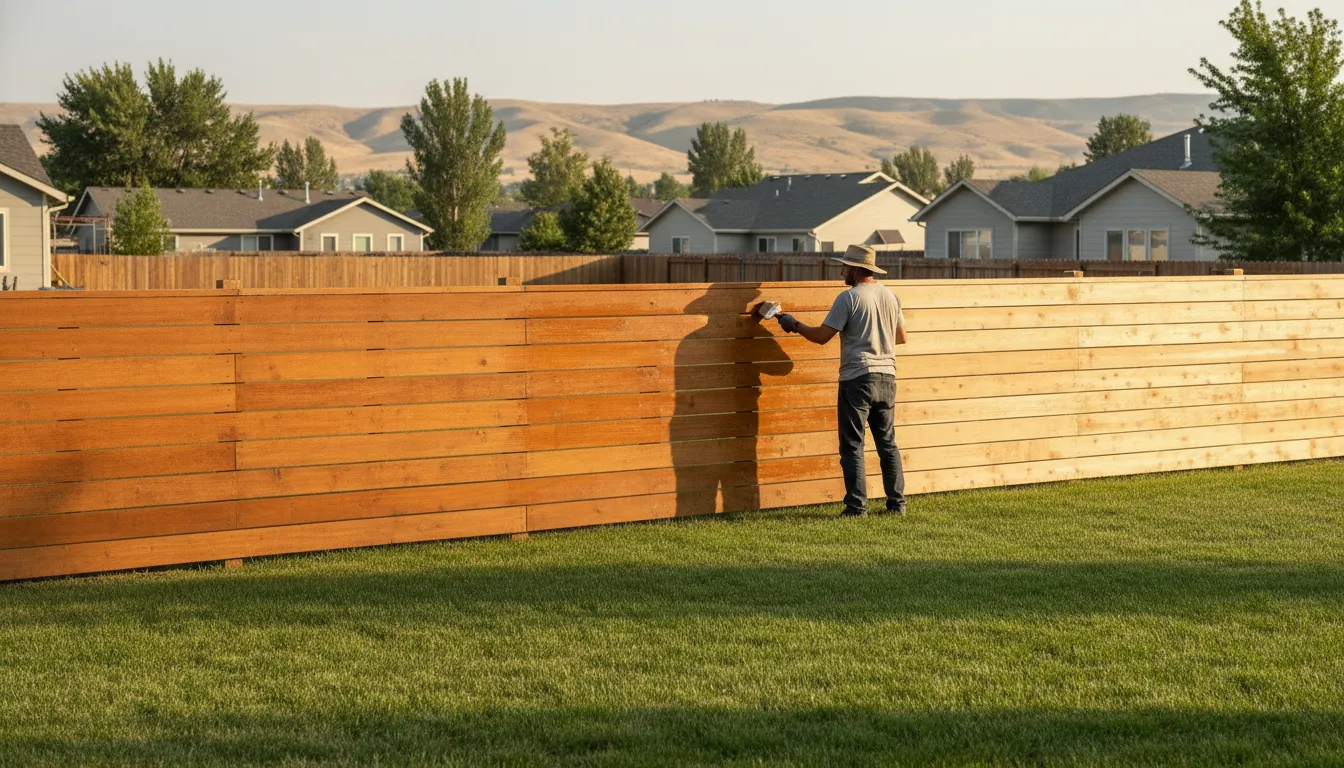
A finish is not only a design choice. Exterior finishes help protect wood from light and moisture. On a fence, that means appearance and surface care should be considered together.
Match the option to your desired result
Choose stain when the wood grain is part of the appeal. It can suit yards where a warm wood tone feels right beside planting beds, stone, or natural landscaping. Homeowners comparing products can begin by reviewing advice on selecting the right stain.
Choose paint when a solid color is the main goal. A painted fence can tie into siding, trim, sheds, and other painted features. The decision is less about hiding wood and more about creating a consistent color plan for the property.
Maintenance signs differ because the finishes look different on the boards. With stain, inspect for areas that appear pale, dry, or uneven. With paint, watch for cracks, lifted edges, or bare wood showing through. Before either finish, clean the fence and inspect repairs.
- Favor stain if you want grain and texture to remain visible.
- Favor paint if a uniform opaque color fits your home.
- Inspect sunny, wet, and shaded areas before choosing.
- Address damaged boards and loose coating before application.
When is the best time to stain a fence in Boise?
Quick answer: Spring and early fall are practical fence-finishing seasons in Boise when the boards are dry and application conditions suit the selected product.
Plan around moderate conditions
Paint Boise identifies spring and early fall as favorable times for exterior fence staining. These periods support planning around moderate conditions while avoiding extreme direct summer heat. The goal is simple: choose a workable weather window for preparation and finishing.
Timing still depends on the fence in front of you. Wood should be inspected and cleaned before a finish is applied. If a fence is wet, dirty, or damaged, it needs attention before staining starts. A planned season does not replace proper preparation.
Spring can make sense when winter has passed and homeowners are preparing outdoor areas for use. Early fall can suit people who notice wear after the warm season. In either case, plan time for cleaning, repairs, adequate drying, and application.
Know when maintenance should move forward
A fence does not need to look ruined before it receives care. Walk both sides and look for faded color, exposed-looking wood, rough grain, loose boards, or failing coating. Pay close attention near gates, post bases, irrigation, and sections facing open sun.
Paint Boise states that vertical fence surfaces in this service area commonly need maintenance every three to five years. That interval is a planning guide, not a promise about every fence. Exposure, the existing finish, and surface condition still matter.
If the last staining date is unknown, begin with the visual inspection rather than guessing. A contractor can assess the wood, discuss paint versus stain, and identify the preparation needed before selecting a service window.
If your fence is showing wear, request a Boise deck and fence finish estimate. Paint Boise can help plan a spring or early fall project around the surface condition.
How should a wood fence be prepared before staining?
Quick answer: Inspect, clean, allow the wood to dry, repair failed boards or loose coating, and apply a compatible finish in workable weather conditions.
Begin with a sound surface
A useful fence staining Boise project starts before a stain can is opened. Preparation helps the finish meet wood rather than dirt, gray surface fibers, damp areas, or loose coating. Set aside time to walk both sides of the fence before work begins.
Note areas that stay shaded, face sprinklers, touch plants, or show damage. Those locations may need added cleaning or repairs before a finish is applied. A fence that appears clean from a distance can still require close attention at gates and lower board edges.
Follow five preparation steps
- Inspect boards and hardware. Look for cracked pickets, loose rails, popped fasteners, rot, peeling finish, and gate movement before finishing.
- Clean away dirt and growth. Remove debris at the base and clean the wood with a method suited to the surface and product instructions.
- Allow the fence to dry. Stain should meet wood ready to accept finish, not boards still damp from washing or recent treatment.
- Make repairs and smooth problem areas. Replace failed boards, secure loose pieces, and remove loose finish where needed before applying new product.
- Apply the compatible finish in suitable conditions. Read the product instructions and work in manageable sections for an even appearance.
Allow treated lumber time to dry
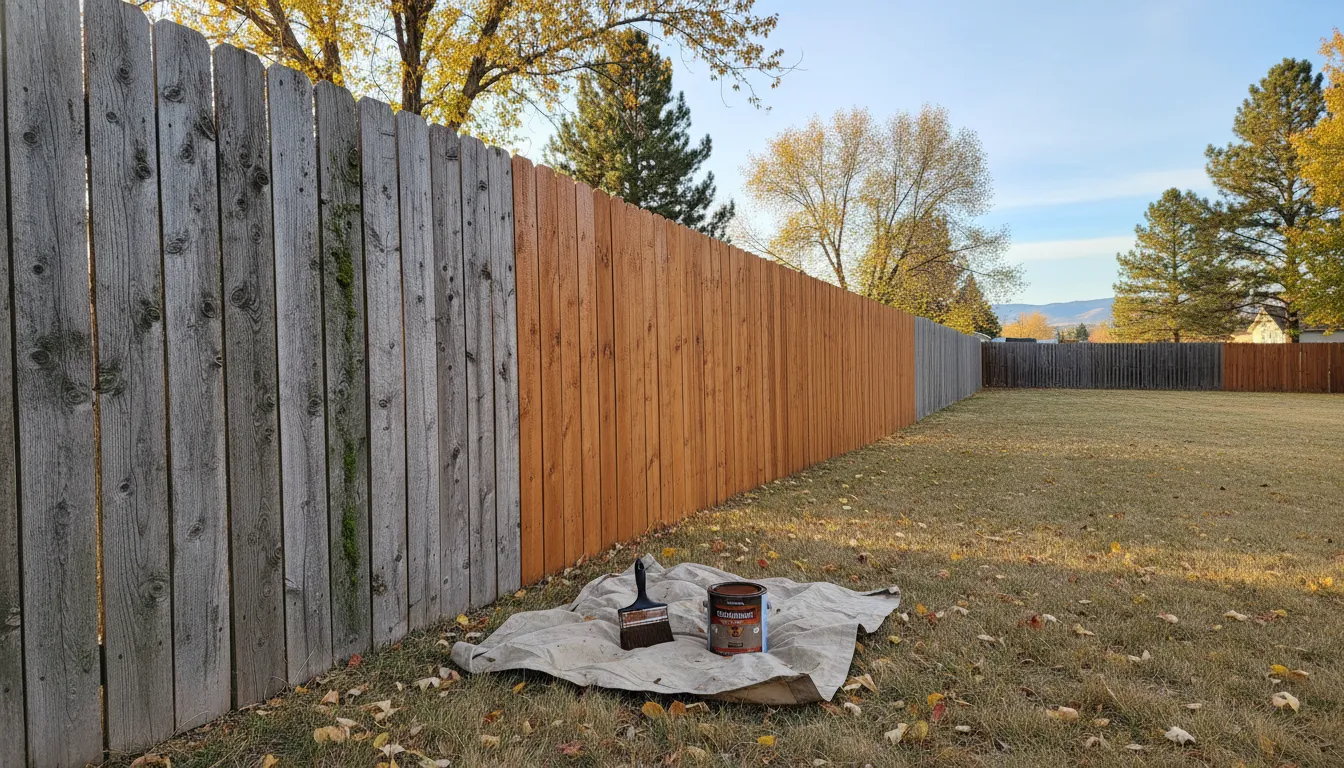
A newly built fence may look ready, yet treated lumber can still hold enough moisture to limit finish absorption. University of Missouri Extension guidance says new pressure-treated lumber should dry for several weeks or months before finishing so it can absorb product.
Homeowners reviewing a newly installed fence can learn more about finishing pressure-treated wood. Drying time is not the only check. Clean surface residue, inspect fasteners and cut ends, and follow the finish label before application.
If you are uncertain whether boards are ready, request project-specific advice instead of coating damp wood. It is easier to delay for sound preparation than to correct uneven finish later.
Talk with Paint Boise about preparing and finishing your fence.
Build a simple fence maintenance plan for Boise homes
.
Quick answer: Check your fence twice each year, reduce repeated moisture exposure, and schedule finish work when fading or coating failure begins to show.
Use two seasonal walkarounds
A simple plan starts with two walkarounds each year: one after winter and one before colder weather returns. In Boise and nearby Treasure Valley communities, look at each fence face, post, rail, and gate from both sides. Find soil splash, sprinkler marks, plant growth, loose fasteners, warped boards, splits, and fading.
Keep a short record after each walkaround. Note which fence side gets the most sun, irrigation, shade, or wind-driven dirt. A photo of problem boards helps you compare changes at the next check, before small issues spread along the fence run.
Address moisture, repairs, and fading
Dirt and plant debris can hold damp material against a finish, so clean stained wood when buildup appears. Trim growth that rubs boards and adjust sprinklers that wet one fence area repeatedly. Before applying a new finish, replace damaged boards and repair loose rails or gates.
- In spring, check winter splits, loose pickets, gate movement, and dirt at the bottom boards.
- During irrigation season, watch for repeated spray, soil splash, and shaded damp sections.
- In early fall, note faded areas and repair needs before planning a finish project.
Fence boards stand upright, so they do not receive the same wear as deck walking surfaces. A deck also receives traffic and weather across horizontal boards. Keep deck staining maintenance separate from your fence checklist, even when both surfaces use related finishes.
Use finish condition, not only a calendar, to plan work. A shaded section may age differently from a sunny board run along the same property line. Record bare spots, fading, cracking, and repairs, so the next stain plan fits the fence in front of you.
If the fence has fading or bare boards, explore fence refinishing options from Paint Boise.
DIY or professional fence finishing: what should you compare?
Quick answer: DIY may fit a small fence in sound condition. Professional help is practical when preparation is extensive, finish compatibility is unclear, or an even result matters across a large fence.
Decide whether the scope is manageable
A fence project can look simple from the driveway: clean the boards, open a can of stain, and apply color. In practice, a sound decision starts with the fence condition, preparation required, and how visible the final finish will be across long runs of boards.
A smaller fence in sound condition may be manageable for a homeowner who has time to inspect every side. Complete the cleaning work, protect nearby surfaces, and apply a compatible finish evenly. Look for loose boards, cracked pickets, peeling old paint, rough areas, and places where the surface appears worn.
DIY work also requires a suitable weather window and access to both sides when possible. A finish applied over dirt, damp wood, or failing coating is unlikely to provide the expected appearance. New pressure-treated boards need added caution because they should dry adequately first.
Recognize when added help is useful
Professional finishing becomes easier to justify when a fence is long, highly visible, unevenly weathered, previously painted, or difficult to access. It can also help when homeowners are unsure whether stain or paint fits the existing surface.
An exterior painting professional can assess repairs, cleaning needs, finish compatibility, and the order of work before material is applied. Paint Boise provides exterior painting services for property owners considering broader exterior finish choices.
Ask specific estimate questions
A useful estimate should explain wood condition, cleaning and preparation steps, finish type, and how weather affects scheduling. Ask whether boards should be repaired before finishing and how an older painted fence differs from bare or previously stained wood.
- What preparation is included before stain or paint application?
- Is the existing finish compatible with the recommended product?
- What signs should trigger maintenance after the project is complete?
- How will the plan change if the fence is damp or weather shifts?
The right choice matches the fence condition and the care a homeowner can realistically provide. If the project needs an even professional finish and a clear prep plan, request a written scope before deciding.
Get a fence staining or painting plan for your Boise yard.
For indoor wood surfaces, our cabinet painting and staining guide covers similar finish choices.
Frequently asked questions about fence staining Boise
How often should you stain a wood fence in Boise?
Paint Boise states that vertical fence surfaces commonly need maintenance every three to five years in this service area. Actual timing depends on exposure and finish condition. Inspect boards each season for fading, roughness, cracking, or water absorption rather than waiting for a fixed anniversary.
Is it better to paint or stain a fence in Boise?
Stain is often a strong choice when you want visible wood grain and a finish that penetrates wood. Paint may suit homeowners who want an opaque color layer. The better option depends on wood condition, existing coating, appearance goals, and required preparation.
Do I need to clean a fence before staining it?
Yes. A fence should be inspected and cleaned before a new finish is applied. Dirt, failing surface material, and damp areas can affect appearance. Preparation may also include repairs or light sanding where boards are damaged or rough.
What is the best time of year to stain a fence in Idaho?
Paint Boise identifies spring and early fall as practical seasons because moderate conditions help avoid extreme direct summer heat. The exact project day should still be selected around dry wood and the product instructions.
Can I stain a new pressure-treated wood fence?
Yes, once the lumber has dried sufficiently to receive a finish. New pressure-treated wood can retain moisture, which can affect absorption. Follow finish directions and ask for guidance if you are not sure the fence is ready.
Ready to plan your Boise fence finish?
A well-planned fence finish begins with wood condition, proper preparation, and a stain or paint choice suited to your home. Paint Boise can review your fence and explain practical options for Treasure Valley exposure.
Request a free fence staining estimate or call 208-254-6615 to discuss your Boise fence project.